SCALE Obesity and Prediabetes published in NEJM
A 3,731-person, 56-week trial of daily liraglutide 3.0 mg published in NEJM found average weight loss of 8.4 kg versus 2.8 kg with placebo, setting the first efficacy benchmark for GLP-1 obesity drugs. [1]
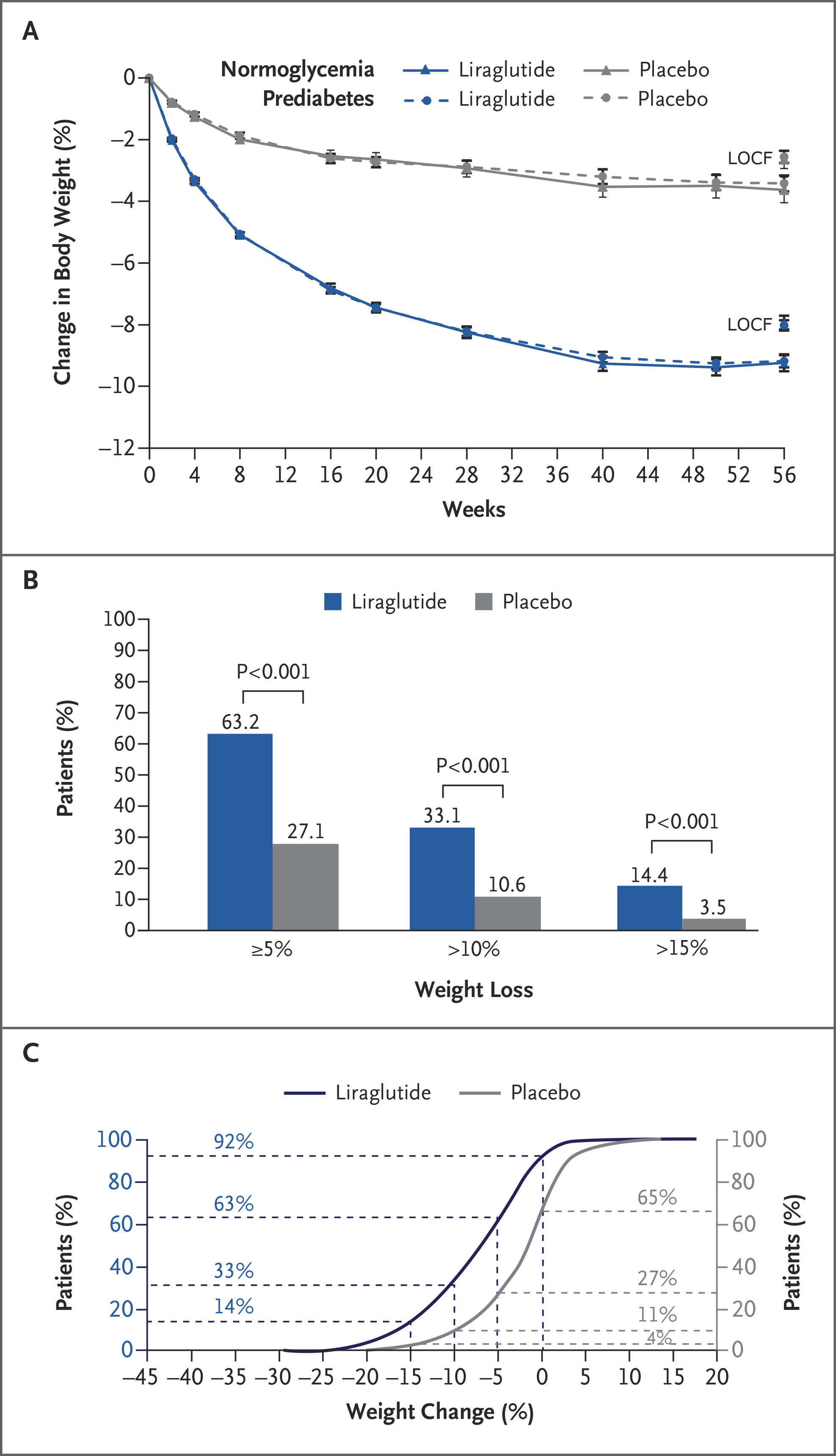
The New England Journal of Medicine published the SCALE Obesity and Prediabetes trial on July 2, 2015, the pivotal study of once-daily liraglutide 3.0 mg for weight management in adults without type 2 diabetes. Over 56 weeks, people taking the drug lost an average of 8.4 kg (about 18.5 pounds) compared with 2.8 kg (about 6 pounds) on placebo [1][2].
What the trial tested
The double-blind study randomly assigned 3,731 adults in a 2:1 ratio to liraglutide 3.0 mg by daily injection (2,487 people) or placebo (1,244 people). Both groups received counseling on diet and exercise. Enrollment required a body-mass index of at least 30, or at least 27 with treated or untreated high cholesterol or high blood pressure [1][2].
Participants averaged 45.1 years of age, weighed 106.2 kg (roughly 234 pounds) and had a mean BMI of 38.3. About 78.5% were women, and 61.2% had prediabetes [1][2]. The drug was started at 0.6 mg daily and raised by 0.6 mg each week to 3.0 mg [1]. The trial ran from June 1, 2011 through March 18, 2013 at 191 sites in 27 countries [1].
The numbers
Three coprimary endpoints were measured at week 56. The difference in weight change was 5.6 kg (about 12 pounds) favoring liraglutide (95% confidence interval, −6.0 to −5.1; P<0.001, using last-observation-carried-forward imputation) [1][2]. Against the average starting weight of 106.2 kg, the 8.4 kg mean loss works out to roughly 8% of body weight [1].
On the categorical endpoints, 63.2% of the liraglutide group lost at least 5% of starting body weight versus 27.1% on placebo, and 33.1% versus 10.6% lost more than 10% (P<0.001 for both) [1][2].
The most frequently reported side effects with liraglutide were nausea and diarrhea, described as mild or moderate. Serious adverse events occurred in 6.2% of the liraglutide group and 5.0% of the placebo group [1][2]. Completion rates differed between groups: 1,789 patients (71.9%) on liraglutide and 801 (64.4%) on placebo finished the 56 weeks, and more people in the liraglutide group withdrew [1].
The trial excluded people with type 1 or type 2 diabetes, prior bariatric surgery, a history of pancreatitis, a history of major depressive or other severe psychiatric disorders, and a personal or family history of multiple endocrine neoplasia type 2 or familial medullary thyroid carcinoma [1]. Novo Nordisk funded the study, supplied the drugs, planned and performed the statistical analyses, and provided editorial and writing assistance [1].
Why it matters for patients
SCALE is the trial that established what a GLP-1 analogue could do for weight in people without diabetes, and its numbers became the reference point later drugs were measured against. Liraglutide 3.0 mg is a daily injection and a different molecule from semaglutide (Ozempic, Wegovy, Rybelsus) or tirzepatide (Mounjaro, Zepbound).
The results also show how averages hide variation. Mean loss was 8.4 kg, but the standard deviation was 7.3 kg, and about one in three participants lost more than 10% of body weight while roughly 37% did not reach even 5% [1][2]. Placebo plus monthly lifestyle counseling produced a 2.8 kg average loss on its own [1].
One design detail speaks to durability: after week 56, liraglutide patients without prediabetes were re-randomized to keep the drug or switch to placebo for 12 weeks, specifically to test whether the effect held after stopping [1]. The published abstract does not report those results.
What happens next
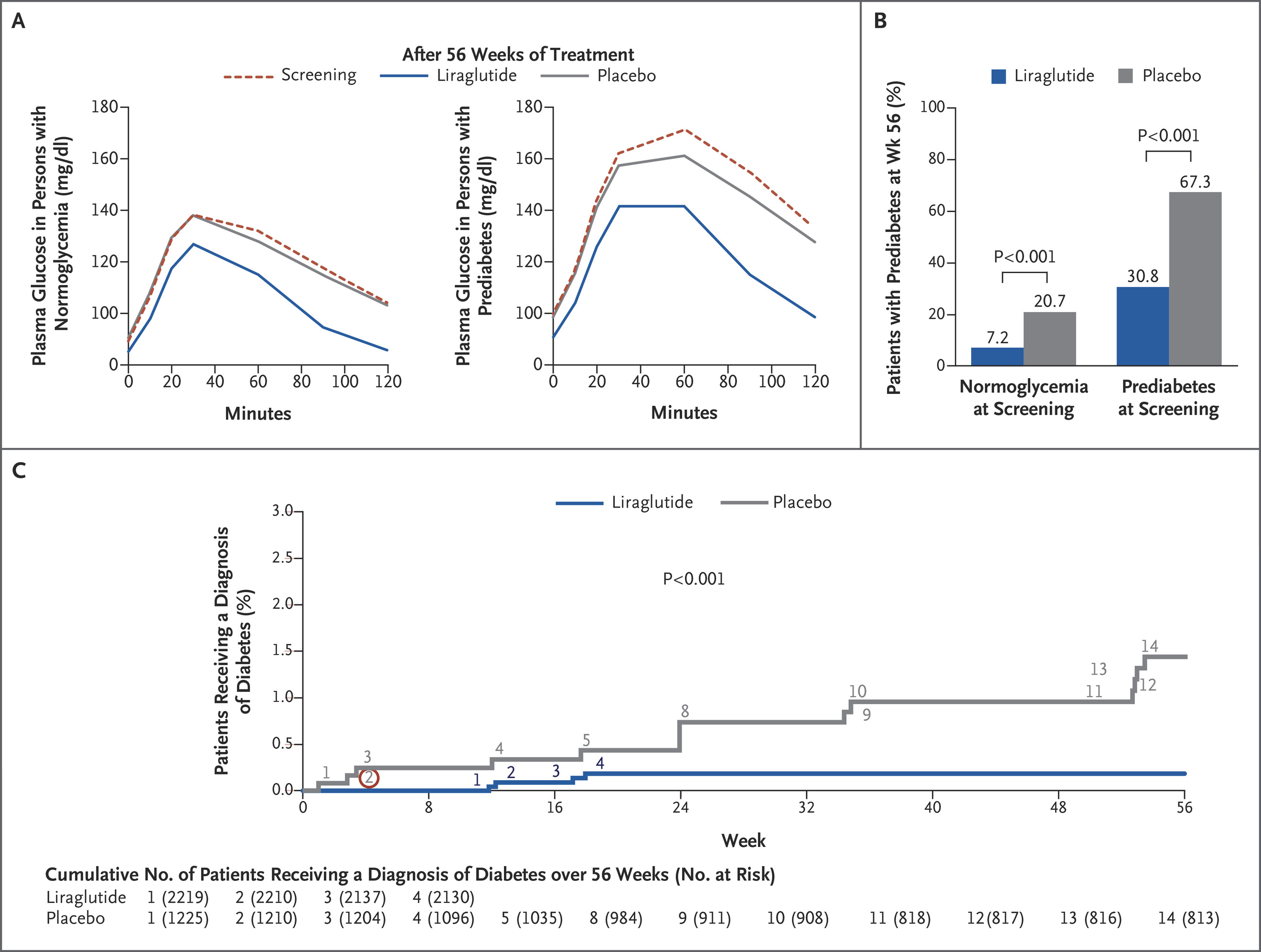
The authors note that a 2-year extension in participants with prediabetes, designed to test whether liraglutide delays the onset of type 2 diabetes, had recently been completed at the time of publication; its findings are not in this report [1]. NEJM ran an accompanying editorial, "Another Agent for Obesity—Will This Time Be Different?" in the same July 2, 2015 issue [2]. The trial is registered as NCT01272219 [1][2].
Images from the sources
Sources
Semaglutides.org is for information only and is not medical advice. Always talk to a licensed healthcare provider about your own care. Some links to telehealth services are affiliate links, labeled where they appear.