SUSTAIN-6 gives semaglutide its first two-year randomized safety record
A 3,297-person, two-year trial found fewer heart attacks, strokes and cardiovascular deaths with weekly semaglutide than placebo, but more eye complications in people with type 2 diabetes.
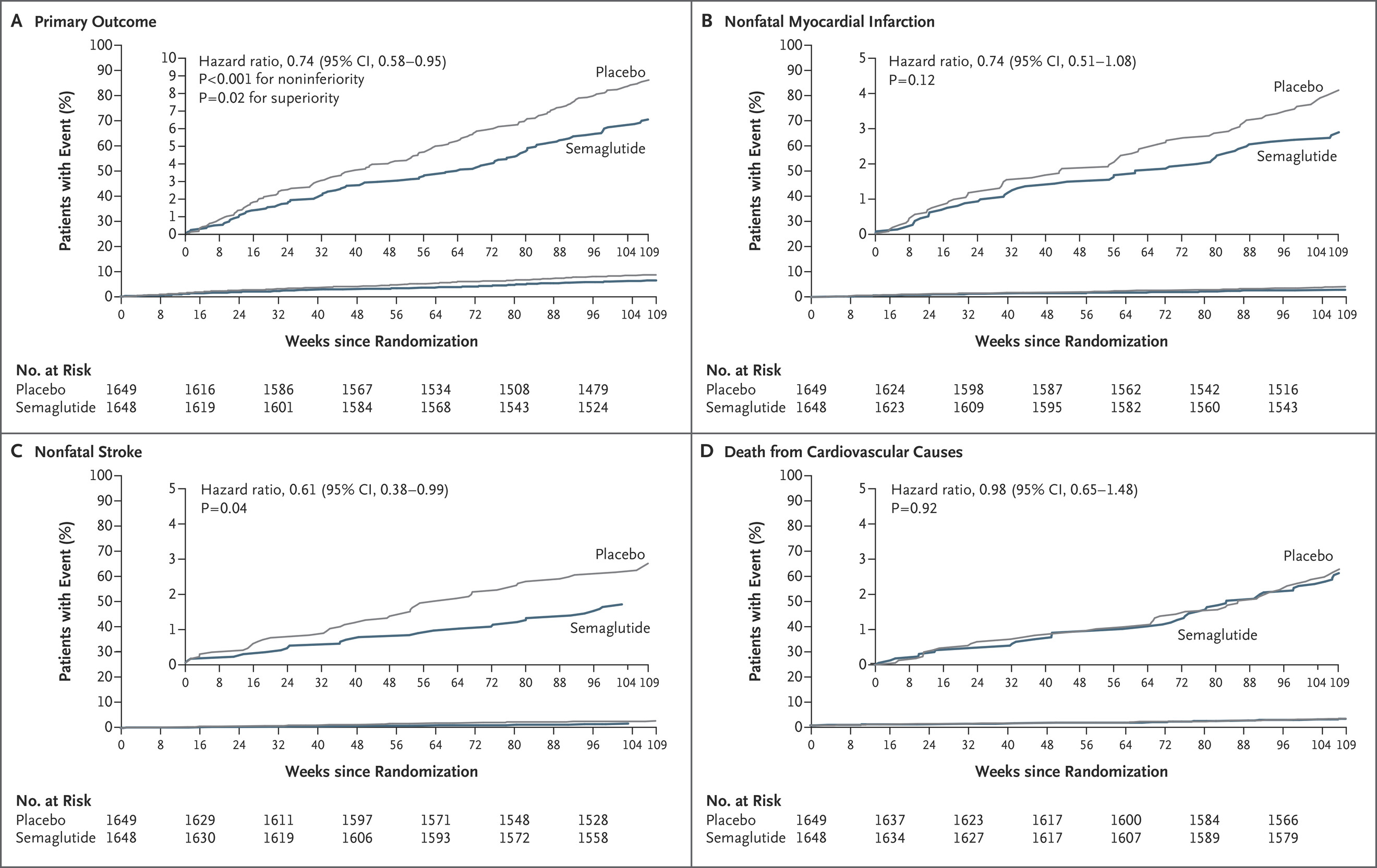
The New England Journal of Medicine has published SUSTAIN-6, the first large randomized trial to follow people taking weekly semaglutide for two full years. Among 3,297 adults with type 2 diabetes at high cardiovascular risk, the main heart outcome occurred in 6.6% of those on semaglutide versus 8.9% on placebo (hazard ratio 0.74; 95% CI, 0.58 to 0.95) [1][2].
The trial was designed as a safety study, not a benefit study. Regulators require makers of new diabetes drugs to show their products do not raise cardiovascular risk, and SUSTAIN-6 was built to rule out a hazard ratio of 1.8 or higher [1]. It cleared that bar with room to spare (P<0.001 for noninferiority), and the numbers also pointed toward benefit — but the authors note that testing for superiority was not prespecified or adjusted for multiple comparisons, so the apparent advantage should be read cautiously [1].
What the trial did
Investigators at 230 sites in 20 countries randomly assigned patients in a 1:1:1:1 ratio to weekly injections of semaglutide 0.5 mg, semaglutide 1.0 mg, or a volume-matched placebo, on top of their usual diabetes care [1]. Everyone started at 0.25 mg for four weeks and stepped up; the maintenance dose could not be changed once reached [1]. Treatment ran 104 weeks, with five more weeks of follow-up, and the median observation time was 2.1 years [1]. Enrollment ran from February through December 2013, and the last patient visit was March 15, 2016 [1].
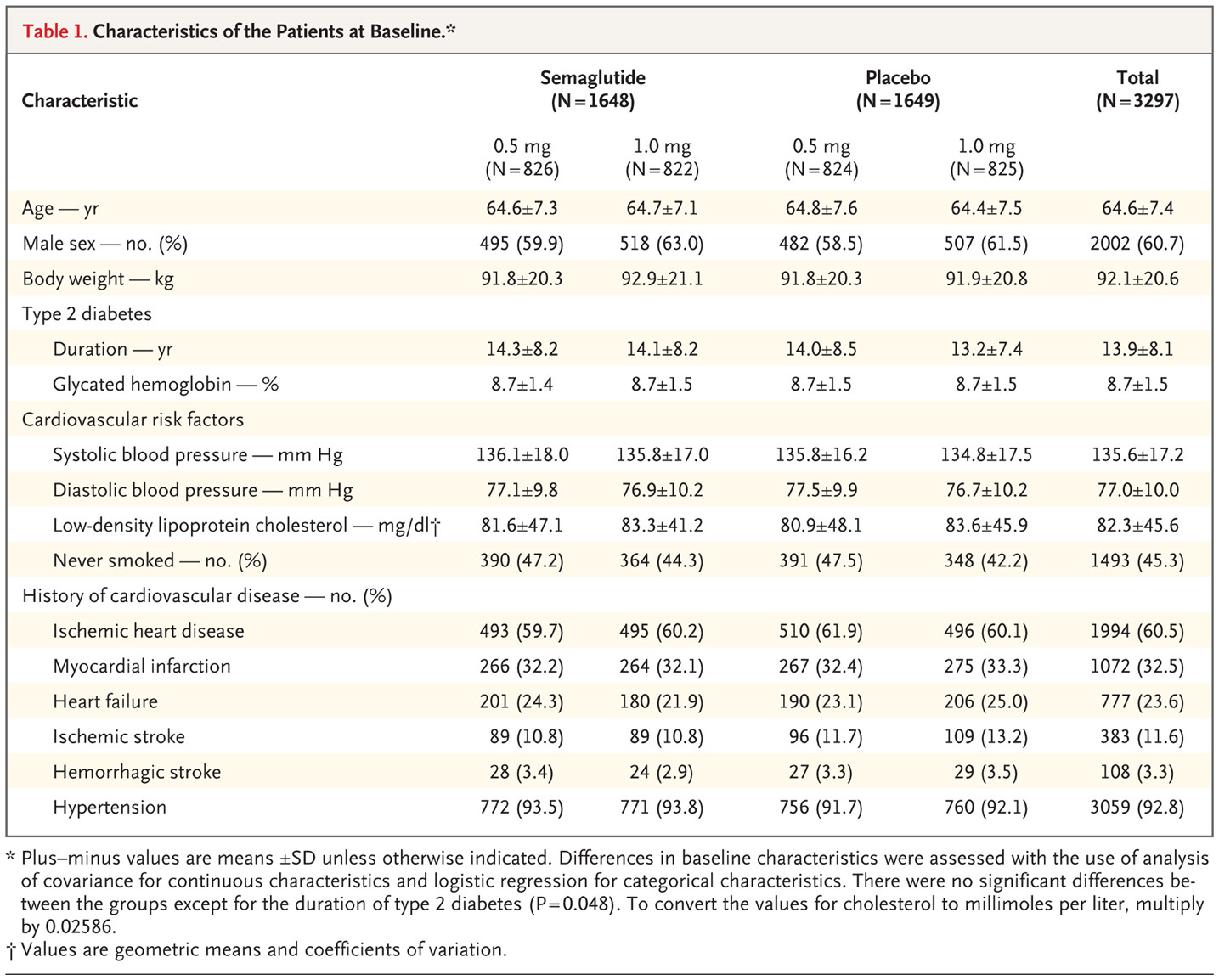
This was a high-risk group: 2,735 patients (83.0%) already had established cardiovascular disease, chronic kidney disease, or both at baseline [1][2]. About 20% stopped study treatment early, similar across groups [1].
The specific results
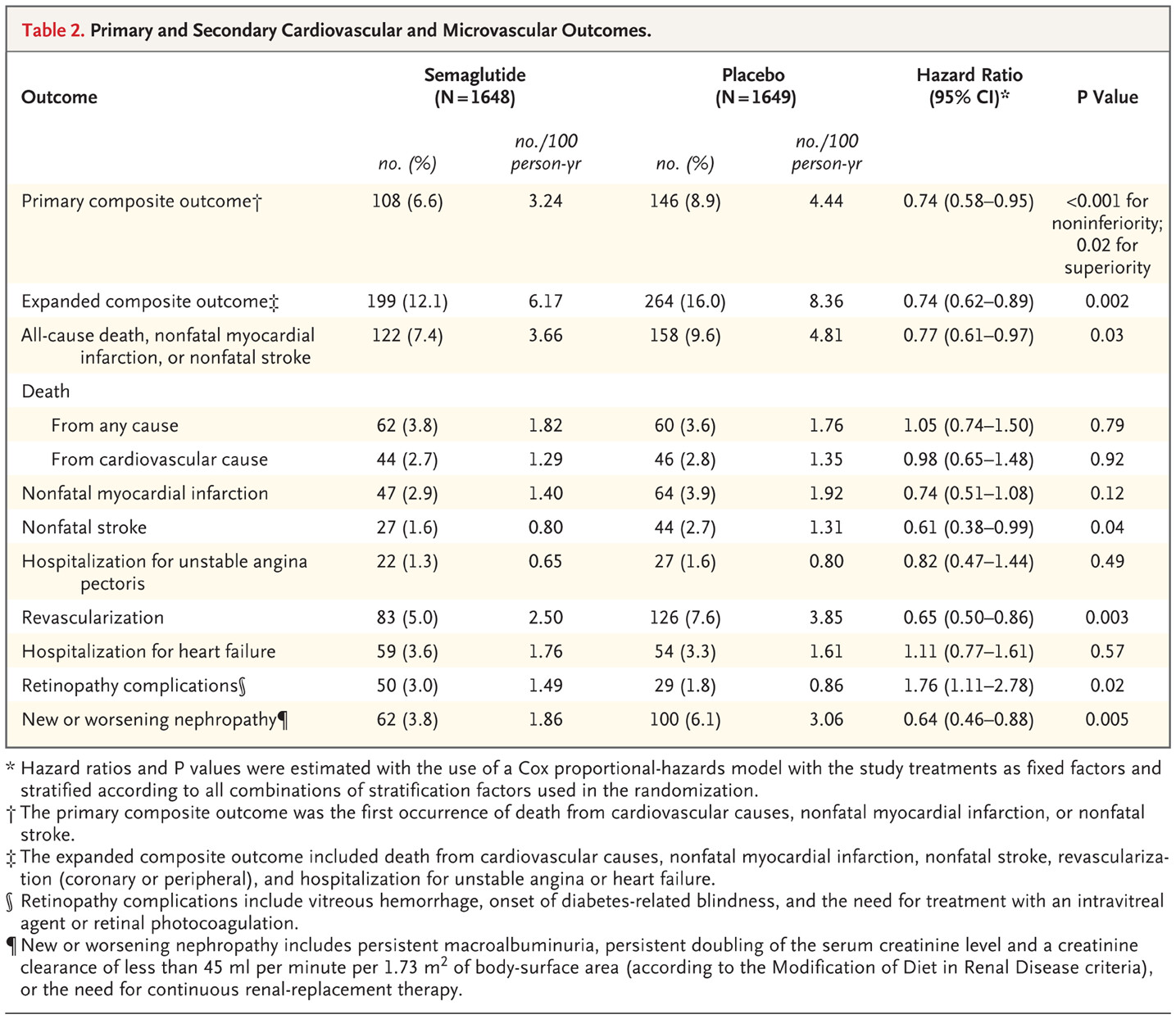
The primary outcome — first cardiovascular death, nonfatal heart attack, or nonfatal stroke — hit 108 of 1,648 semaglutide patients and 146 of 1,649 placebo patients [1][2]. Broken apart, nonfatal myocardial infarction occurred in 2.9% versus 3.9% (HR 0.74; 95% CI, 0.51 to 1.08; P=0.12) and nonfatal stroke in 1.6% versus 2.7% (HR 0.61; 95% CI, 0.38 to 0.99; P=0.04) [1][2]. Death from cardiovascular causes was similar in both groups [1][2].
Kidney outcomes favored semaglutide: rates of new or worsening nephropathy were lower [1][2]. Eye outcomes went the other way. Retinopathy complications — defined as vitreous hemorrhage, blindness, or conditions requiring an intravitreal drug or laser photocoagulation — were significantly more frequent with semaglutide (HR 1.76; 95% CI, 1.11 to 2.78; P=0.02) [1][2].
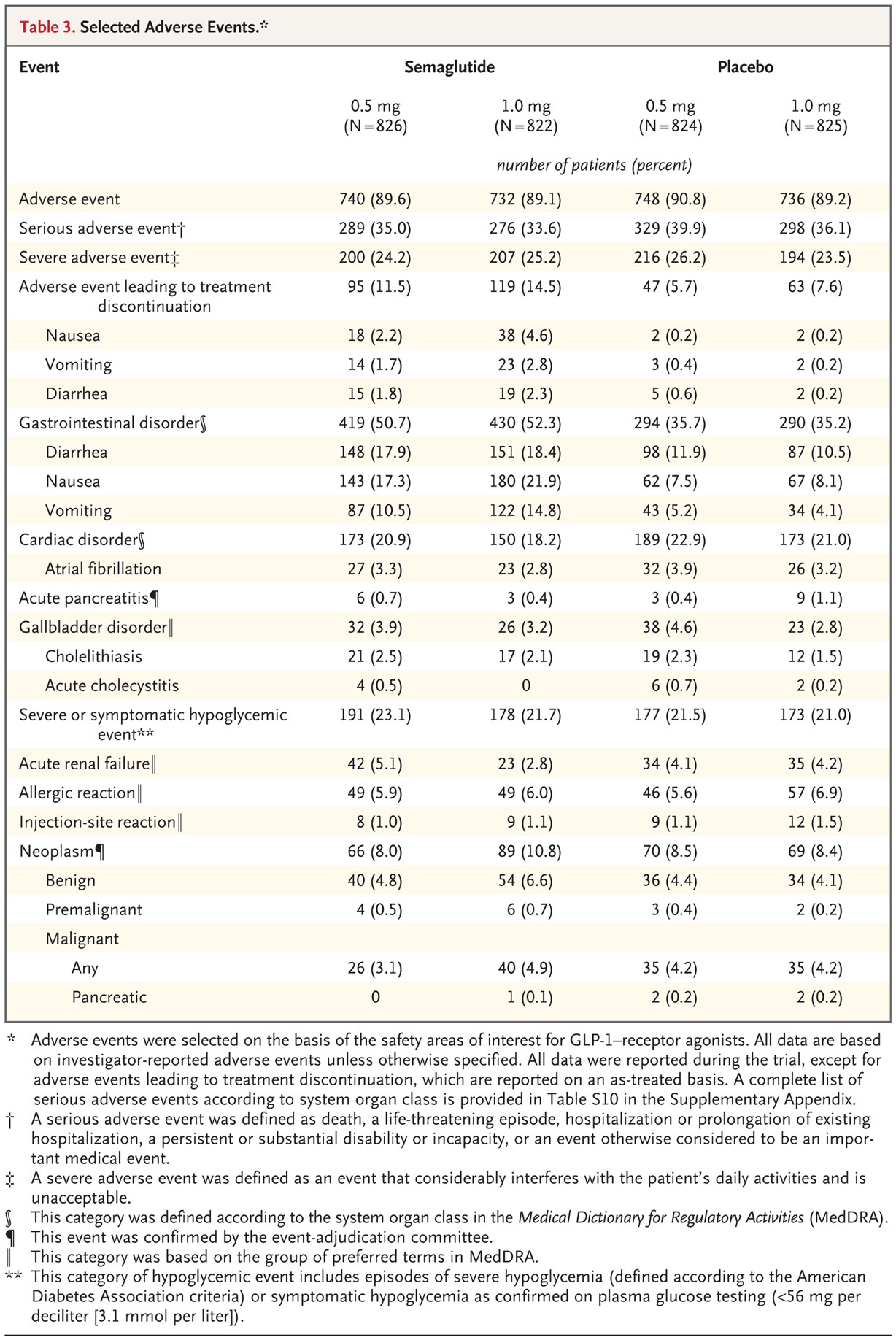
On general safety, fewer serious adverse events occurred in the semaglutide group, but more patients quit because of side effects, mainly gastrointestinal ones [1][2]. The trial was funded by Novo Nordisk, which designed the study, monitored sites, and collected and analyzed the data; an independent committee adjudicated outcome events in blinded fashion [1].
Why it matters for patients
Until now, the question "what happens if I stay on this drug for years?" had no randomized answer for semaglutide. SUSTAIN-6 provides roughly two years of controlled data in a population that is older and sicker than average — people 50 and over with existing heart, vascular, or kidney disease, or 60 and over with at least one risk factor [1].
The retinopathy signal is the finding most likely to come up in clinic conversations. The trial reports the higher rate but the published abstract does not establish a cause, and it is not yet known whether it reflects the drug itself, the speed of blood sugar improvement, or something else [1][2]. Patients with existing eye disease may be in a different position than those without.
Two limits are worth keeping straight. The trial tested 0.5 mg and 1.0 mg weekly in type 2 diabetes; it did not test higher doses or people without diabetes [1]. And at the time of this trial, semaglutide was still in development and not yet approved for type 2 diabetes [1].
What happens next
Semaglutide's approval status and labeling — including how any eye warning is worded — will be decided by regulators, and those decisions have not been reported in these sources [1]. The trial is registered as NCT01720446 [1][2].
Images from the sources
Sources
Semaglutides.org is for information only and is not medical advice. Always talk to a licensed healthcare provider about your own care. Some links to telehealth services are affiliate links, labeled where they appear.