ADA publishes the first practical guidance on switching between GLP-1s
A 2020 ADA journal review lays out the first practical playbook for switching patients between different GLP-1 drugs, since up to a quarter leave their first one within a year and no official conversion chart exists.
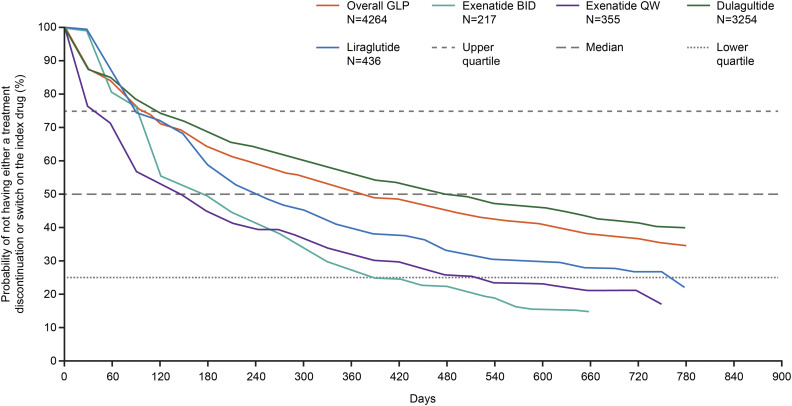
A review published in the American Diabetes Association journal Clinical Diabetes in October 2020 offers the first detailed, practical guidance on switching patients from one GLP-1 receptor agonist to another. The article, written by Jaime Almandoz and colleagues, does not introduce a new drug or approval. Instead, it summarizes why doctors switch patients between these medicines and how to manage that transition safely [1].
The authors point to pharmacy data showing that up to one-fourth of patients switch away from their first GLP-1 drug to a different glucose-lowering medicine within the first year of treatment [1]. Some of those patients move to a different GLP-1 drug rather than leaving the class entirely, but the review notes that clear, real-world guidance on how to do that switch well has been scarce [1].
Part of the challenge is that GLP-1 drugs are not interchangeable in a simple way. Although they belong to one drug class, they differ in structure, molecular weight, and how long they last in the body. Semaglutide, for example, has a molecular weight of about 4.11 kDa and a half-life of roughly seven days, while liraglutide has a molecular weight of about 3.75 kDa and a half-life of only about 13 hours [1]. Dosing schedules also vary widely: liraglutide and lixisenatide are taken once a day, exenatide immediate-release is taken twice a day, and dulaglutide, semaglutide, and extended-release exenatide are taken once a week [1]. Oral semaglutide, approved around the same time as this review, is taken once daily on an empty stomach with a small amount of water, at least 30 minutes before any other food, drink, or medicine [1].
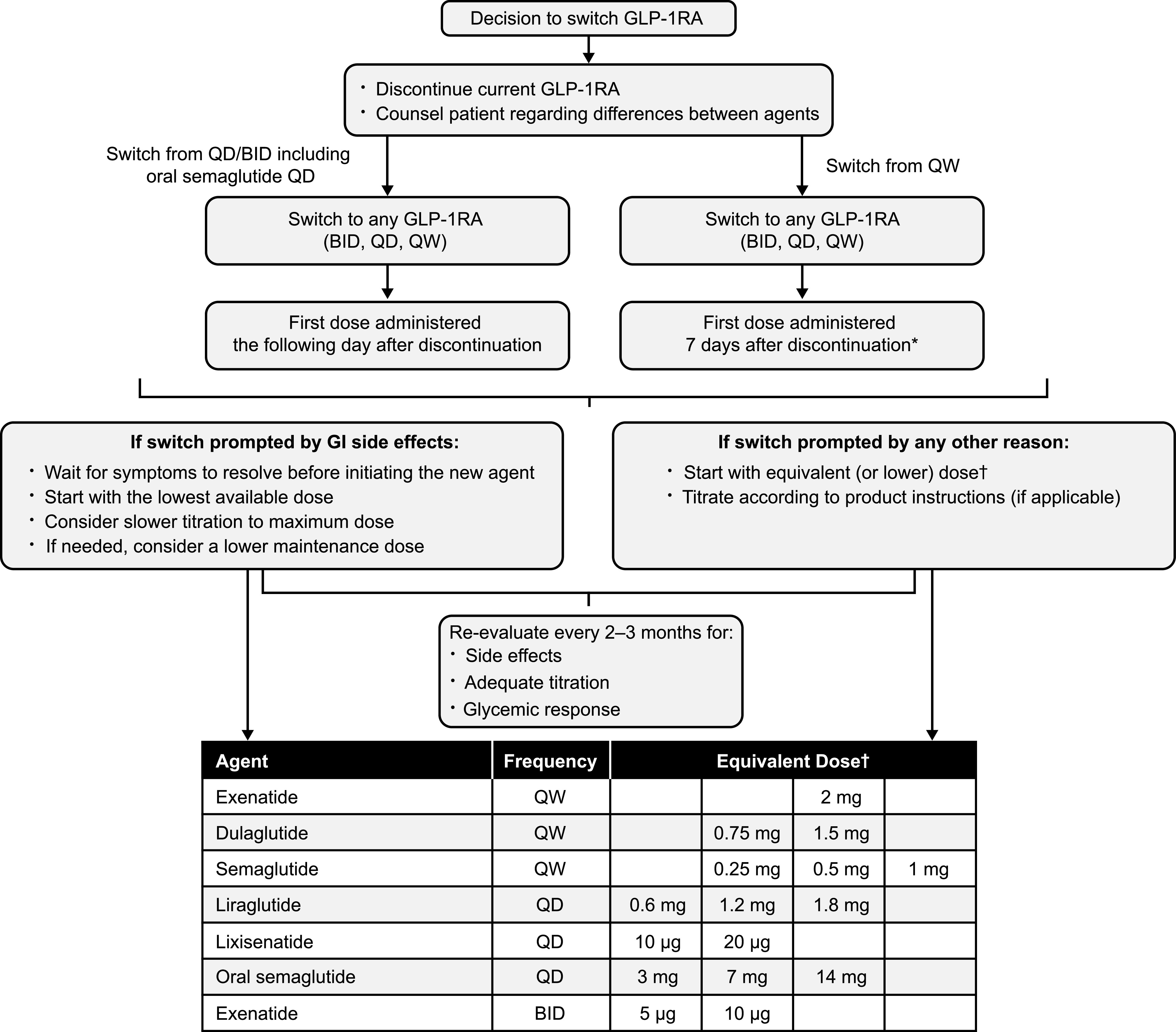
Because these drugs differ so much in dosing and pharmacology, the review states that there is no FDA-approved conversion chart for moving a patient from one GLP-1 drug to another. The guidance in the article is instead built from published studies plus the clinical experience of the authors, who describe it as practical suggestions rather than official dosing instructions [1].
Why it matters for patients
For patients currently taking or considering a GLP-1 drug, this review is a reminder that switching between products in this class is common but not standardized. If insurance coverage changes, a drug is out of stock, or a patient and clinician decide a different GLP-1 drug might work better, there is no single official chart telling a clinician exactly how to convert the dose from one medicine to another [1].
The review notes that up to a quarter of patients stop their first GLP-1 drug within a year, which means switching is not a rare event [1]. Patients who need to change drugs may notice differences in how often they take a dose, how it's administered, and food or timing requirements, since these vary by drug as shown in the review's dosing table [1].
The absence of an FDA-approved conversion chart also means that switching decisions rely on clinical judgment informed by published data and experience, rather than a standardized federal guideline [1]. The sources reviewed here do not describe how this guidance has since been updated, expanded, or replaced by later research or newer drugs such as tirzepatide or orforglipron; that is not addressed in this review.
What happens next
The review itself does not lay out a formal timeline for future updates or additional guidance. It also does not specify whether the ADA or FDA intends to issue an official switching or conversion chart in the future. That remains not yet known based on the sources available.
Images from the sources
Sources
Semaglutides.org is for information only and is not medical advice. Always talk to a licensed healthcare provider about your own care. Some links to telehealth services are affiliate links, labeled where they appear.