STEP 1 publishes the weight-loss curve that anchors every 'how fast does it work' question
STEP 1, published in NEJM, found adults without diabetes lost an average of 14.9% of body weight on semaglutide 2.4 mg at 68 weeks versus 2.4% on placebo — the trial behind most expectations about results [1].
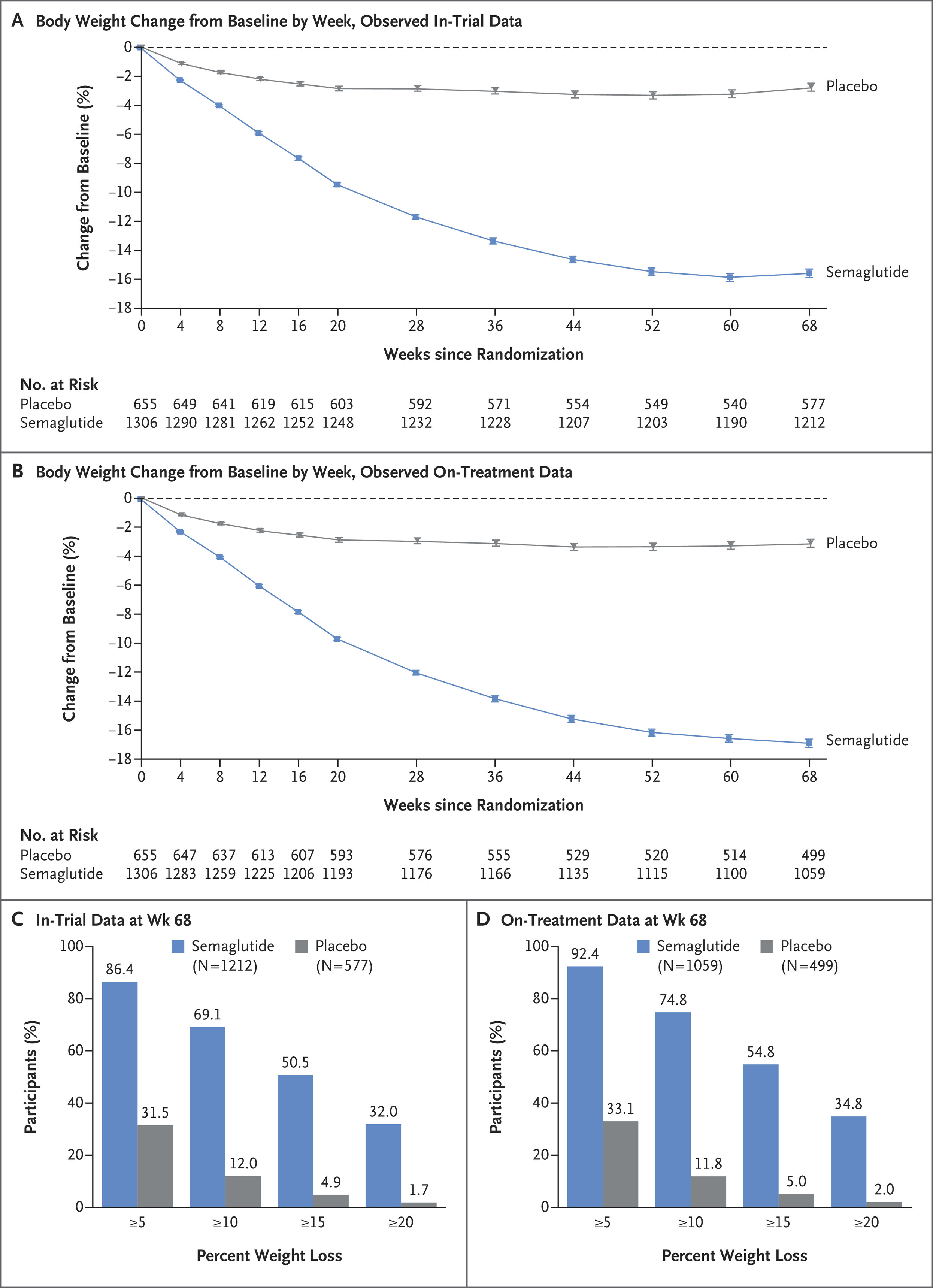
The New England Journal of Medicine published results from STEP 1, a 68-week trial of once-weekly semaglutide 2.4 mg in 1,961 adults with overweight or obesity who did not have diabetes. Average weight change from baseline to week 68 was −14.9% with semaglutide compared with −2.4% with placebo, an estimated treatment difference of −12.4 percentage points (95% CI, −13.4 to −11.5; P<0.001) [1].
The trial ran at 129 sites in 16 countries across Asia, Europe, North America and South America, with participants randomly assigned in a 2:1 ratio to semaglutide or matching placebo, both added to a lifestyle program [1]. Enrollment ran from June through November 2018 [1]. Participants had a body-mass index of 30 or greater, or 27 or greater with at least one weight-related condition such as high blood pressure, abnormal cholesterol, sleep apnea or cardiovascular disease [1]. People with diabetes, a glycated hemoglobin of 6.5% or higher, prior obesity surgery, or recent use of anti-obesity medication were excluded [1].
Dosing started at 0.25 mg once weekly and increased every four weeks to reach the 2.4 mg maintenance dose by week 16; lower maintenance doses were allowed for people who could not tolerate 2.4 mg [1]. Everyone, including the placebo group, got counseling sessions every four weeks aimed at a 500-calorie daily deficit and 150 minutes a week of physical activity, such as walking, tracked in a diary or app [1].
The numbers behind the average
Averages hide a wide spread, and STEP 1 reported how many people crossed specific thresholds. At week 68, 1,047 semaglutide participants (86.4%) lost at least 5% of body weight, compared with 182 placebo participants (31.5%) [1]. At least 10% was reached by 838 (69.1%) versus 69 (12.0%), and at least 15% by 612 (50.5%) versus 28 (4.9%). All three comparisons were statistically significant (P<0.001) [1]. A figure for the share reaching 20% or more is not included in the published abstract text available here, so that number is not confirmed by this source.
In absolute terms, weight fell by 15.3 kg (about 34 pounds) with semaglutide and 2.6 kg (about 6 pounds) with placebo, a difference of 12.7 kg (95% CI, −13.7 to −11.7) [1]. The trial also reported greater improvement in cardiometabolic risk factors and in participant-reported physical functioning with semaglutide [1].
On side effects, nausea and diarrhea were the most common events with semaglutide. The investigators described them as typically transient and mild to moderate, subsiding over time [1]. More people stopped treatment because of gastrointestinal events in the semaglutide group: 59 participants (4.5%) versus 5 (0.8%) on placebo [1].
Study retention was high: 94.3% completed the trial, 91.2% had a weight measurement at week 68, and 81.1% adhered to treatment [1]. The 68 weeks of treatment were followed by a 7-week period with no drug, placebo or lifestyle program [1]. The trial was funded by Novo Nordisk, which designed it and oversaw its conduct, with a sponsor-funded medical writer assisting the authors; the registration number is NCT03548935 [1].
Why it matters for patients
STEP 1 is the study most often cited when people ask how much weight loss to expect and how long it takes. The headline −14.9% is a group average over 68 weeks — roughly 16 months — not a promise for any one person [1]. The responder breakdown shows the range: about half of participants reached 15% or more, while roughly one in seven did not reach even 5% [1].
It also shows what the comparison group did. Placebo plus the same counseling produced −2.4%, and nearly a third of placebo participants lost at least 5%, a reminder that the structured diet and activity program was part of both arms [1].
The dose schedule matters for pacing expectations too: the full 2.4 mg dose was not reached until week 16 [1]. And the gastrointestinal discontinuation rate of 4.5% gives a sense of how often side effects ended treatment in a controlled trial setting [1].
The source text here does not report what happened to weight during the 7-week off-treatment period, so that result is not established by this material.
Sources
Semaglutides.org is for information only and is not medical advice. Always talk to a licensed healthcare provider about your own care. Some links to telehealth services are affiliate links, labeled where they appear.