SURPASS-4 analysis shows tirzepatide slowing kidney decline in type 2 diabetes
A new analysis of the SURPASS-4 trial found tirzepatide (Mounjaro) slowed kidney function decline and cut new albuminuria in people with type 2 diabetes at high heart risk, compared with insulin glargine.
A prespecified analysis of the SURPASS-4 trial, presented at the American Diabetes Association's 2022 Scientific Sessions in New Orleans, found that tirzepatide slowed the loss of kidney function and reduced new or worsening protein in the urine compared with insulin glargine in adults with type 2 diabetes who were at high risk for cardiovascular disease [1][2].
Tirzepatide is sold under the brand name Mounjaro for type 2 diabetes and was approved by the FDA in May 2022, shortly before this analysis was presented [1]. It works differently from semaglutide (Ozempic, Wegovy, Rybelsus) because it acts on two gut hormone receptors, GIP and GLP-1, rather than one [1][2].
SURPASS-4 was an open-label trial that compared three doses of tirzepatide (5 mg, 10 mg, and 15 mg) with titrated insulin glargine in adults with type 2 diabetes who were also taking one to three oral diabetes medicines [1][2]. Of 2,002 people randomized, 1,995 received at least one dose of study drug and were included in this kidney-focused analysis; participants had an average age of 63.6 years, an average HbA1c of 8.5%, and an average estimated glomerular filtration rate (eGFR) of 81.3 mL/min/1.73 m2 at the start of the study [1][2]. Seventeen percent of participants already had an eGFR below 60, a marker of reduced kidney function, and more than a third had some degree of albuminuria, meaning protein was leaking into their urine [1][2].
Over a median follow-up of 85 weeks, out of a maximum of 104 weeks, people on tirzepatide had a 41% lower risk of a combined kidney outcome — a 40% or greater drop in eGFR, kidney failure, progression to end-stage kidney disease, or new-onset heavy albuminuria — compared with those on insulin glargine, with a hazard ratio of 0.59 [1][2]. Tirzepatide also cut the risk of new-onset macroalbuminuria, or heavier protein leakage, by 59%, with a hazard ratio of 0.41 [1]. When macroalbuminuria was left out of the combined outcome, the reduction in risk was smaller and not statistically significant, at a hazard ratio of 0.80 [2].
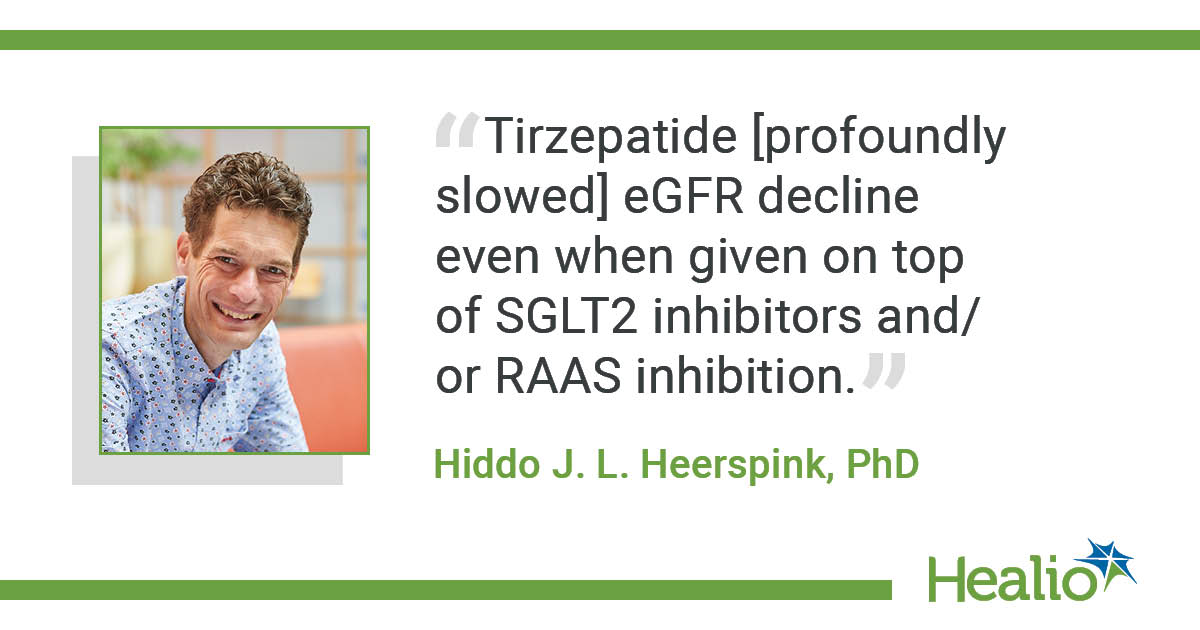
The benefit held up across several subgroups: people not already taking an SGLT2 inhibitor, those with UACR of at least 30 mg/g, and those with an eGFR below 60 mL/min/1.73 m2 all saw lower risk with tirzepatide [1]. Study presenter Hiddo J. L. Heerspink, PhD, of the University Medical Center Groningen in the Netherlands, said the finding that tirzepatide slowed eGFR decline even on top of SGLT2 inhibitors or RAAS-blocking blood pressure drugs was "the most surprising finding" [1].
Why it matters for patients
Type 2 diabetes is a leading cause of chronic kidney disease in the United States, and current guideline treatments do not fully protect the kidneys for everyone [1]. This analysis suggests tirzepatide's effects may extend beyond blood sugar control and weight loss to include the kidneys, which could matter for patients already managing both diabetes and early kidney problems [1][2].
George L. Bakris, MD, a hypertension specialist at the University of Chicago Medicine who was not involved in the study, noted that other GLP-1 drugs, including semaglutide (Wegovy) and liraglutide (Saxenda), have also been shown to reduce albuminuria, and he said the consistent pattern across these drugs points to a broader effect on inflammation tied to weight loss [1]. He raised an open question: whether tirzepatide's dual mechanism will prove better for the kidneys than GLP-1 drugs alone, something not yet known from this data [1].
Importantly, this was an exploratory, prespecified analysis rather than the trial's original primary purpose, which was to compare cardiovascular safety [1][2]. Heerspink said the findings "encourage future trials in patients with type 2 diabetes and CKD" to test tirzepatide specifically for kidney disease [1].
What happens next
Heerspink and colleagues called for dedicated clinical trials in patients with type 2 diabetes and chronic kidney disease to confirm these exploratory findings [1]. No specific trial dates were given in the sources reviewed [1][2].
Images from the sources
Sources
Semaglutides.org is for information only and is not medical advice. Always talk to a licensed healthcare provider about your own care. Some links to telehealth services are affiliate links, labeled where they appear.