American Academy of Pediatrics issues its first childhood obesity clinical practice guideline
The American Academy of Pediatrics' first childhood obesity guideline says clinicians should offer weight-loss medication to adolescents 12 and older alongside lifestyle treatment, not instead of it.
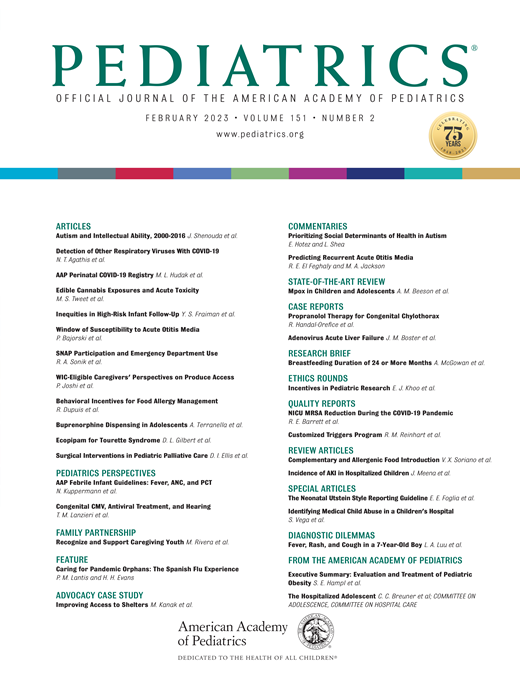
The American Academy of Pediatrics published its first clinical practice guideline on evaluating and treating children and adolescents with obesity in the February 2023 issue of its journal Pediatrics [1]. One part of that guideline, Key Action Statement 12, told pediatricians and other clinicians to offer weight-loss medication to adolescents 12 and older who have obesity, as an addition to health behavior and lifestyle treatment [1].
The guideline drew a line between two age groups. For teens 12 and up, offering pharmacotherapy is framed as something providers should do alongside behavioral treatment [1]. For children aged 8 through 11, the guideline offers only a weaker consensus recommendation that medication may be considered, again as an add-on [1]. The guideline also states plainly that no evidence supports using obesity medication by itself, without lifestyle and behavioral treatment [1].
That "adjunct" framing matters. The document devotes substantial space to intensive health behavior and lifestyle treatment, motivational interviewing, and what clinicians should do when intensive programs are not available in their community [1]. It also includes sections on health equity, racism, weight bias and stigma, and adverse childhood experiences, and separate sections on evaluating and treating obesity-related conditions [1].
What the sources do and don't say
The materials available here do not list which specific medications the guideline discusses, what age or weight thresholds apply to each drug, or how much weight children lost in the trials the authors reviewed. Those details are in the full guideline text but are not captured in the sources for this story, so they are not reported here.
The guideline is indexed by the National Library of Medicine as a practice guideline, with subject headings covering pediatric obesity diagnosis and therapy, exercise, and overweight in children and adolescents [2]. The AAP completed an independent review for bias, and one author, Dr. Barlow, disclosed a financial relationship with the Eunice Kennedy Shriver National Institute of Child Health and Human Development as a co-investigator [2].
Why it matters for patients
For families, the practical significance is that a major US pediatric medical society put obesity medication on the table for adolescents as part of routine care, rather than treating it as a last resort after years of watchful waiting. The guideline's structure suggests medication is meant to sit on top of behavioral treatment, not replace it [1].
Insurance coverage often follows professional guidelines, though the sources here do not describe how payers responded. Coverage for GLP-1 drugs in teenagers varies by plan and is not addressed in this guideline text.
The guideline also signals that children as young as 8 could be considered for medication in some cases, but with a notably weaker level of recommendation than for teens [1]. That difference in strength reflects how much less evidence exists in younger children, and it is a distinction worth understanding when a clinician raises the option.
Anyone weighing these questions for a child would need a conversation with that child's own pediatrician or specialist about benefits, side effects, monitoring, and how long treatment might continue. None of that is something a news story can answer.
What happens next
The AAP published a separate executive summary of the guideline alongside the full document [1]. In January 2024, Pediatrics published a "Statement of Correction: Obesity Clinical Practice Guideline," an erratum to the original article [2]. The content of that correction is not described in the sources available here.
The guideline also drew commentary in other journals, including a 2023 piece in MCN: The American Journal of Maternal/Child Nursing noting it as the AAP's first guidance on childhood obesity [2]. Whether the AAP has since updated or revised Key Action Statement 12 is not established by these sources.
Sources
Semaglutides.org is for information only and is not medical advice. Always talk to a licensed healthcare provider about your own care. Some links to telehealth services are affiliate links, labeled where they appear.