KFF finds 12% of US adults have ever taken a GLP-1
A KFF national poll conducted April 23–May 1, 2024 found 12% of US adults said they had ever taken a GLP-1 drug and 6% were taking one at the time, with more than half reporting trouble affording it [1].
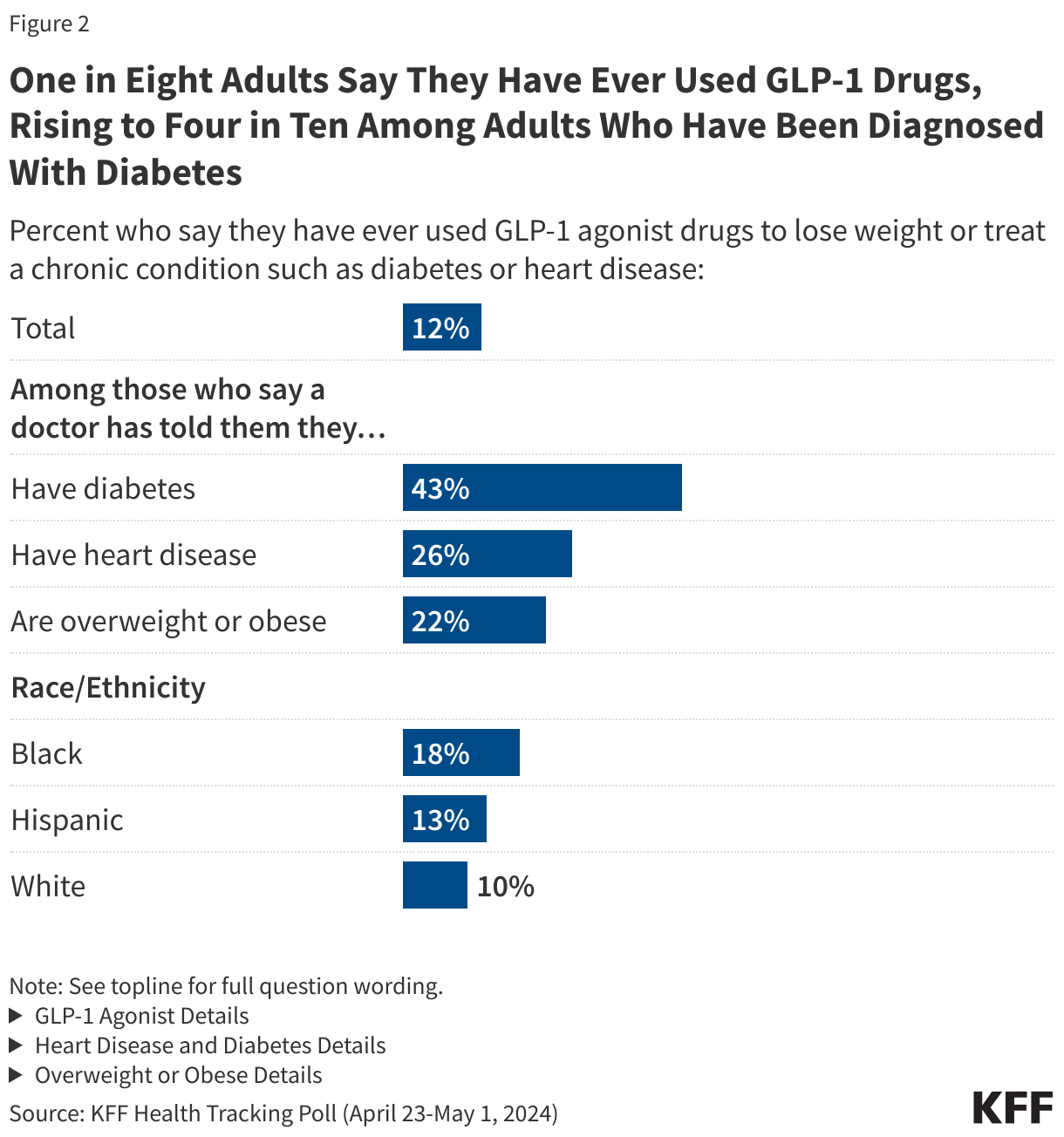
A KFF Health Tracking Poll released May 10, 2024 found that about one in eight US adults (12%) said they had ever taken a GLP-1 drug, including 6% who said they were taking one at the time of the survey [1]. The poll, fielded April 23 through May 1, 2024, among roughly 1,500 respondents, became the first widely cited national benchmark for how common these medications had become [1][2].
Use was concentrated among people with the conditions the drugs treat. Among adults who said a doctor had told them they have diabetes, 43% reported ever taking a GLP-1. That figure was 26% among adults told they have heart disease and 22% among those told in the past five years that they are overweight or obese [1]. KFF asked about the class broadly, describing it to respondents as including Ozempic, Wegovy, Mounjaro, Zepbound, Rybelsus, Trulicity and semaglutide, so the results do not break out individual brands [1].
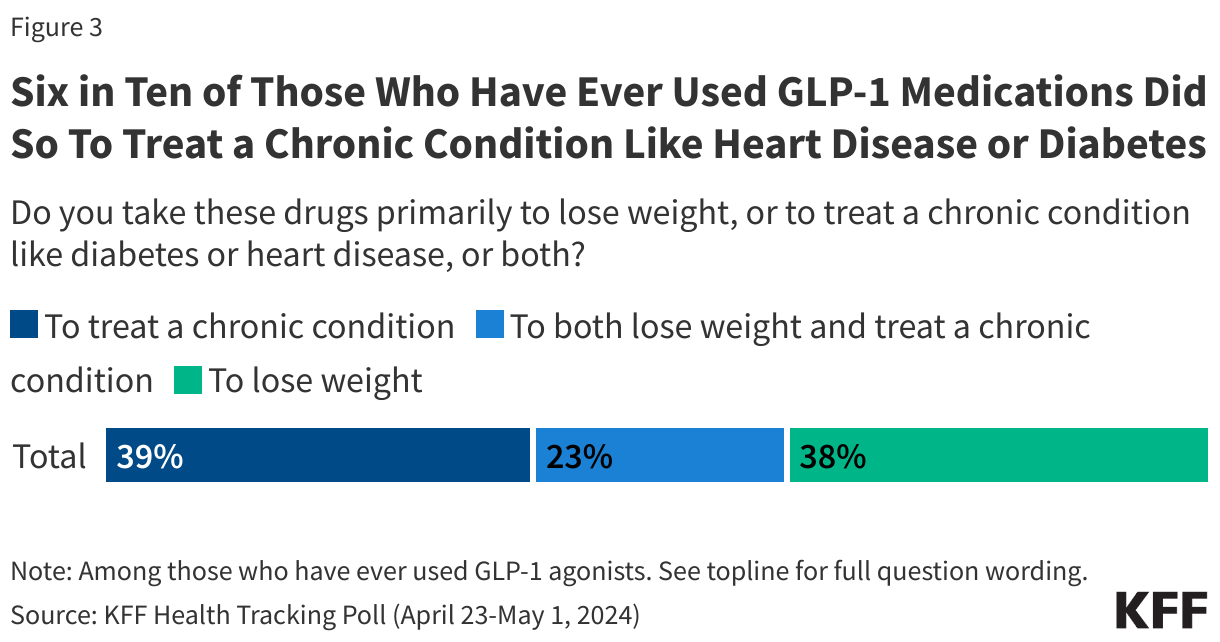
Most users were not taking the drugs only for weight loss. Among adults who had ever taken a GLP-1, 62% said they took it to treat a chronic condition such as diabetes or heart disease — 39% only for a chronic condition and 23% for both a condition and weight loss. About 38% said they used the drugs only to lose weight [1].
Cost was a problem even for insured users
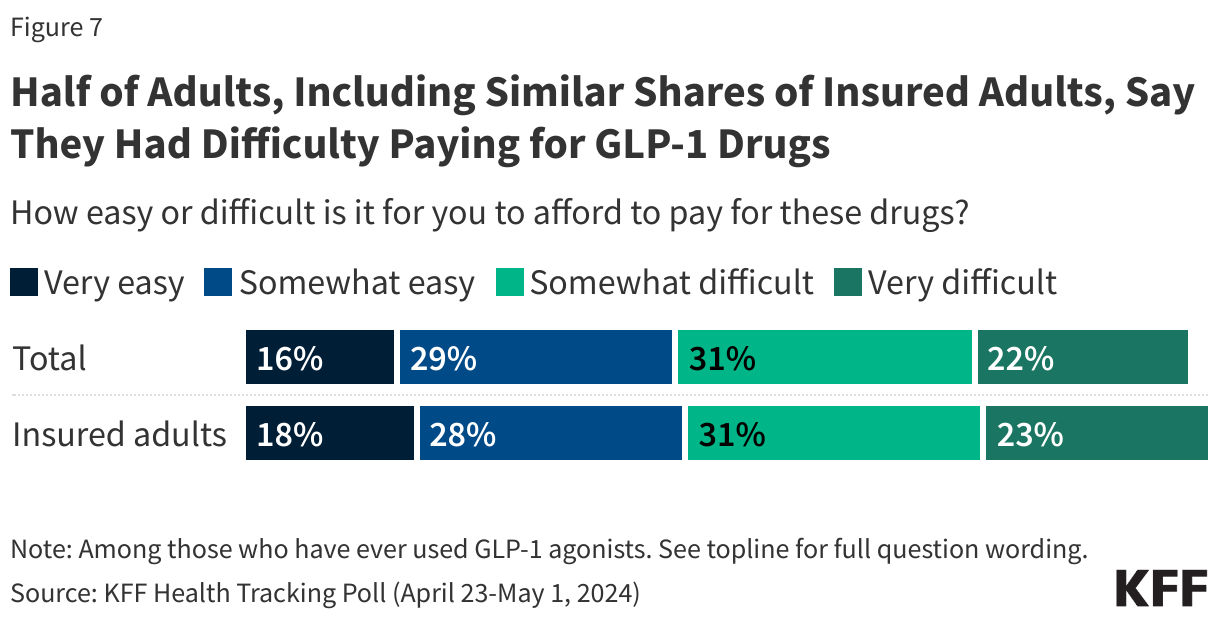
About 54% of all adults who had taken a GLP-1 said it was difficult to afford the cost, including 22% who called it "very difficult" [1]. Insurance helped but did not solve the problem: most insured adults who had taken the drugs said their plan covered at least part of the cost, yet 53% of insured users still said the cost was hard to afford [1].
Awareness rose sharply in less than a year. About 82% of adults said they had heard at least "a little" about GLP-1 drugs, and 32% said they had heard "a lot" — up from 70% and 19%, respectively, in KFF's July 2023 poll [1]. Awareness was highest among older adults: roughly four in ten adults ages 50 to 64 and 65 and older had heard "a lot," compared with 32% of those 30 to 49 and 17% of those 18 to 29 [1].
Reported use differed by race. Black adults were somewhat more likely than White adults to say they had ever taken these drugs (18% versus 10%), with 13% among Hispanic adults [1]. KFF noted that CDC data show higher obesity rates among Black and Hispanic adults than White adults [1]. Use was similar across gender, income and insurance status [1].
Why it matters for patients
The numbers put individual experiences in context. If you have found the cost hard to manage, you are in the majority of users KFF surveyed — including among people with insurance [1]. The poll also shows that the popular framing of GLP-1s as weight-loss drugs understates how they are actually used: most people who had taken them cited diabetes or heart disease, at least in part [1].
Medicare coverage stands out. Among adults 65 and older, 8% said they had taken a GLP-1 for a chronic condition but only 1% said they had ever taken one to lose weight — a gap KFF said may reflect that Medicare is prohibited by law from covering prescription drugs used for weight loss [1]. That is despite 37% of adults 65 and older saying a doctor had told them in the past five years that they are overweight or obese [1].
Public opinion ran ahead of that policy. Six in ten adults said Medicare should cover these drugs when prescribed for weight loss for people who are overweight, including more than half of Democrats, independents and Republicans, and support held up even after respondents heard arguments for and against [1].
What the poll does not tell you
These are self-reported figures from a single survey period in spring 2024, not prescription records [1][2]. The sources do not report a margin of error, do not say how long people stayed on treatment, and do not separate semaglutide from tirzepatide or older GLP-1s [1][2]. Whether the 12% and 6% figures have risen since is not addressed in these sources.
Images from the sources
Sources
Semaglutides.org is for information only and is not medical advice. Always talk to a licensed healthcare provider about your own care. Some links to telehealth services are affiliate links, labeled where they appear.