Nestlé launches Vital Pursuit for GLP-1 users
Nestlé's Vital Pursuit frozen meals, priced at $4.99 and under, were the first supermarket line built around GLP-1 users' smaller appetites and higher protein needs [3].
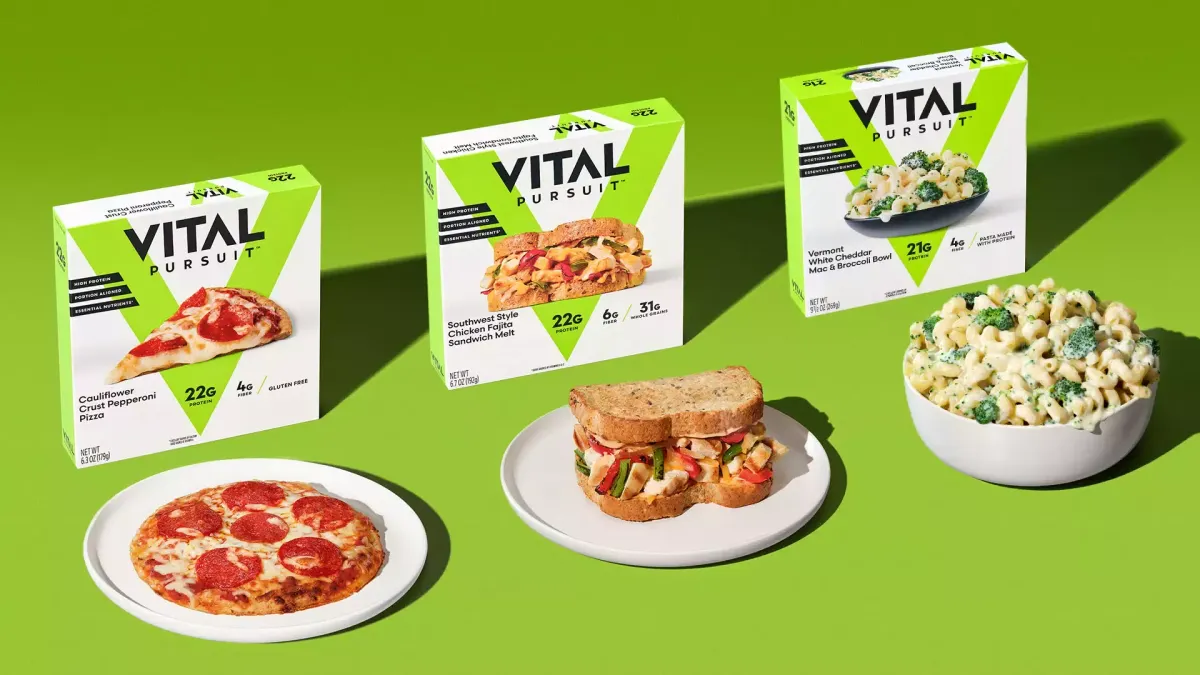
Nestlé announced Vital Pursuit in May 2024, a line of frozen bowls, sandwich melts and pizzas designed as a "companion" for people taking GLP-1 weight loss medications and others managing their weight [3]. It was the company's first major new US brand in nearly three decades, and the first time a global food giant built an entire brand around a class of prescription drugs [1][3].
The products are high in protein, a good source of fiber, contain essential nutrients such as vitamin A, potassium, calcium or iron, and are "portion-aligned to a weight loss medication user's appetite," according to Nestlé [3]. Formats include bowls with whole grains or protein pasta, sandwich melts and pizzas, with gluten-free options and several air-fryer-ready items [3]. Suggested retail price was $4.99 and under, though prices vary by retailer [3]. Nestlé said the line would reach select retailers nationwide by the fourth quarter of 2024 with 12 SKUs [3].
The business math behind the launch
Nestlé laid out the market case directly. It cited National Center for Health Statistics data that nearly half — 49% — of American adults report trying to lose weight at some point in a year, American Pharmacists Association figures that one in 60 adults were prescribed a GLP-1 in 2023, and a J.P. Morgan Research projection that US GLP-1 users could reach 30 million by 2030, roughly 9% of the population [3].
"As the use of medications to support weight loss continues to rise, we see an opportunity to serve those consumers," said Steve Presley, CEO of Nestlé North America [3]. Tom Moe, president of Nestlé USA's Meals Division, said the company would "continue to expand Vital Pursuit with more product formats" as the market evolves [3].
The pressure on food companies is measurable. A Cornell University and Numerator study found households with at least one GLP-1 user cut grocery spending by about 6% within six months of starting the medication, and spent 11% less on savory snacks [2]. A Morgan Stanley survey of 300 people taking GLP-1s found they consumed 20% to 30% fewer calories a day; about two-thirds said they had cut sugary beverages and 62% said they were drinking less alcohol [2]. Morgan Stanley estimated 24 million Americans, roughly 7% of the population, will use GLP-1s by 2035 [2].
Other companies followed. Conagra Brands added a "GLP-1 friendly" label to some Healthy Choice frozen meals, and in 2025 Danone launched an Oikos yogurt drink aimed at GLP-1 users to help build and retain muscle [1]. General Mills CEO Jeff Harmening told analysts in February 2026 that "anti-obesity drugs will have a lasting influence on the food market," and said the drugs are "nudging some consumers toward smaller portions and more nutrient-dense protein and fiber-forward foods" [1].
Why it matters for patients
GLP-1 medications like semaglutide (Ozempic, Wegovy) and tirzepatide (Mounjaro, Zepbound) suppress appetite, which means the calories a person does eat carry more nutritional weight. Food Dive notes that because of this, maximizing nutrients to help maintain muscle mass has become more important for people on these drugs [1]. That is the gap Vital Pursuit and similar products claim to address.
But a "GLP-1" label on a box is a marketing claim, not a regulated medical standard. The sources describe protein, fiber and portion size as the design features [3]; they do not report any clinical testing of Vital Pursuit meals, nor any evidence that these products improve outcomes for people on GLP-1s. That question is not answered in the available sources.
There is also skepticism inside the industry. Erin Lash, a senior director of consumer equity research at Morningstar, said food companies still question whether GLP-1s will fade like Atkins or South Beach, and noted that little is known about how long people stay on the drugs [1]. One study found 50% to 75% of people who start these medications stop within a year [1]. Conagra's Bob Nolan said the company expects customers attracted while on GLP-1s to stick around even after stopping [1].
What happens next
Nestlé said Vital Pursuit would be on shelves by Q4 2024 with 12 items and that more formats would follow [3]. Circana projected in November 2025 that households with GLP-1 users will account for more than a third of US food and beverage sales over the next five years [1].
Sources
Semaglutides.org is for information only and is not medical advice. Always talk to a licensed healthcare provider about your own care. Some links to telehealth services are affiliate links, labeled where they appear.