Real-world study links semaglutide to about half the rate of alcohol use disorder
A study of over 83,000 patients with obesity found people prescribed semaglutide were about half as likely to develop or have a return of alcohol use disorder compared with those on other weight-loss drugs, adding real-world evidence behind anecdotal reports of reduced drinking.
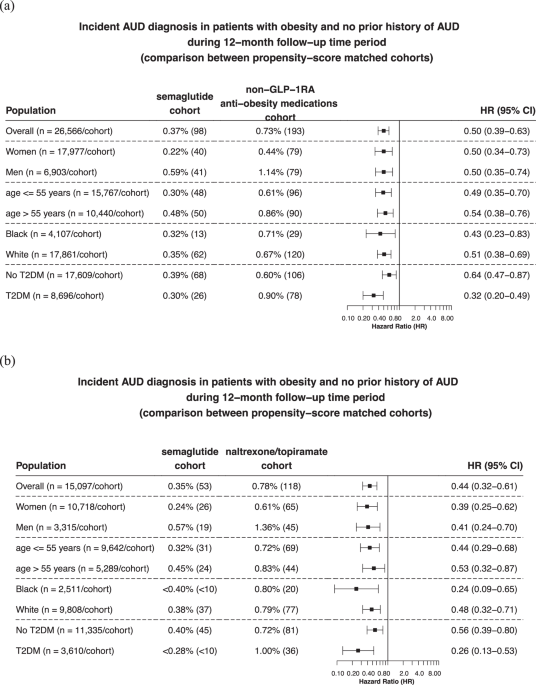
A large retrospective study published in Nature Communications found that semaglutide, the GLP-1 medicine sold as Ozempic, Wegovy and Rybelsus, was linked to roughly half the rate of new and returning alcohol use disorder (AUD) compared with other anti-obesity treatments [1]. The finding comes from an analysis of electronic health records covering 83,825 patients with obesity, and it adds weight to earlier anecdotal reports that people on semaglutide often say they want to drink less [1].
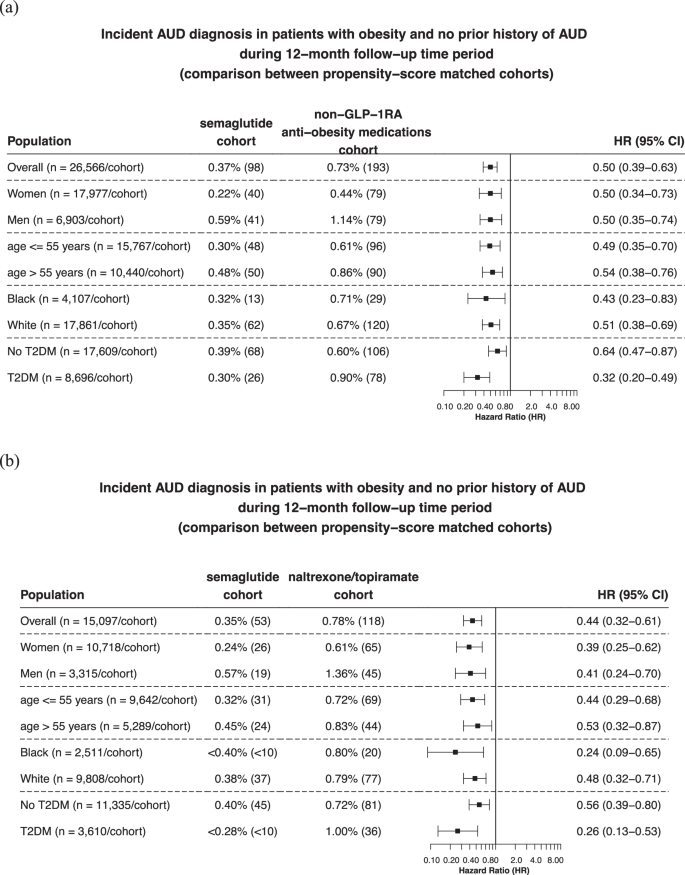
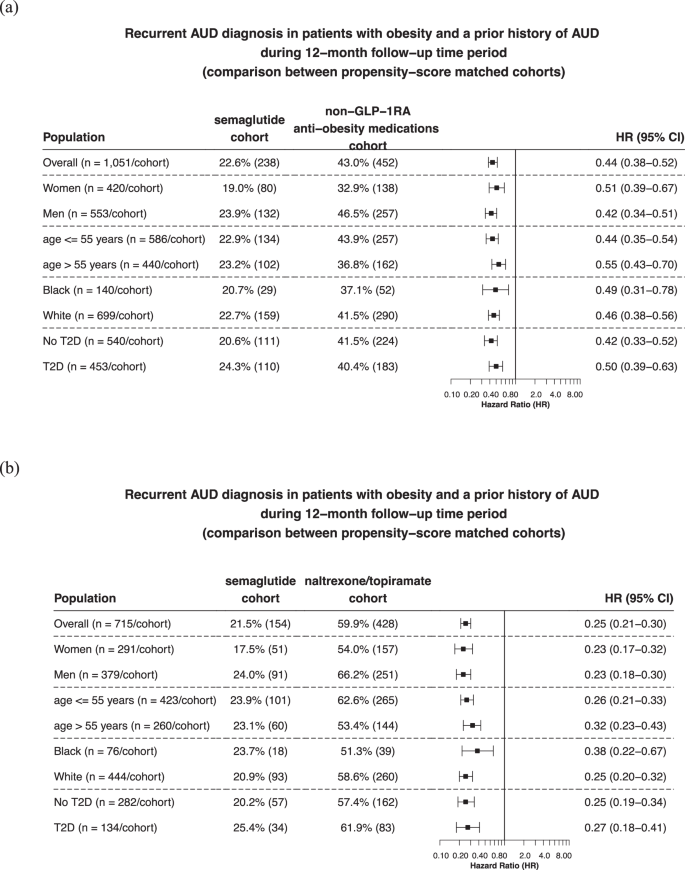
Researchers looked at patients with obesity who had no prior AUD diagnosis and were newly prescribed either semaglutide or a non-GLP-1 anti-obesity drug, including naltrexone or topiramate, between June 2021 and December 2022 [1]. After matching 26,566 patients in each group for age, sex, race and other health factors, those on semaglutide had a new AUD diagnosis rate of 0.37% versus 0.73% for the comparison group, a hazard ratio of 0.50, meaning about half the risk [1]. Compared specifically with naltrexone or topiramate, semaglutide users had a 0.35% incidence rate versus 0.78%, a hazard ratio of 0.44 [1]. The paper's summary describes the overall reduction in risk, for both new and recurring AUD, as 50% to 56% lower with semaglutide [1].
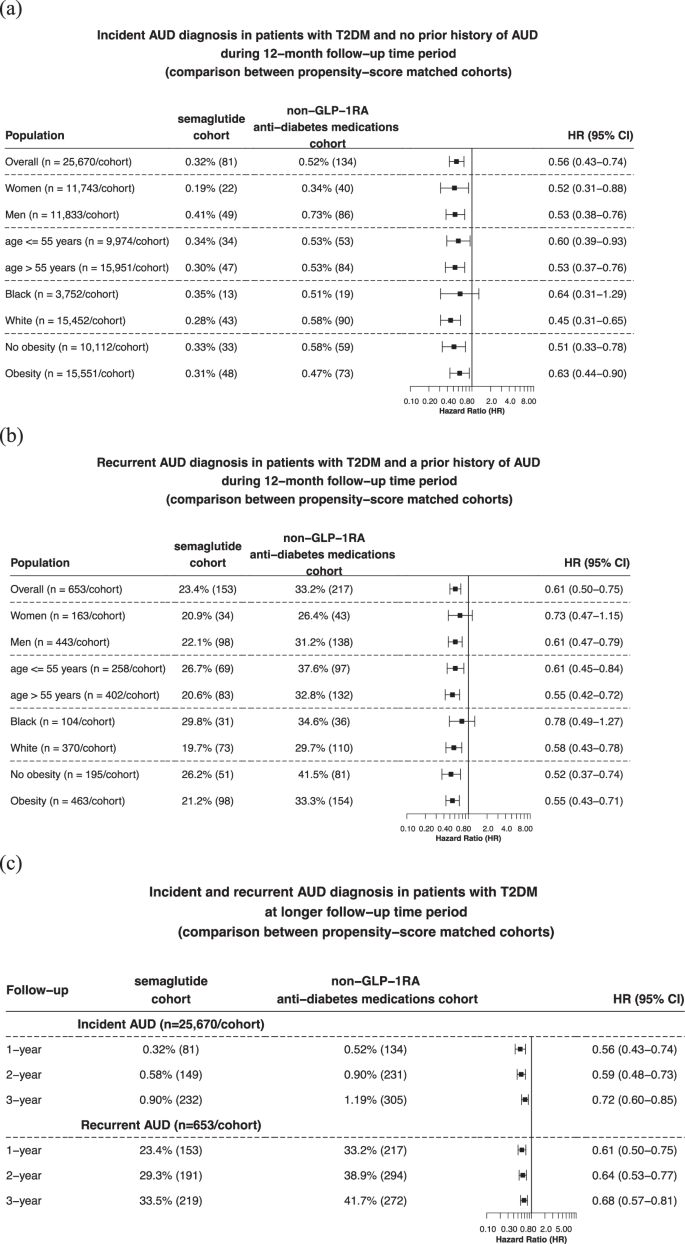
The pattern held up across different groups. The lower risk was consistent when researchers broke the data down by gender, age group, race, and whether or not patients also had type 2 diabetes [1]. The team also checked their results against a second, separate group of 598,803 patients with type 2 diabetes from a different time period and found similar results, which strengthens confidence that the association is not a fluke of one dataset [1].
The study's authors note that this is an observational analysis of existing health records, not a randomized controlled trial, and they explicitly call for randomized clinical trials to confirm whether semaglutide actually reduces alcohol use disorder or whether other factors explain the link [1]. Background research cited in the paper includes studies in alcohol-dependent rats showing semaglutide reduced drinking and relapse-like behavior, plus a small trial of a related GLP-1 drug, exenatide, in 127 people that found reduced heavy drinking days among participants with obesity [1]. An author correction to the paper was issued on June 18, 2024, though the summary conclusions were not changed [1].
Why it matters for patients
Alcohol use disorder affects an estimated 29.5 million Americans age 12 and older, about 10.6% of that population, and it contributes to more than 80,000 deaths in the US each year [1]. Only three medications are FDA-approved to treat it, and their benefits are described as modest [1]. If semaglutide's association with lower AUD risk holds up in controlled trials, it could represent a new option in a field with few effective treatments. For now, though, this remains an observational finding from insurance and health-record data, not proof that the drug treats or prevents alcohol use disorder in an individual patient. Patients weighing whether a GLP-1 drug might affect their drinking should know that this evidence is preliminary and was not the primary reason these drugs were approved for weight loss or diabetes.
What happens next
The study's authors say their real-world findings should motivate randomized controlled trials to directly test semaglutide as a treatment for alcohol use disorder [1]. No specific trial dates or results are mentioned in this paper, so it is not yet known when such trials might report results or whether regulators would consider an AUD indication for semaglutide.
Images from the sources
Sources
Semaglutides.org is for information only and is not medical advice. Always talk to a licensed healthcare provider about your own care. Some links to telehealth services are affiliate links, labeled where they appear.