SUMMIT mechanistic analysis shows less circulatory overload and less organ injury
A new analysis of the SUMMIT trial suggests tirzepatide's heart failure benefit in people with obesity comes from lowering blood volume, blood pressure and inflammation, easing strain on the heart and kidneys.
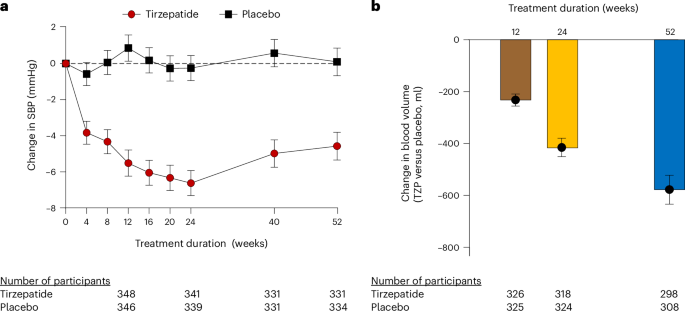
A secondary analysis of the SUMMIT trial, published in Nature Medicine, offers a possible explanation for why tirzepatide helps people with obesity-related heart failure with preserved ejection fraction (HFpEF). The drug appears to work partly by reducing blood volume and blood pressure, cooling systemic inflammation, and protecting the heart and kidneys from ongoing damage [1].
The SUMMIT trial enrolled 731 people with obesity-related HFpEF at 129 centers in nine countries, randomly assigning 364 to tirzepatide and 367 to placebo [1]. Participants had an average body mass index above 38 and a high burden of related conditions, including coronary disease and atrial fibrillation. Nearly half had been hospitalized or needed urgent care for worsening heart failure in the year before joining the trial, and 41% had elevated troponin, a marker of heart muscle injury [1].
At baseline, participants also showed signs of the disease's underlying mechanics: expanded blood volume, borderline high blood pressure, reduced kidney function (average estimated glomerular filtration rate of 55.3), and systemic inflammation, with two-thirds having elevated C-reactive protein [1].
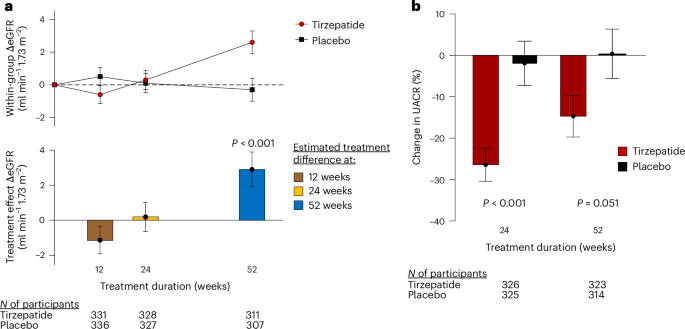
After 52 weeks, compared with placebo, tirzepatide reduced systolic blood pressure by an estimated 5 points and cut estimated blood volume by 0.58 liters, both statistically significant changes [1]. C-reactive protein, a marker of inflammation, dropped by an estimated 37.2% [1]. Kidney filtration improved, with estimated glomerular filtration rate rising by 2.90 units per year compared with placebo [1]. Urine albumin, a marker of kidney damage, fell by 25% at 24 weeks and 15% at 52 weeks, though the 52-week reduction fell just short of standard statistical significance [1]. Troponin T, the heart injury marker, dropped by 10.4% [1], and NT-proBNP, a marker tied to heart strain, fell by 10.5%, though this change did not reach statistical significance [1].
In additional exploratory analyses, the researchers found that patients whose blood volume dropped more also tended to have larger drops in blood pressure and urine albumin, along with better scores on a heart failure symptom questionnaire and longer distances walked in six minutes. Similarly, larger drops in C-reactive protein were linked to bigger troponin reductions and better walking distance [1]. These correlations do not prove cause and effect, but they point to a consistent pattern: as fluid and inflammation levels came down, so did measures of organ strain and injury, alongside improvements patients could feel.
Why it matters for patients
This analysis does not change what tirzepatide is approved to do, but it helps explain a benefit already reported from the main SUMMIT trial: fewer cardiovascular deaths or worsening heart failure events among people with obesity-related HFpEF [1]. For patients living with this combination of obesity and heart failure, the findings suggest the drug's effect on heart failure risk may be tied to reducing the physical burden of extra fluid volume and blood pressure on the heart, not just weight loss alone.
The kidney and heart injury markers tracked in this study — filtration rate, urine albumin, troponin — are used by doctors to gauge how much ongoing damage is occurring in these organs. Improvements in these measures alongside better blood pressure and less inflammation give a mechanistic picture of what may be happening inside the body, though the study describes associations from post hoc analyses, and some key changes, like the NT-proBNP reduction, did not reach statistical significance [1].
What happens next
The SUMMIT trial's data collection ran through July 2, 2024, and this mechanistic analysis has now been published [1]. The primary SUMMIT trial results on cardiovascular death and worsening heart failure were reported separately in the New England Journal of Medicine [1]. It is not yet known from these sources how or whether this mechanistic evidence will influence prescribing guidance or labeling for tirzepatide in heart failure with preserved ejection fraction.
Images from the sources
Sources
Semaglutides.org is for information only and is not medical advice. Always talk to a licensed healthcare provider about your own care. Some links to telehealth services are affiliate links, labeled where they appear.