Cornell and Numerator quantify the GLP-1 grocery effect
A Cornell–Numerator study of 2,623 GLP-1 households found grocery spending fell about 5.5% within six months of starting the drugs — roughly $416 a year — with chips, bakery and cookies dropping most.[2]
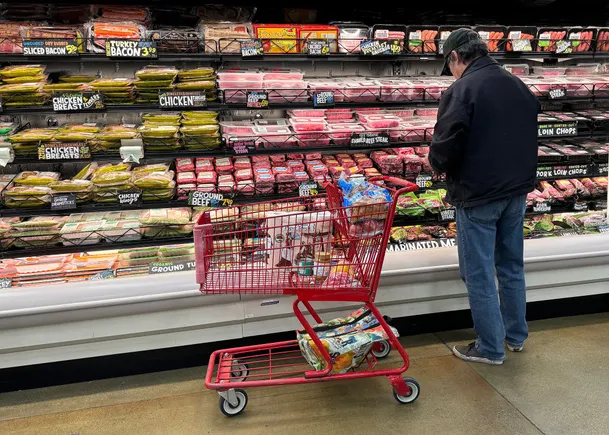
Households with at least one person using a GLP-1 medication cut their grocery spending by roughly 6% within six months of starting the drug, according to a study from Cornell University's S.C. Johnson College of Business and the consumer data firm Numerator [1][2]. The report, titled "The No-Hunger Games: How GLP-1 Medication Adoption Is Changing Consumer Food Purchases," was released Dec. 29 [2].
The two trade outlets covering the paper describe the headline number slightly differently. Food Dive reports an approximately 6% drop in grocery spending [1], while Food Business News cites a fall of "about 5.5%" six months after adoption [2]. Both agree on the dollar figure: based on average monthly grocery spending of about $630, the decline works out to a $416 annual reduction per household [2].
What the researchers measured
The study drew on Numerator's 150,000-household US consumer panel, which was surveyed about GLP-1 use in four waves between October 2023 and July 2024 [2]. From a sample of 22,712 households, researchers identified 2,623 with at least one GLP-1 user and tracked grocery purchases for six months before and six months after the person started the medication [2].
The cutbacks were not spread evenly. Looking at the 40 highest-spending grocery categories, chips, sweet bakery, side dishes and cookies showed some of the largest declines, averaging between 6.7% and 11.1% [1][2]. Food Dive cites an 11% drop in savory snacks [1]. Among people using GLP-1s specifically for weight loss, spending on chips and other savory snacks and on sweet bakery items fell by more than 10% [2]. Declines of 5% to 10% showed up across a long list that included cheese, soft drinks, meat, butter, eggs, ice cream, pasta, frozen meals and pizza, candy and chocolate, and seafood [2].
Income mattered a lot. Households earning more than $125,000 a year cut monthly grocery purchases by 8.6%, an annualized drop of $690 [2]. That was more than double the 4.2% reduction, or $270 a year, seen in households earning less than $125,000 [2].
The researchers also found that baskets got healthier mostly by subtraction, not addition. "We do not observe statistically significant increases in spending on traditionally healthier products, such as fresh produce or whole grains, across all adopters," they wrote, though weight-loss users showed "a modest increase in spending on fresh produce and yogurt" [2]. Yogurt and fresh produce were the categories least affected overall [2].
Spending patterns were "relatively similar" whether people were taking a GLP-1 for weight loss or for diabetes, and the difference between the two groups was not statistically significant [2].
Why it matters for patients
For people on or considering these drugs, the study puts a number on something many users describe anecdotally: appetite suppression shows up in the household budget, not just on the scale. A $416 average annual grocery reduction is real money, though it is a fraction of what these medications typically cost, and the study did not attempt to net the two against each other.
The pattern in the data — deep cuts to snacks, sweets and calorie-dense items, with produce and yogurt roughly flat — also raises a practical point about overall food quality. If total intake falls but the amount of nutrient-dense food does not rise, the mix improves only because the less healthy items shrink [2]. The study measured purchases, not nutrition or health outcomes, so it cannot say what that means for any individual's diet quality.
One finding is worth noting for anyone planning long term: at 12 months, the effect on grocery and restaurant spending was less pronounced than at six months, though still negative and statistically significant [2]. The researchers said this "partial reversal may be driven by factors such as compliance challenges, waning drug efficacy or measurement limitations," adding that "anecdotally, some users report that the appetite-suppressing effects weaken over time, necessitating dosage adjustments to sustain efficacy" [2]. The study was not designed to test why, so the cause is not yet known.
What happens next
Food companies are already responding. Conagra began rolling out more than two dozen Healthy Choice meals with a "GLP-1 friendly" label in January 2025, the first major food brand to name the drug class on packaging [1]. Nestlé launched a pre-meal Boost drink in December 2024 aimed at hunger suppression, after introducing its Vital Pursuit brand earlier that year [1]. Hershey CEO Michele Buck said in November that the company was seeing a "mild" impact from GLP-1s [1].
Food Dive cites nearly 15 million US adults taking GLP-1 medications, and Morgan Stanley analysts project the global obesity drug market will reach $105 billion by 2030 [1].
Images from the sources
Sources
Semaglutides.org is for information only and is not medical advice. Always talk to a licensed healthcare provider about your own care. Some links to telehealth services are affiliate links, labeled where they appear.