SURMOUNT-1 DXA sub-study puts numbers on tirzepatide lean mass loss
A DXA sub-study of 160 SURMOUNT-1 participants found tirzepatide cut body weight 21.3% and fat mass 33.9% over 72 weeks, with about 25% of the weight lost coming from lean tissue — the same share as placebo [2].
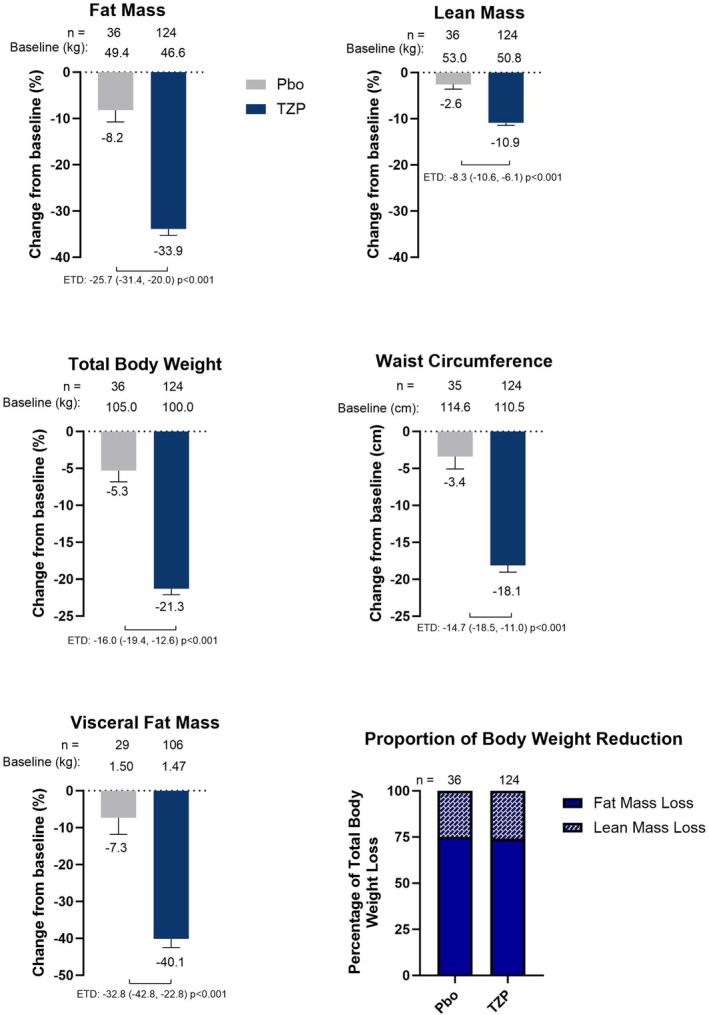
A sub-study of Eli Lilly's SURMOUNT-1 obesity trial has put specific numbers on a question many people taking GLP-1 drugs ask: how much of the weight lost is fat, and how much is muscle and other lean tissue? The analysis, published February 25, 2025 in Diabetes, Obesity and Metabolism, scanned 160 participants with dual-energy X-ray absorptiometry (DXA) at the start of the trial and again at week 72 [2][3].
Among those 160 people — 124 on pooled tirzepatide doses of 5, 10 and 15 mg and 36 on placebo — body weight fell 21.3%, fat mass fell 33.9% and lean mass fell 10.9% with tirzepatide. In the placebo group the changes were −5.3%, −8.2% and −2.6%. All comparisons were statistically significant at p < 0.001 [2][4].
The headline finding is the ratio. Of the weight lost, roughly 75% was fat mass and 25% was lean mass — and that split was the same in the tirzepatide group and the placebo group [2]. The authors note that many dietary restriction studies report the same approximate 75/25 breakdown, suggesting the much larger weight loss produced by tirzepatide did not shift the composition of that loss toward lean tissue [4].
What the sub-group data showed
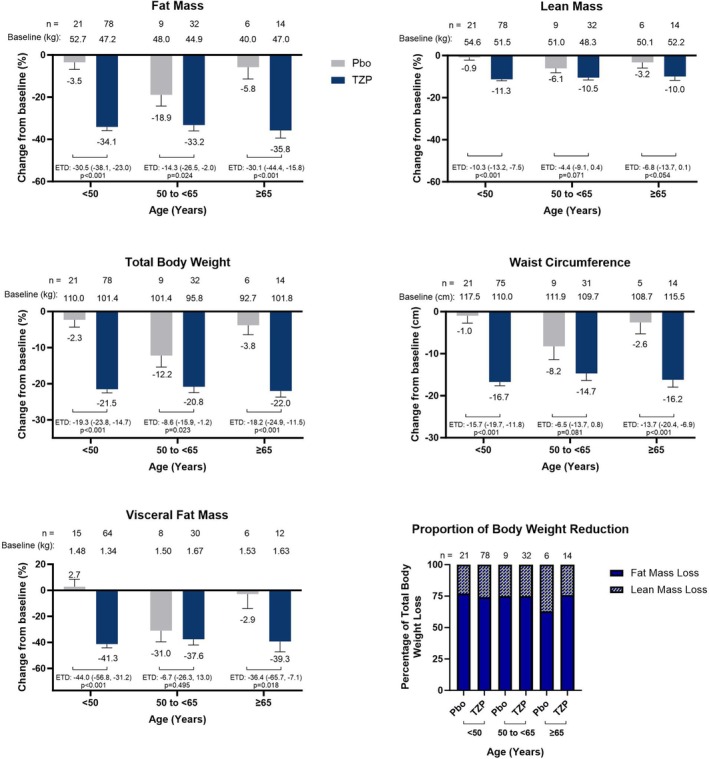
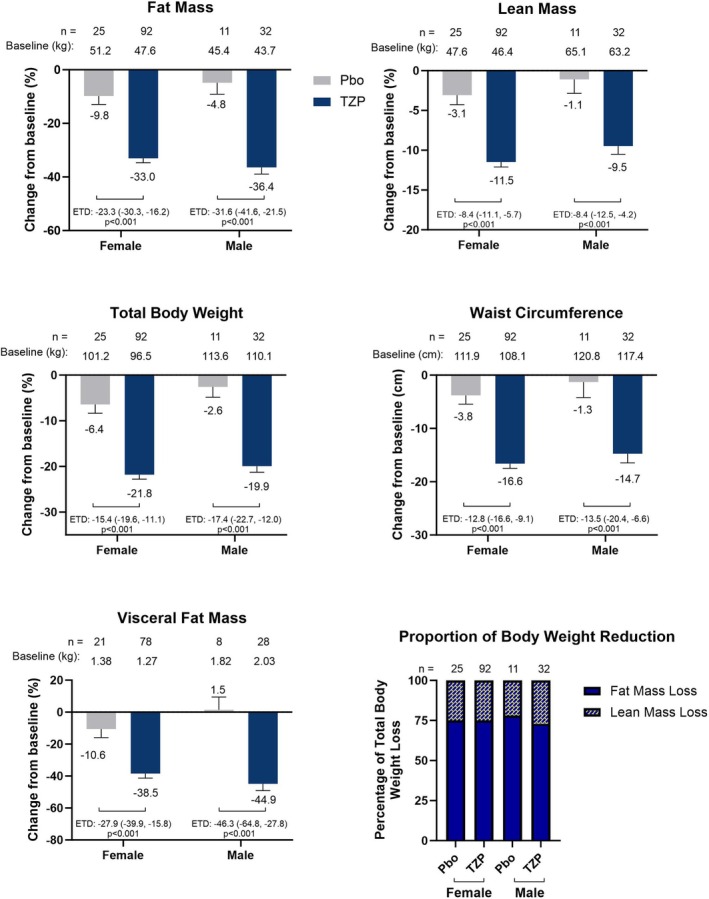
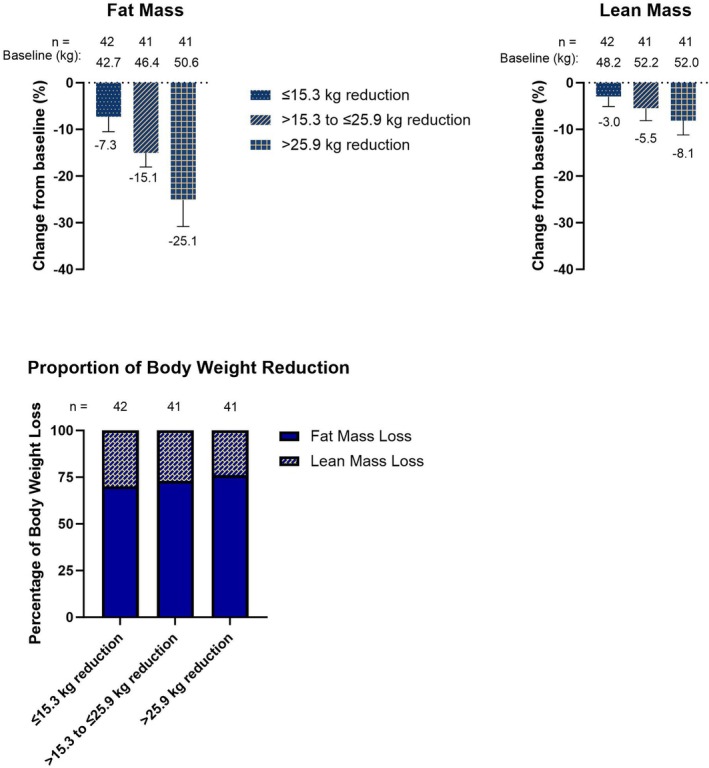
The researchers ran post hoc sub-group analyses by sex, by age (under 50, 50 to under 65, and 65 or older) and by how much total weight each person lost, split into tertiles of 15.3 kg or less, more than 15.3 up to 25.9 kg, and more than 25.9 kg [2]. The fat-to-lean proportions "remained consistent across most subgroup analyses," according to the abstract [2]. That means older participants and those who lost the most weight did not, in this dataset, appear to give up a disproportionate share of lean tissue.
Some context on the sample matters. The 160 people scanned were a small slice of the 2,539 enrolled in SURMOUNT-1; they were 73% female, with a mean baseline weight of 102.5 kg (about 226 pounds) and a mean body mass index of 38.0 kg/m² [2]. The sub-group analyses were post hoc, meaning they were not planned before the trial began, which limits how firmly conclusions can be drawn from them [2].
It is also worth noting that the placebo group in this DXA sub-study lost 5.3% of body weight, more than the −2.4% reported for placebo in the full SURMOUNT-1 trial at 72 weeks. In the main trial, tirzepatide produced mean weight changes of −16.0% at 5 mg, −21.4% at 10 mg and −22.5% at 15 mg [4].
Why it matters for patients
Lean mass includes skeletal muscle. The study's authors write that excessive loss of lean body mass, particularly muscle, may reduce physical function, muscle strength, resting energy expenditure and neuromuscular function, and may increase fatigue and injury risk [4]. That concern has driven much of the public debate about GLP-1 and GIP/GLP-1 medicines, and has spurred drug developers to test muscle-preserving add-on therapies.
This sub-study does not settle that debate, but it narrows it. It shows that at 72 weeks, tirzepatide's much larger total weight loss came with proportionally the same lean-mass share as placebo-level weight loss [2]. What the published abstract does not report is whether participants' strength, walking speed, or physical function changed — DXA measures tissue mass, not what that tissue can do. Those functional outcomes are not reported in the available material. Neither is what happens to body composition beyond week 72, or after someone stops the medication.
One more disclosure point: most of the study authors are employees and shareholders of Eli Lilly and Company, which makes tirzepatide (sold as Mounjaro for type 2 diabetes and Zepbound for weight management), and two outside authors report consulting or speaking fees from Lilly and other companies [1].
What happens next
The paper appeared in volume 27, issue 5, pages 2720–2729 of Diabetes, Obesity and Metabolism [2]. A correction was published on August 20, 2025 in volume 27, issue 11, page 6823; the sources available do not describe what was corrected, and no abstract accompanies the correction notice [1][3]. Anyone weighing what these numbers mean for their own care would need to discuss it with their clinician.
Images from the sources
Sources
Semaglutides.org is for information only and is not medical advice. Always talk to a licensed healthcare provider about your own care. Some links to telehealth services are affiliate links, labeled where they appear.