Bimagrumab plus semaglutide produced 22.1% weight loss with less lean mass loss in BELIEVE trial
A mid-stage trial suggests an activin-pathway drug can blunt the muscle loss that comes with GLP-1 weight loss, but the combination is not approved and no timeline for patients was disclosed.
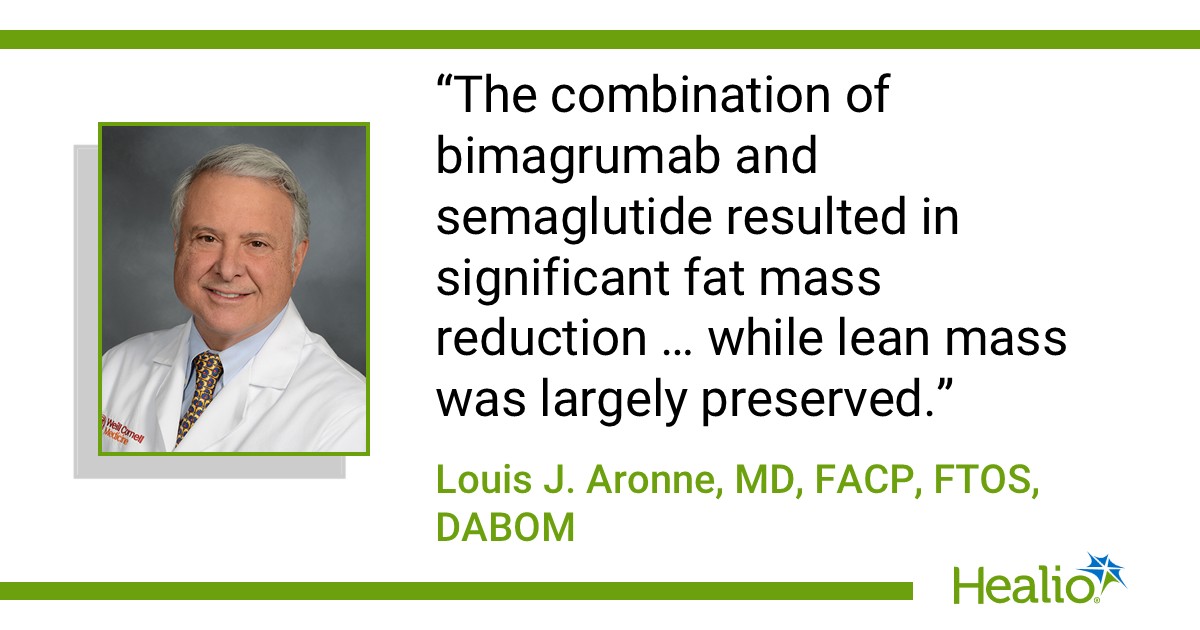
Adding the experimental drug bimagrumab to semaglutide helped adults with overweight or obesity lose 22.1% of their body weight over 72 weeks, with much less of that loss coming from lean muscle than with semaglutide alone, according to results of the phase 2b BELIEVE trial presented June 23, 2025 at the American Diabetes Association Scientific Sessions in Chicago [1][2].
In the highest-dose groups, people taking bimagrumab 30 mg/kg plus semaglutide 2.4 mg (Wegovy) lost 22.1% of body weight, compared with 15.7% for semaglutide 2.4 mg alone and 10.8% for bimagrumab alone [2]. Lean mass fell 7.4% with semaglutide alone but only 2.9% with the combination, while bimagrumab alone produced a 2.5% gain in lean mass [1][2].
How the trial was designed
BELIEVE was a randomized, double-blind, placebo-controlled, multicenter study in 507 adults with overweight or obesity [1][2]. Participants were assigned to one of nine groups: placebo; bimagrumab 10 mg/kg or 30 mg/kg; semaglutide 1 mg (Ozempic) or 2.4 mg (Wegovy) plus placebo; or one of four combinations of the two drugs [2]. Bimagrumab was given as an intravenous infusion at weeks 4, 16, 28 and 40, and semaglutide as a once-weekly subcutaneous injection [1]. The main treatment period ran 48 weeks, followed by a 24-week extension in which everyone stayed on their regimen except the placebo and bimagrumab 10 mg/kg groups, which were switched to bimagrumab 30 mg/kg [2].
Bimagrumab is a monoclonal antibody that blocks activin type II receptors, including signaling by myostatin, which normally limits muscle growth [1][2]. Louis J. Aronne, MD, of Weill Cornell Medicine, said during a press conference that the drug does not suppress appetite and works differently from semaglutide [2]. Steven Heymsfield, MD, of Pennington Biomedical Research Center, is the lead author [1].
What the 72-week results showed
For bimagrumab 30 mg/kg, semaglutide 2.4 mg and the combination, respectively, the trial reported [2]:
- Body fat mass fell 28.5%, 27.8% and 45.7%.
- Visceral fat fell 45.1%, 35.8% and 58.2%.
- Waist circumference fell 13.3 cm, 14.7 cm and 21.7 cm.
- High-sensitivity C-reactive protein, a marker of inflammation, fell 70.1%, 59.1% and 83.4%.
- The share of weight loss that came from fat was 100%, 71.8% and 92.8%.
- The share of patients losing at least 30% of their fat mass was 50%, 36.4% and 94%.
The ADA notes that lean body mass can account for up to 15% to 40% of total weight loss with GLP-1 therapies [1]. On lipids, total cholesterol rose 10.1% with bimagrumab alone, fell 4.4% with semaglutide alone and fell 2.1% with the combination; triglycerides rose 2.3% with bimagrumab alone, fell 21% with semaglutide alone and fell 25.2% with the combination [2].
Common side effects included muscle spasms, diarrhea and acne with bimagrumab, and nausea, constipation and fatigue with semaglutide [2]. Aronne said there were no serious adverse cardiac events [2]. The study was funded by Versanis Bio, which Eli Lilly acquired during the trial [2]. Aronne reported consulting for and receiving research support from Eli Lilly and Novo Nordisk; Heymsfield reported no relevant financial disclosures [2].
Why it matters for patients
Muscle loss is a recognized concern with GLP-1 weight loss, and the results suggest the activin pathway can be targeted alongside an incretin drug. But bimagrumab is not an approved medicine, and in this trial it was delivered by IV infusion, not the weekly injection form most GLP-1 users know [1][2]. Whether preserving lean mass translates into differences in strength, physical function, falls or other health outcomes has not been reported. As a phase 2b study, BELIEVE was not designed to show whether the combination reduces heart, kidney or other complications. Cost, insurance coverage and availability timelines have not been disclosed.
What happens next
A 32-week treatment withdrawal period is still running, and Aronne said the hope is to see better maintenance of weight loss during it [2]. A trial combining bimagrumab with tirzepatide (Mounjaro, Zepbound) is underway, and future bimagrumab studies will use a subcutaneous injection instead of IV infusion [1][2]. No dates or results from those studies have been reported.
A separate presentation on June 22 described a proof-of-concept continuous protein sensor from Biolinq, designed to detect phenylalanine as a marker of muscle breakdown or protein intake; the next phase is clinical trials in real-world settings [1].
Sources
Semaglutides.org provides information only, not medical advice. Talk to a licensed provider about your own care before making changes. Some telehealth links are affiliate links and are labeled where they appear.