Pilot study finds tirzepatide raised testosterone and improved erectile function in men with obesity
A small, non-randomized two-month study suggests tirzepatide may improve testosterone and erectile function in men with obesity-related low testosterone, though effects on fertility remain untested.
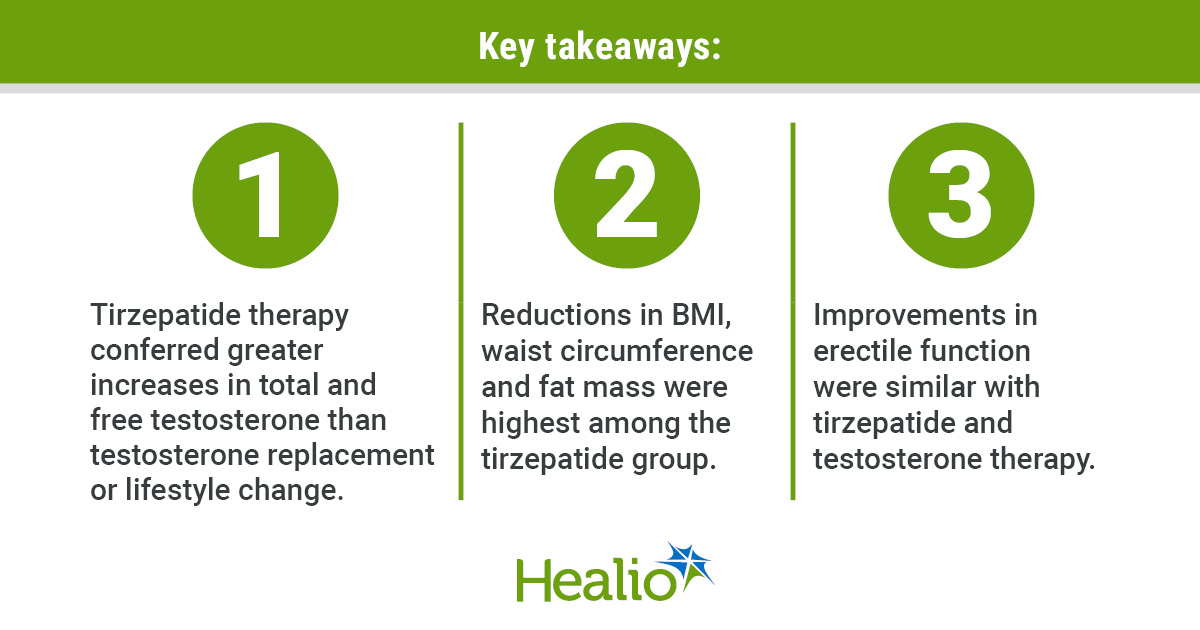
A two-month pilot study of 83 men with obesity and low testosterone found that those given tirzepatide had greater weight loss and larger increases in several reproductive hormones than men treated with lifestyle changes alone or with transdermal testosterone, with erectile function improving more than with lifestyle changes alone [1][2].
The results were published July 2, 2025, in the journal Reproductive Biology and Endocrinology and were presented at ENDO 2025, held July 12 to 15 in San Francisco [1][2].
The study enrolled men in Italy with metabolic hypogonadism, a condition in which low testosterone is tied to excess weight and insulin resistance [1]. To qualify, men had to have a body mass index between 30 and 39.9 kg/m2, a waist circumference above 94 cm, severe erectile dysfunction on the five-item International Index of Erectile Function (IIEF-5) that had not improved with treatment in the previous three months, total testosterone below 12 nmol/L, normal-to-low gonadotropin levels, reduced sex hormone-binding globulin, and an insulin-resistance index above 2.5 [2]. Their average age was 55.3 years [1].
All 83 men followed a low-calorie diet and walked briskly for 20 minutes a day [1]. They were split into three groups: 28 men took tirzepatide, at 2.5 mg weekly for the first month and 5 mg weekly afterward; 30 men made lifestyle changes only; and 25 men applied 60 mg of transdermal testosterone every other day [1][2]. Tirzepatide is sold as Zepbound by Eli Lilly for obesity [2].
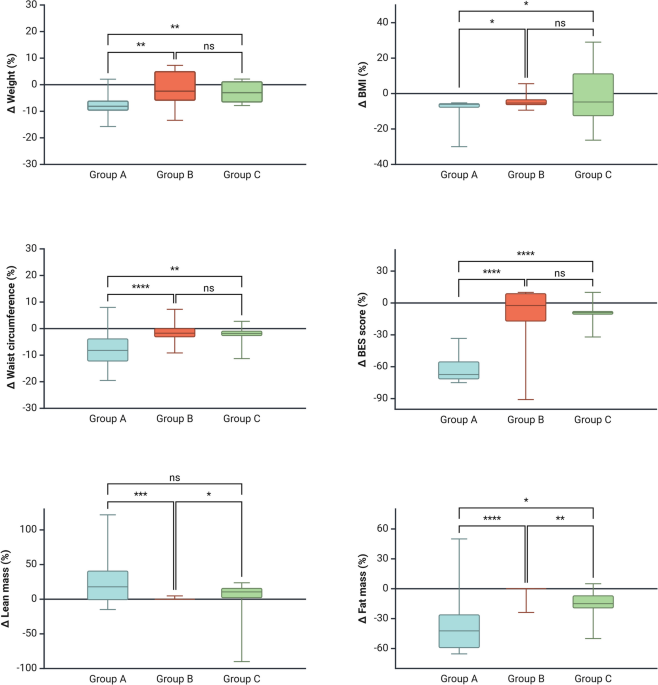
After two months, the tirzepatide group had significantly greater reductions in body weight, waist circumference, fat mass and binge-eating scores, and a greater increase in lean mass, than either of the other two groups [1]. That group also had significantly higher blood levels of luteinizing hormone, follicle-stimulating hormone, sex hormone-binding globulin, total testosterone, free testosterone and bioavailable testosterone, and lower estradiol, than the other two groups [1]. The published abstract reports the direction and statistical significance of those changes but does not list the numeric hormone values.
On erectile function, IIEF-5 scores rose significantly more in the tirzepatide group than in the lifestyle-only group, while the increase was similar between the tirzepatide and testosterone groups [2].
The study has important limits. It was a pilot, patients were allocated to a group by preference rather than randomly, and the groups were not identical at the start: waist circumference was higher in the lifestyle-only group, while binge-eating scores, lean mass and luteinizing hormone levels were higher in the tirzepatide group [1]. Two months is a short follow-up, and the trial did not test sperm parameters or track whether the hormone changes lasted.
Rossella Cannarella, MD, PhD, an endocrinologist at the University of Catania in Italy, said in the presentation that the drug's effect reached beyond weight loss. "The presence of hypogonadism, or low testosterone, was reversed in all patients that were treated with tirzepatide, which was really a remarkable finding," she said [2]. She added that higher gonadotropin levels could make this kind of treatment "a nice choice in patients looking for fatherhood ... but this needs to be tested by looking at the impact on the sperm parameters in this patient population" [2].
Why it matters for patients
Low testosterone is common in men with obesity, and it is often treated with testosterone replacement. This study compared tirzepatide against both testosterone replacement and lifestyle change alone over a short period, and the tirzepatide group came out ahead on weight, body composition and most hormone measures [1][2]. For men who want to preserve or improve fertility, the finding that gonadotropins rose with tirzepatide is notable, but it is not yet known whether that translates into better sperm measures or more pregnancies [2].
The results do not establish that tirzepatide should replace testosterone therapy, and no guidance or approval has changed based on this pilot. The researchers did not report whether the hormone improvements persisted after the two months, whether sexual function stayed better, or how the drug compares with testosterone over a longer period. Costs, insurance coverage and access were not addressed [1][2].
What happens next
The findings were presented at ENDO 2025, which ran July 12 to 15 in San Francisco, and published as an abstract-level report in Reproductive Biology and Endocrinology [1][2]. Cannarella said the effect on sperm parameters still needs to be tested [2]. No larger trial, follow-up study or timeline for one has been disclosed in these reports.
Images from the sources
Sources
Semaglutides.org provides information only, not medical advice. Talk to a licensed provider about your own care before making changes. Some telehealth links are affiliate links and are labeled where they appear.