CDC reports 26.5% of US adults with diagnosed diabetes used GLP-1 injectables in 2024
A new CDC report finds 26.5% of US adults with diagnosed diabetes, or about 6.9 million people, used injectable GLP-1 drugs in 2024, with use highest among those ages 50 to 64.
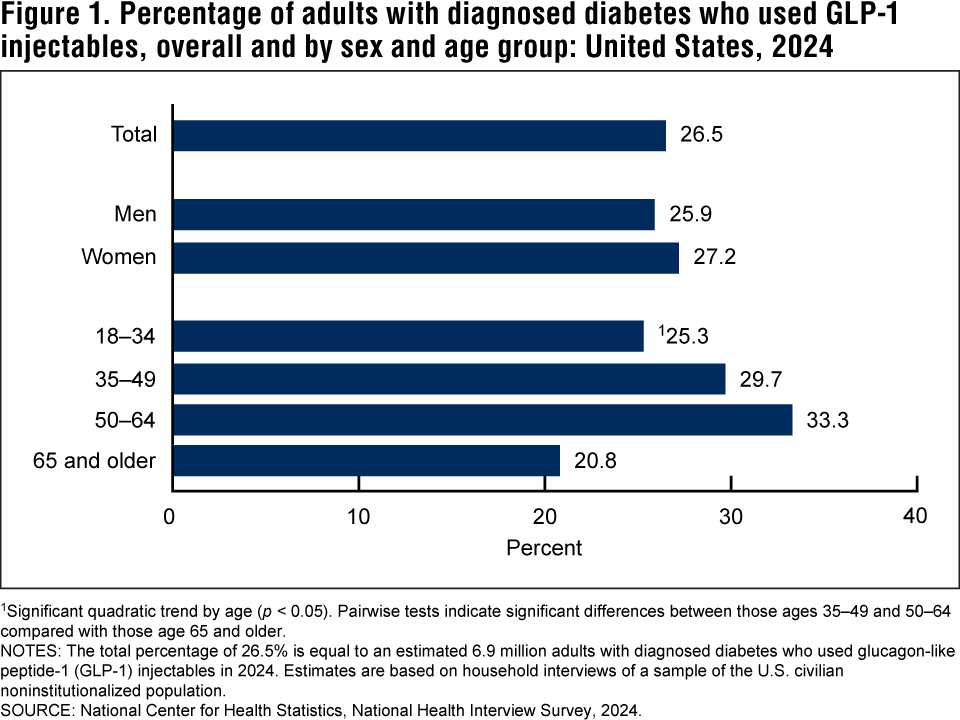
The Centers for Disease Control and Prevention's National Center for Health Statistics reported that 26.5% of adults with diagnosed diabetes used a GLP-1 injectable medication in 2024, translating to an estimated 6.9 million people [1][2]. The figure, drawn from the 2024 National Health Interview Survey, is the first federal benchmark of its kind for this group [1].
Use varied sharply by age. It rose from 25.3% among adults ages 18 to 34 to a peak of 33.3% among those ages 50 to 64, then fell to 20.8% among adults 65 and older [1][2]. There was no significant difference between men (25.9%) and women (27.2%) [1].
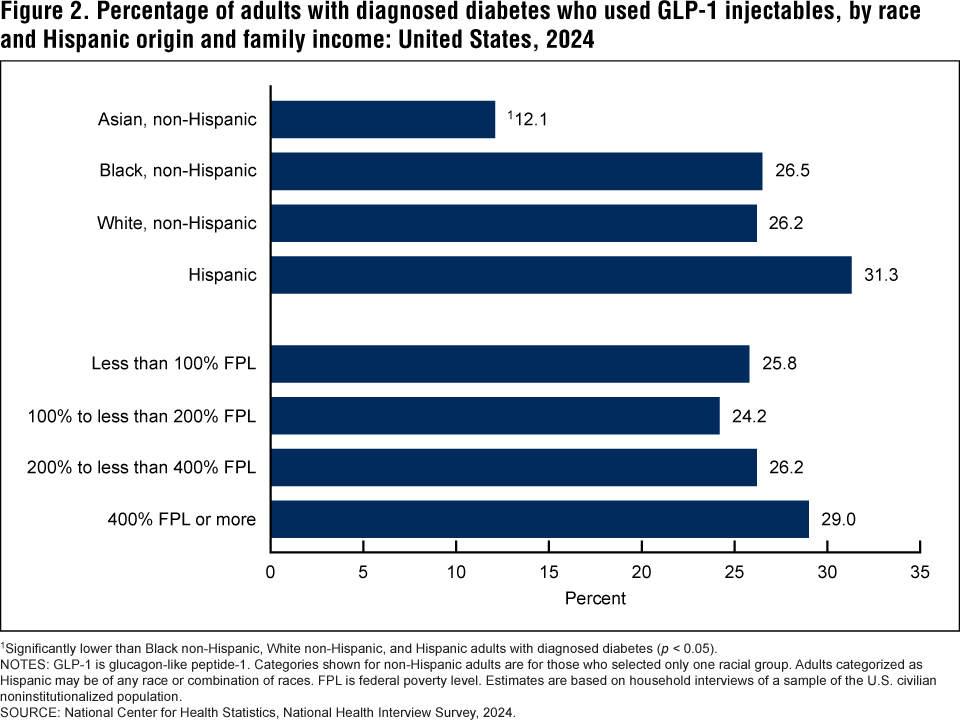
Race and ethnicity also mattered. Hispanic adults with diagnosed diabetes had the highest use, at 31.3%, followed by Black non-Hispanic adults (26.5%) and White non-Hispanic adults (26.2%). Asian non-Hispanic adults had notably lower use, at 12.1%, a rate significantly lower than the other three groups [1]. Differences by family income were not statistically significant, ranging from 24.2% among those with incomes at 100% to less than 200% of the federal poverty level to 29.0% among those at 400% of the poverty level or above [1].
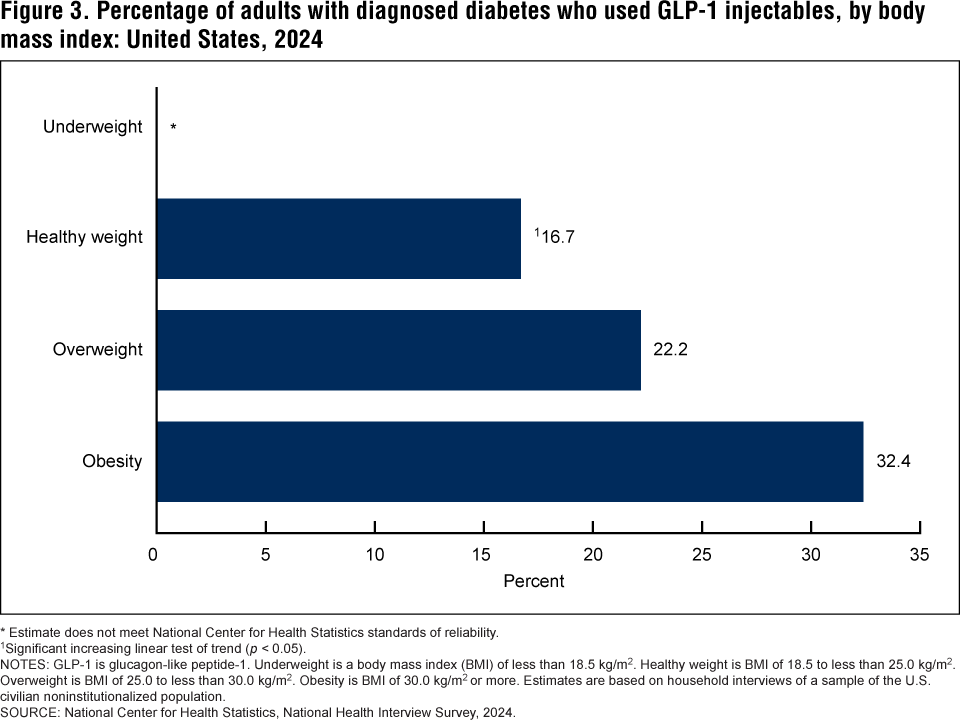
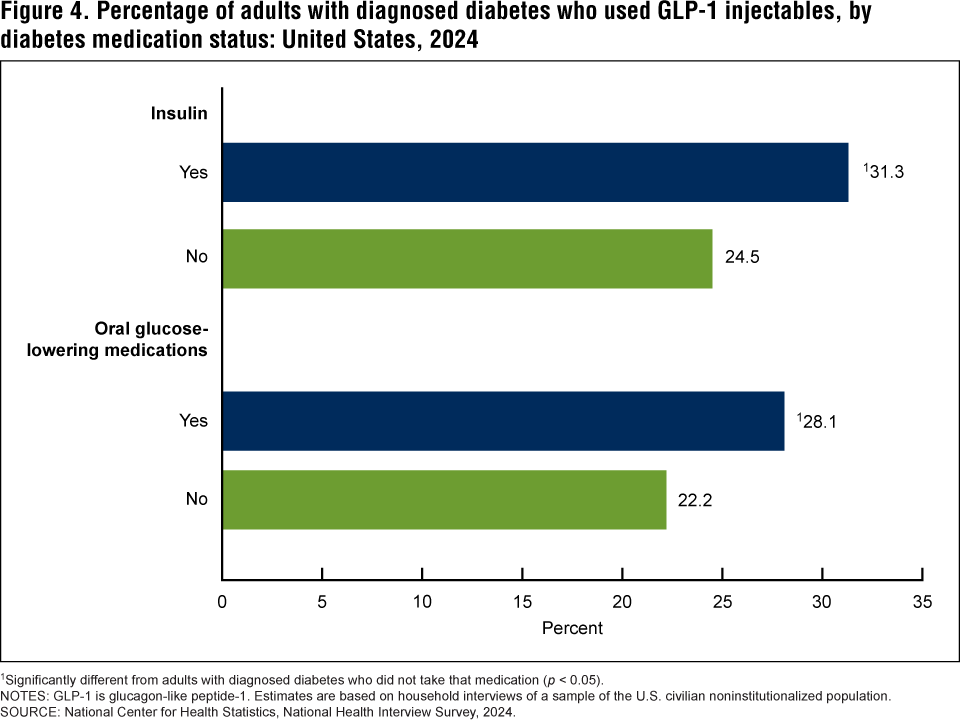
Body weight was linked to use as well. Among adults with diagnosed diabetes, 16.7% of those at a healthy weight used a GLP-1 injectable, compared with 22.2% of those classified as overweight and 32.4% of those with obesity, a significant increasing trend [1][2]. The report also found that people already taking insulin (31.3%) or oral glucose-lowering medications (28.1%) were more likely to also use a GLP-1 injectable than those not on those medications (24.5% and 22.2%, respectively) [1][2].
The survey counted someone as a GLP-1 injectable user if they had diabetes and answered yes to using an injectable medication other than insulin to lower blood sugar or lose weight; interviewers could name examples including Ozempic, Wegovy, Saxenda, Victoza, Trulicity, Mounjaro, and Byetta [2]. The report notes this growth builds on earlier trends: a separate analysis of Medical Expenditure Panel Survey data found a 155% increase in GLP-1 use among adults with type 2 diabetes, from 7.6% in 2018 to 19.4% in 2022, while spending on GLP-1 medications rose more than 500% from 2018 to 2023 based on retail and mail-order prescription data [2].
Why it matters for patients
This report gives patients and clinicians a national reference point for how common GLP-1 injectable use already is among people with diagnosed diabetes, rather than relying on sales figures or anecdotes. Knowing that roughly one in four adults with diabetes used these drugs in 2024, and one in three among the 50-to-64 age group, helps put an individual's own treatment path in context [1].
The report also highlights gaps that patients may want to be aware of. Asian non-Hispanic adults with diagnosed diabetes had less than half the usage rate of other racial and ethnic groups, a difference the report calls statistically significant, though the data brief does not explain the cause [1]. Because the survey relies on self-report and cannot separate whether a person is using a GLP-1 injectable for blood sugar control, weight loss, or both, patients should understand this is a broad usage snapshot rather than a breakdown of specific medical reasons for use [2].
What happens next
The data brief does not include forward-looking projections or scheduled follow-up reports. It draws on the 2024 National Health Interview Survey and references prior analyses covering 2018 through 2023, meaning any future comparison would depend on subsequent NHIS survey cycles or other federal data releases not yet described in this report [1][2].
Images from the sources
Sources
Semaglutides.org is for information only and is not medical advice. Always talk to a licensed healthcare provider about your own care. Some links to telehealth services are affiliate links, labeled where they appear.