Obesity Pillars publishes the most concrete US nutrition numbers for GLP-1 therapy
A narrative review in the Obesity Medicine Association's journal lays out specific protein, fluid and fiber targets for people taking GLP-1 drugs, and says many patients get no nutrition advice at all.
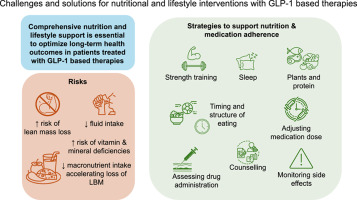
A narrative review published in Obesity Pillars, the open-access journal of the Obesity Medicine Association, has put concrete nutrition numbers next to GLP-1 based therapies such as semaglutide (Ozempic, Wegovy, Rybelsus) and tirzepatide (Mounjaro, Zepbound). The paper, by Angela Fitch, Linda Gigliotti and Harold Edward Bays, appears as article 100205 in Volume 16 and is published by Elsevier on behalf of the Obesity Medicine Association [1].
The review's blunt starting point is a gap in care. Despite what the authors call the "impressive weight reduction capabilities" of GLP-1 based therapies, "many patients on GLP-1 based therapies do not receive appropriate nutrition advice and struggle to maintain their weight reduction" [1]. These drugs are approved as an adjunct to a reduced-calorie diet and increased physical activity, but the review argues that the diet half of that instruction is often left vague or skipped entirely [1].
The numbers the review puts on the table
Against that backdrop, the authors set out targets a clinician or patient can actually act on: protein of 1 to 1.5 grams per kilogram of body weight per day; fluid intake above 2 to 3 liters per day, with the caveat that GLP-1 therapy may blunt the sensation of thirst; and fiber of 21 to 25 grams per day for women and 30 to 38 grams per day for men [1]. The review also points to structure rather than just content — regular eating schedules with planned portions — and suggests limiting high-fat and spicy foods, which are common triggers for the nausea, reflux and stomach discomfort that accompany these medicines [1].
The protein target is tied to the review's central clinical worry: body composition. The authors flag the impact of rapid weight reduction on muscle mass and the risk of sarcopenic obesity, meaning a person can end up with a lower body weight but too little muscle to support daily function [1]. Their recommendation pairs increased protein intake with resistance training, not protein alone, for preserving muscle [1].
Nutrition is only one piece. The review frames good GLP-1 care as comprehensive lifestyle counselling that is patient-centered and built around adequate macronutrients, micronutrients and fluid, plus attention to mental health, sleep hygiene, physical activity, and medication adherence and persistence [1]. It calls on physicians to work with dietitians and other healthcare providers rather than handle nutrition alone, and says evidence-based nutrition guidelines help keep advice consistent across clinicians [1].
Why it matters for patients
Most people starting a GLP-1 medication get a dose schedule and a warning about nausea. Far fewer get a number for how much protein or water to aim for. This review is one of the first widely available documents in the US to attach specific figures to that advice in the context of GLP-1 therapy [1].
The thirst point is practical. If the medication reduces how thirsty a person feels, normal cues may no longer track actual fluid needs, which matters more when appetite and total intake are already down [1]. The fiber ranges matter for a different reason: constipation is a familiar complaint on these drugs, and fiber and fluid work together.
The muscle issue is the one with the longest tail. Weight on the scale does not distinguish fat from lean tissue, and the review's framing suggests that what a person eats and whether they do resistance training can change the composition of the weight they lose [1].
It is worth being clear about what this paper is and is not. It is a narrative review — a structured summary of existing literature — not a randomized trial, and not a formal clinical practice guideline [1]. The authors describe their methods as exploring and summarizing existing evidence on nutrition intake challenges in people with obesity taking GLP-1 based therapies [1]. Narrative reviews do not report new patient outcomes, and the sources here do not say how the specific gram targets were derived or whether following them improves long-term results. That remains untested in this publication.
What happens next
The article is dated to the December 2025 issue of Obesity Pillars and is available open access under a Creative Commons license, meaning patients and clinicians can read the full text without a subscription [1]. Whether professional societies fold these specific figures into formal guidance is not addressed in the available source. Nothing here changes labeling, coverage or prescribing rules for semaglutide, tirzepatide or any other GLP-1 medication.
Sources
Semaglutides.org is for information only and is not medical advice. Always talk to a licensed healthcare provider about your own care. Some links to telehealth services are affiliate links, labeled where they appear.