Gallup reports the US obesity rate falling to 37.0% as GLP-1 use hits 12.4%
Gallup says US adult obesity fell from 39.9% in 2022 to 37.0% in 2025 — about 7.6 million fewer adults — while 12.4% of adults now say they take a GLP-1 for weight loss.
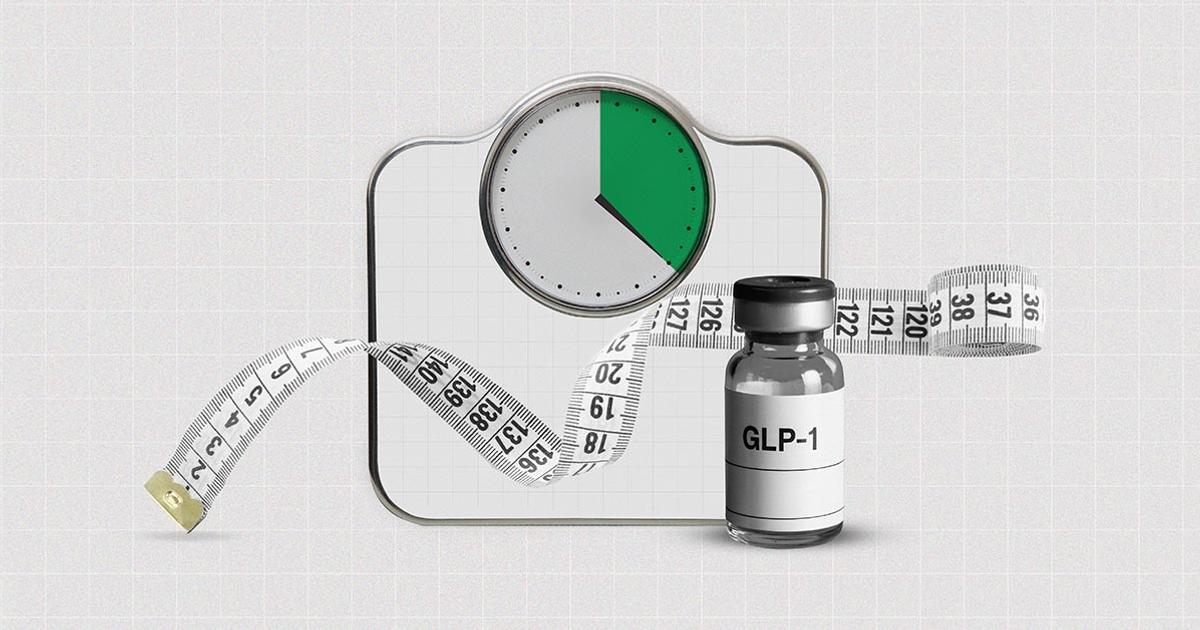
Gallup's 2025 survey wave found the US adult obesity rate at 37.0%, down from a record 39.9% in 2022. Gallup calls that a statistically meaningful drop that works out to roughly 7.6 million fewer adults with obesity than three years ago [1]. Over the same stretch, the share of adults who say they take a GLP-1 medication specifically for weight loss more than doubled, reaching 12.4% [1].
The numbers come from the Gallup National Health and Well-Being Index, based on three nationally representative web surveys of 16,946 US adults in the first three quarters of 2025, conducted through the probability-based Gallup Panel [1]. A Statista summary of the same data describes it as surveys of more than 15,000 adults in mid-to-late 2025 [2].
One caveat Gallup names directly: obesity here is calculated from self-reported height and weight, using the federal standard of a body mass index of 30 or higher. A "vanity effect" in how people describe themselves likely makes Gallup's estimates lower than studies that measure people in a clinic. Because the method has stayed the same over time, Gallup argues the trend line is still useful even if the absolute level is not [1].
The GLP-1 numbers
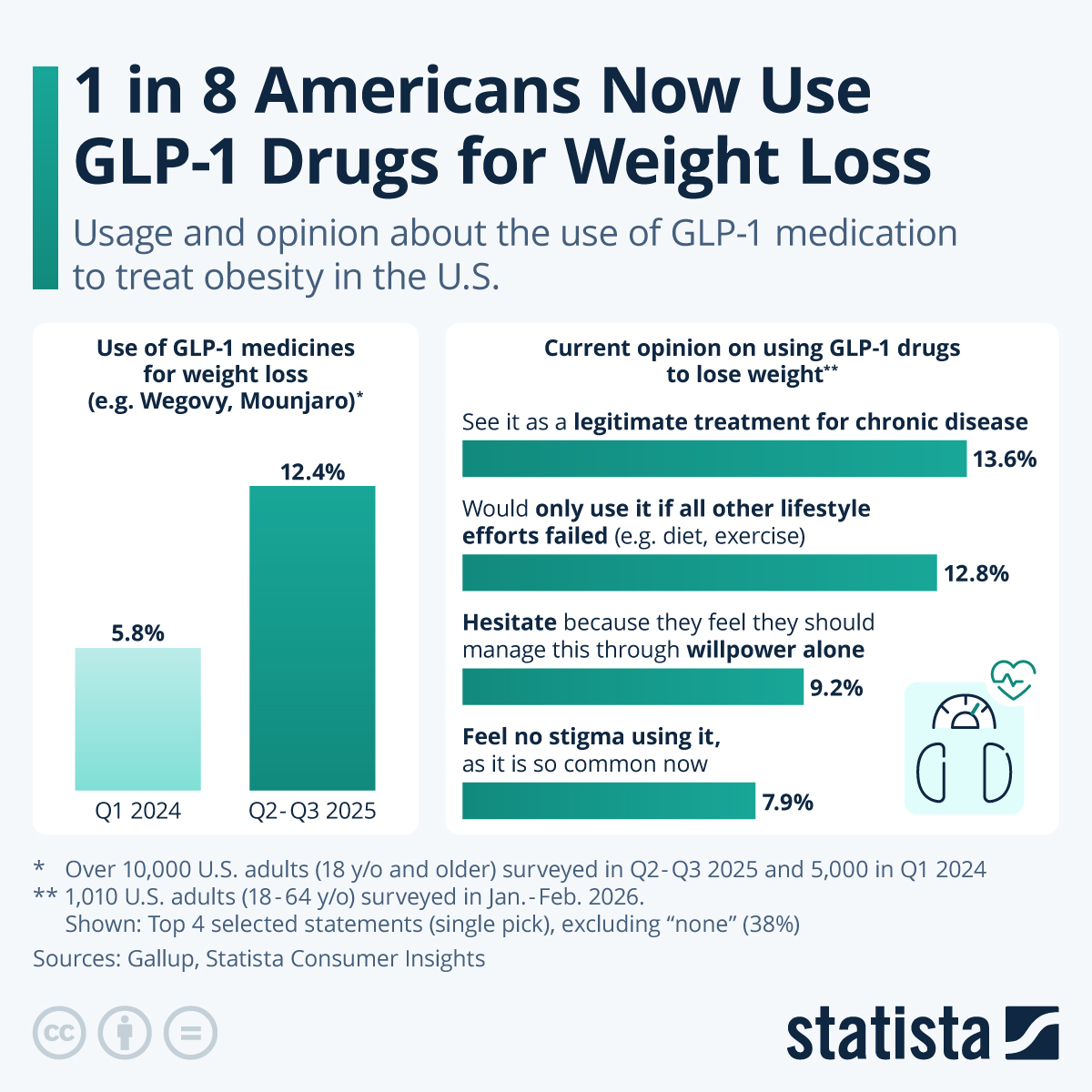
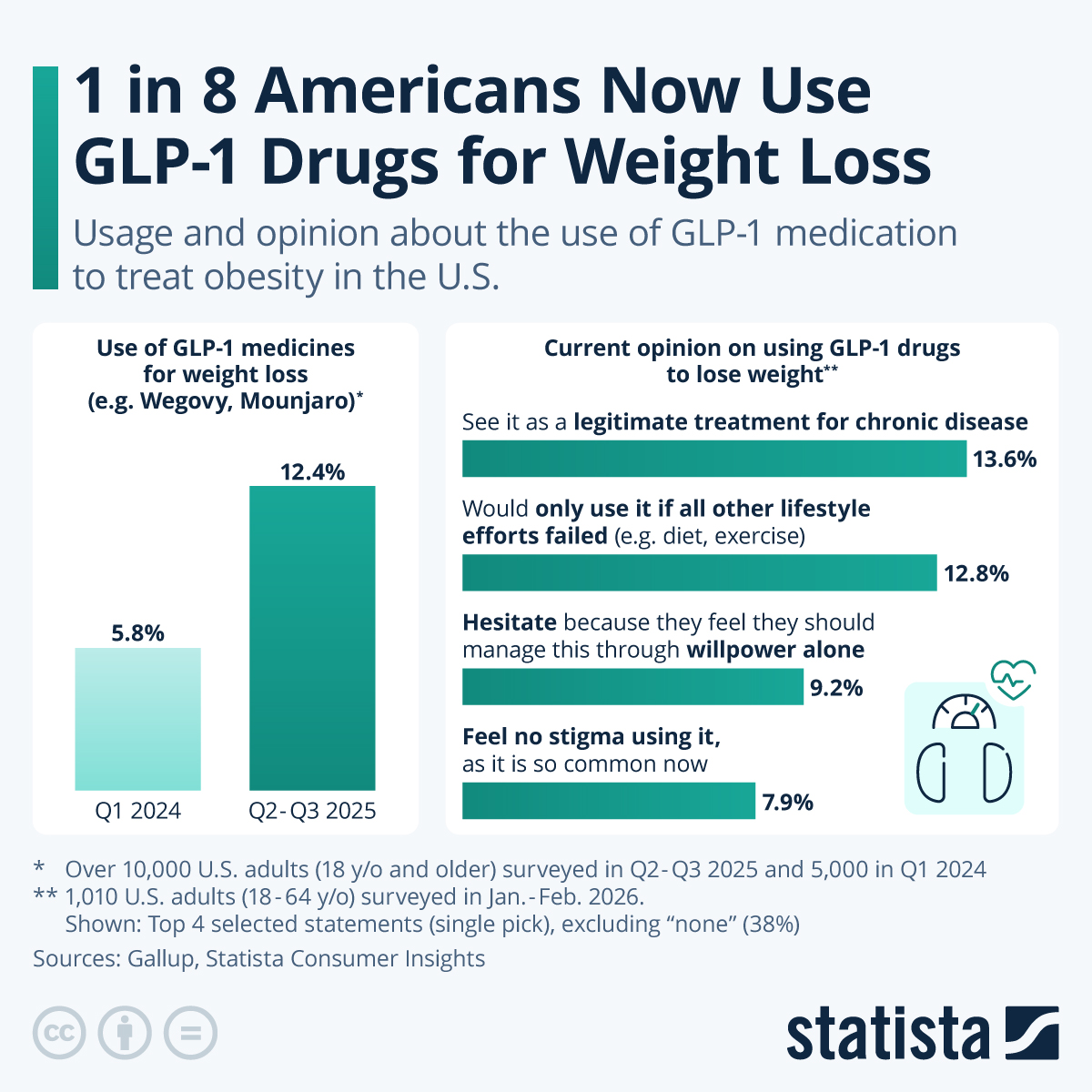
GLP-1 use for weight loss stood at 5.8% of adults when Gallup first measured it in February 2024, and reached 12.4% in 2025 [1][2]. Women report higher use than men, 15.2% versus 9.7%, though both groups more than doubled in a year [1]. Awareness of these drugs climbed from 80% to 89% nationally over the same period [1]. Among adults diagnosed with diabetes, 14.1% report using the drugs for weight loss — slightly above the general population [1].
The obesity declines line up loosely with who is taking the medications. Women's obesity rate fell 3.5 points to 38.8% since 2022, while men's fell 2.3 points to 35.2% [1]. The largest drops came in middle age: adults 40 to 49 fell 4.3 points to 43.3%, with 16.2% currently using a GLP-1 for weight loss, and adults 50 to 64 fell 5.0 points to 42.8%, with 17.0% using one [1]. Adults 30 to 39 dropped 2.2 points. The youngest adults and seniors were essentially unchanged [1].
That last group is a puzzle. Adults 65 and older have the third-highest reported use (11.1%) and the largest jump since early 2024 (6.5 points), yet no measured reduction in obesity. Gallup points to earlier research showing older Americans report the drugs working less well for weight loss than younger users do [1].
Importantly, this is survey data showing two trends moving at once, not proof that one caused the other. Gallup did not measure GLP-1 use for weight loss in 2022 or 2023, so the earlier part of the curve is an estimate [1].
Diabetes went the other direction. Diagnoses hit an all-time high of 13.8%, measured by asking adults whether a doctor or nurse ever told them they have diabetes — a lifetime diagnosis that does not disappear when weight goes down [1].
Why it matters for patients
If you are weighing a GLP-1, the practical takeaway is that this has become an ordinary thing for American adults to be doing. Roughly one in eight adults reports taking one for weight loss, and nearly nine in 10 have heard of them [1][2].
Attitudes are mixed but shifting. Pew Research found 53% of US adults say weight loss drugs are a good option for people with obesity or weight-related health conditions, while 62% say semaglutide is not a good option for people without such a condition [1]. A Statista Consumer Insights survey of more than 1,000 US adults in January and February 2026 found over 26% combined describing GLP-1s as a legitimate treatment for a chronic disease or a next step when lifestyle changes fail; about 9% still said weight should be managed through willpower alone, and about 8% said they would feel no stigma because the drugs are "so common now" [2].
Access remains uneven. Gallup notes that 13 states fully cover GLP-1s for obesity treatment under Medicaid, with legislative efforts targeting broader coverage, and says expanded access may determine whether this decline lasts [1].
Gallup also cautions against treating these drugs as a cure-all. The rise in GLP-1 use has coincided with better BMI numbers but not with fewer diabetes diagnoses, and Gallup's own 2023 data suggest Americans had worse health habits than in 2019 [1].
What happens next
Gallup has not published a date for its next Well-Being Index update. Whether the 2022-to-2025 decline continues — and whether new diabetes cases eventually slow — is not yet known from these sources.
Images from the sources
Sources
Semaglutides.org is for information only and is not medical advice. Always talk to a licensed healthcare provider about your own care. Some links to telehealth services are affiliate links, labeled where they appear.