Survey links injectable semaglutide to a 46% drop in constant food thoughts
A patient survey adds real-world detail to reports that semaglutide quiets food noise, but its retrospective design means it cannot show cause and effect.

A survey of 550 US adults taking injectable semaglutide for weight management found that the share who reported constant thoughts about food throughout the day fell from 62 percent before treatment to 16 percent during treatment, a change reported as a 46 percent decline [1]. Results from the INFORM survey were presented at the European Association for the Study of Diabetes (EASD) 2025 meeting in Vienna, held September 15–19, and were later published in the journal Advances in Therapy [1][2]. Injectable semaglutide for weight management is sold as Wegovy [1].
The paper defines food noise as "persistent, intrusive thoughts about food that are disruptive to daily life and make healthy behaviors difficult" [2]. The survey asked 22 multiple-choice questions, including the five-item Food Noise Questionnaire, or FNQ [2]. Participants were recruited from Numerator's opinion panel and had already been identified as semaglutide users for weight management; responses were collected May 13–21, 2025 [2]. The group had a mean age of 53 years, 86 percent were women, 79 percent were white, 86 percent had a body mass index of 30 or higher when they started, and 81 percent had used semaglutide for at least four months [2]. About 64 percent reported weighing 92 kilograms (roughly 203 pounds) or more when they began treatment [1].
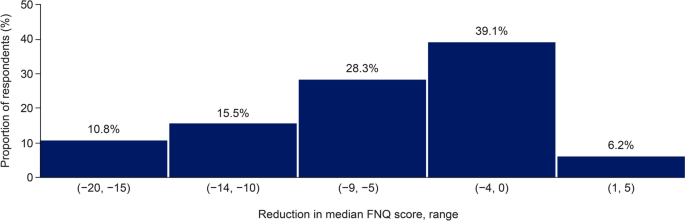
On the FNQ, which is scored out of 20 with higher scores meaning more food noise, the median score was 13 before semaglutide (interquartile range 10–16) and 6 after (interquartile range 3–10), for a median change of −5 (interquartile range −10 to −2) [2]. The share of participants who agreed or strongly agreed with statements indicating the presence of food noise fell from 47–63 percent before treatment to 15–20 percent after, and the reductions held across subgroups based on treatment duration and BMI [2]. The share who said food noise disrupted daily life fell from 60 percent to 20 percent [1].
Respondents also reported changes in other areas. Sixty-four percent said their mental health had improved since starting semaglutide, 76 percent reported developing a "healthier lifestyle," 80 percent reported "healthier habits," and 83 percent reported high satisfaction with treatment [1]. The journal paper says satisfaction was highest among those who had been on treatment longer, and that most respondents agreed their mental health, self-confidence, lifestyle and habits had improved [2].
"There are so many factors that challenge people with overweight or obesity in their efforts to lose weight, including food noise," Filip Knop, MD PhD, a Novo Nordisk senior vice president and incoming chief medical officer, said in a statement. He called the data "encouraging" [1].
The findings come with limits the authors state. INFORM was a cross-sectional survey, meaning it captured a single point in time, and the comparison to before treatment relied on participants' recollection [2]. All results were self-reported, there was no control group, and the survey was designed by Novo Nordisk and Numerator [2]. The paper concludes that "further prospective, longitudinal research is warranted" [2]. It has not been reported whether the drop in food noise tracks with the amount of weight lost, how long the effect lasts, or what happens after people stop taking semaglutide. The survey covered injectable semaglutide for weight management only, not Ozempic, Rybelsus or tirzepatide products, and it does not compare semaglutide with other drugs [2].
Why it matters for patients
Food noise is often described anecdotally by people taking GLP-1 medications, and a previous 20-week randomized, placebo-controlled trial of semaglutide 2.4 mg in adults with obesity found significant reductions in food cravings compared with placebo [2]. The survey adds patient-reported detail: many respondents said intrusive thoughts about food became less frequent and less disruptive, and most described their mental health and habits as better [1][2].
Because INFORM has no comparison group and asks people to remember how they felt before treatment, it cannot show that semaglutide caused these changes, and the authors say more rigorous study is needed [2]. The results also do not describe dosing, or whether similar changes occur with other GLP-1 medications. People weighing whether to start or continue treatment may want to discuss these findings with a clinician, since the survey does not establish what any individual should expect.
What happens next
The paper's authors call for prospective, longitudinal research to better characterize food noise changes and their relationship to clinical outcomes [2]. Novo Nordisk also presented separate EASD data on eating behavior and control of eating with semaglutide from the STEP UP trial, with full results published in Lancet Diabetes & Endocrinology on September 14, 2025 [1]. No timeline has been disclosed for follow-up INFORM research.
Images from the sources

Sources
Semaglutides.org provides information only, not medical advice. Talk to a licensed provider about your own care before making changes. Some telehealth links are affiliate links and are labeled where they appear.