Study documents racial inequity in semaglutide prescribing among people with HIV
A study of nearly 11,600 people with HIV found only 6.7% who qualified got semaglutide, and Black patients were 20% less likely than White patients to receive it.
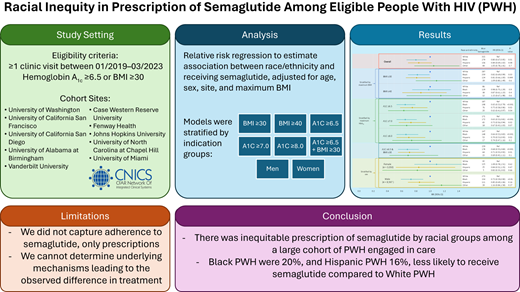
A new analysis published in Diabetes Care on September 19, 2025, found that most people with HIV who met medical criteria for semaglutide did not receive it, and that Black patients were significantly less likely than White patients to be prescribed the drug [1][2].
Researchers studied 11,617 people with HIV across nine U.S. sites who were part of the Centers for AIDS Research Network of Integrated Clinical Systems (CNICS) cohort between 2019 and 2023 [1][2]. Patients qualified for semaglutide if they had a body mass index (BMI) of 30 or higher, or an HbA1c level of 6.5 or higher, a standard marker for diabetes [2]. Among these eligible patients, only 774 people, or 6.7%, actually received the drug [1][2]. Of those who got semaglutide, 92% qualified through BMI, 62% qualified through HbA1c, and 54% met both criteria [2].
The study found a racial gap in who received treatment. Eligible Black patients were 20% less likely to receive semaglutide than eligible White patients, a difference researchers call a prevalence ratio (PR) of 0.80, with a 95% confidence interval of 0.67 to 0.95 [1][2]. This means researchers are 95% confident the true difference in prescribing rates falls somewhere in that range, and the entire range shows Black patients being prescribed the drug less often.
The gap widened among patients with more severe blood sugar problems. For people with an HbA1c of 8.0 or higher, a level indicating harder-to-control diabetes, the disparity grew sharper. Black patients in this group were 34% less likely to receive semaglutide than White patients (PR 0.66, 95% CI 0.53–0.83), and Hispanic patients were 30% less likely (PR 0.70, 95% CI 0.53–0.93) [2]. The researchers adjusted their calculations for age, sex, clinic site, and maximum BMI to try to isolate the effect of race and ethnicity from these other factors [2].
The study's authors, led by Andrew W. Hahn of the University of Washington, concluded that their data describe "inequitable semaglutide use" among people with HIV, with lower rates of the drug being started in eligible Black patients [1][2]. The paper is a brief report, meaning it presents a focused set of findings rather than an exhaustive investigation, and it does not identify the specific causes behind the prescribing gaps [1][2].
Why it matters for patients
People with HIV face higher rates of obesity and diabetes-related complications tied to both the virus and its treatments, according to background research cited in the study [1]. Semaglutide, sold as Ozempic, Wegovy, and Rybelsus, is used to treat diabetes and support weight loss. If eligible patients are not equally likely to be offered this option regardless of race, some patients managing both HIV and metabolic conditions may be missing a treatment that could help them, while similar patients elsewhere are getting it.
The study does not say why this gap exists. It does not identify whether the cause is unequal access to insurance coverage, differences in how doctors discuss treatment options, patient preferences, or other factors. The sources do not specify what happens next in terms of research aimed at explaining or closing this gap.
For patients with HIV who are also managing obesity or diabetes, this study is a reminder that national prescribing patterns show unevenness by race, particularly for those with more severe blood sugar levels. It does not offer guidance on any individual's treatment decisions, and eligibility criteria, insurance coverage, and clinical judgment all vary by person and by health system.
What happens next
The study was published in the October 2025 print issue of Diabetes Care, with the peer-reviewed version appearing online on September 19, 2025 [1]. The sources do not describe any planned follow-up studies or policy responses stemming from these findings.
Images from the sources

Sources
Semaglutides.org is for information only and is not medical advice. Always talk to a licensed healthcare provider about your own care. Some links to telehealth services are affiliate links, labeled where they appear.