Target trial emulation finds the largest alcohol use disorder reduction with tirzepatide
A large real-world study found tirzepatide (Mounjaro/Zepbound) was linked to a 53% lower rate of new alcohol use disorder diagnoses in people with type 2 diabetes, though no randomized trial has tested this yet.
Researchers analyzing electronic health records from more than 120 million US patients found that tirzepatide, the drug sold as Mounjaro and Zepbound, was associated with the largest reduction in new alcohol use disorder (AUD) diagnoses among four incretin-based diabetes drugs studied [1][2][3]. The study, published October 7, 2025 in Diabetes, Obesity and Metabolism, used a method called target trial emulation, which mimics a randomized trial using existing medical records rather than assigning patients to treatments directly [1][2][3].
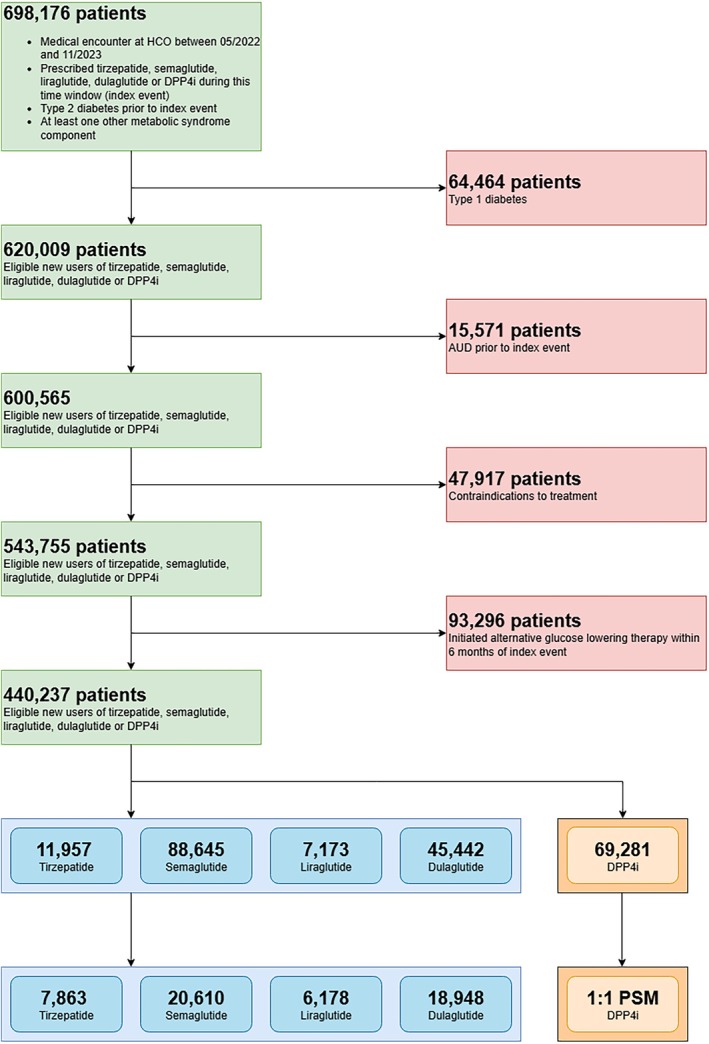
The research team built four separate comparisons in adults with type 2 diabetes who had no prior AUD diagnosis, each measuring outcomes over 18 months. Patients taking tirzepatide, semaglutide (Ozempic/Wegovy/Rybelsus), liraglutide, or dulaglutide were each compared against similar patients taking DPP-4 inhibitor drugs, a different diabetes medication class [1][2][3]. After statistical matching for confounding factors, the study included 7,165 tirzepatide patients, 20,198 semaglutide patients, 6,565 liraglutide patients, and 19,061 dulaglutide patients, each matched one-to-one with DPP-4 inhibitor users [1][2][3].
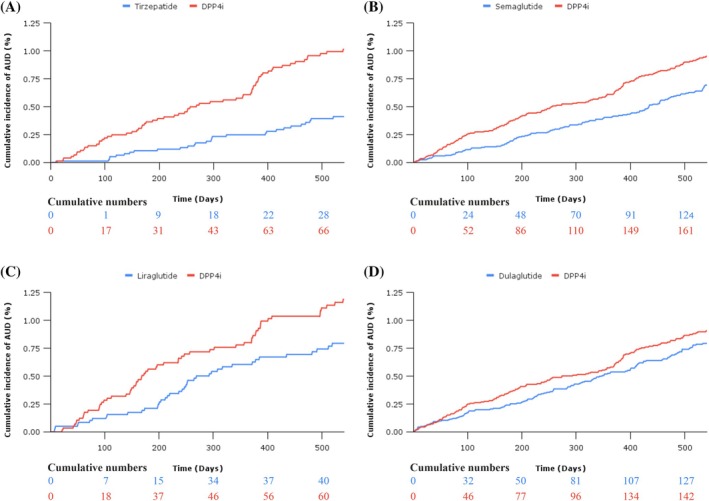
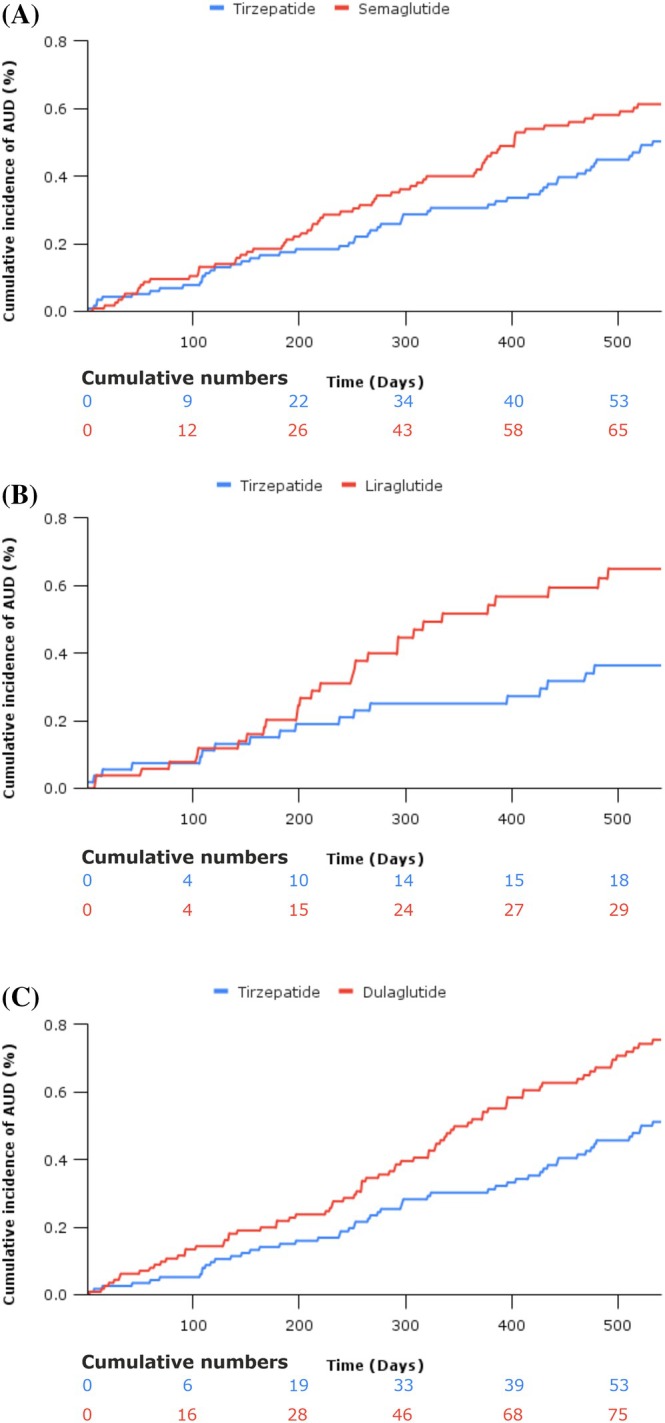
Tirzepatide was linked to a 53% lower rate of a first AUD diagnosis compared with DPP-4 inhibitors, with a hazard ratio of 0.47 (95% confidence interval 0.29 to 0.75) [1][2][3]. Semaglutide showed a smaller but still significant reduction, with a hazard ratio of 0.68 (0.52 to 0.89), roughly a 32% lower rate [1][2][3]. Liraglutide and dulaglutide were not associated with statistically significant reductions in AUD diagnoses [1][2][3]. When the researchers compared the drugs directly against each other, tirzepatide showed a significant advantage over liraglutide, with a hazard ratio of 0.47 (0.24 to 0.92) [1][2][3].
The study's authors concluded that tirzepatide and semaglutide use was associated with lower AUD incidence in patients with type 2 diabetes, and they called for "robust randomised, controlled evidence for the use of these drugs for this novel indication" [1][2][3]. That statement signals that no such randomized controlled trial testing tirzepatide specifically for alcohol use disorder currently exists.
Why it matters for patients
This study does not show that tirzepatide treats alcohol use disorder. It shows an association in medical records among people already being treated for type 2 diabetes, not a controlled experiment where researchers randomly assigned drugs and tracked drinking behavior directly. The outcome measured was a new AUD diagnosis code in health records, not a validated clinical assessment of drinking [1][2][3].
People taking tirzepatide, semaglutide, or other GLP-1 and GIP drugs for diabetes or weight management should not assume these medications will change their relationship with alcohol. The study population was limited to adults with type 2 diabetes, so it is not yet known whether similar patterns would appear in people without diabetes who take these drugs for weight loss alone [1][2][3].
The difference in results between drugs is also notable. Liraglutide and dulaglutide, both older GLP-1 drugs, showed no significant effect, while tirzepatide and semaglutide did [1][2][3]. Why some incretin drugs might show this association and others do not is not addressed in this study and remains unclear.
What happens next
The authors explicitly call for randomized controlled trials to test these drugs for alcohol use disorder before any conclusions can be drawn about their use for this purpose [1][2][3]. No dates or specific trial plans are mentioned in the study. Until such trials are conducted and published, this remains observational evidence, not proof of a treatment effect.
Images from the sources
Sources
Semaglutides.org is for information only and is not medical advice. Always talk to a licensed healthcare provider about your own care. Some links to telehealth services are affiliate links, labeled where they appear.