Brain recordings suggest tirzepatide's effect on food noise may be temporary
A case report found that in one woman on tirzepatide, brain activity tied to food obsession went quiet at full dose but returned within months, raising early questions about how long
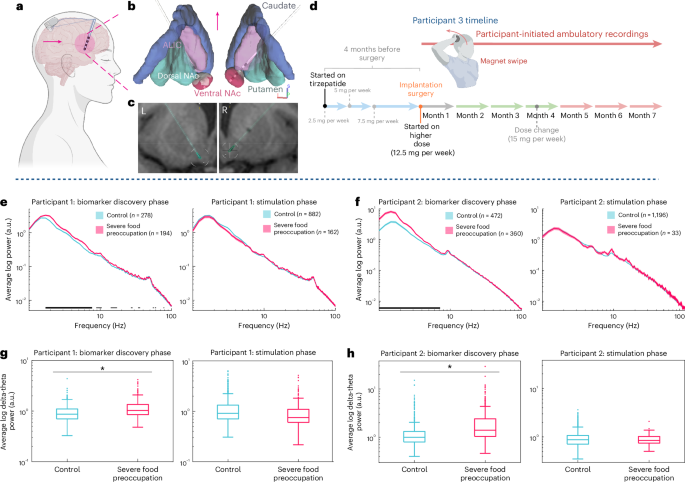
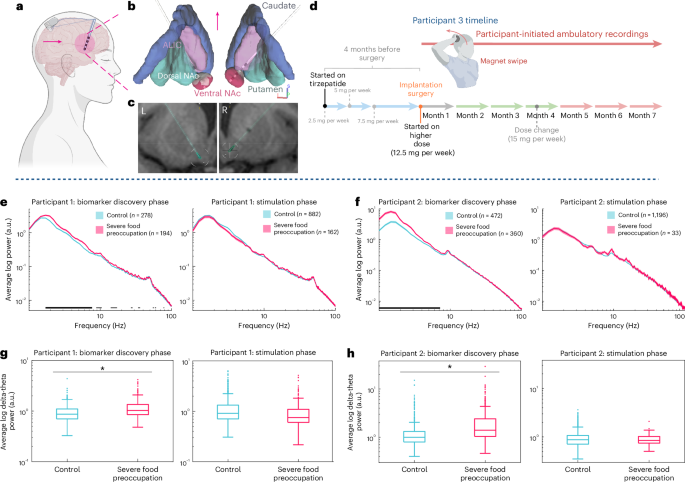
A new case report published in Nature Medicine on November 17, 2025, describes the first direct recordings of brain activity inside the nucleus accumbens (NAc) — a key reward center — in a person taking tirzepatide, the drug sold as Mounjaro and Zepbound [1]. Researchers found that the medication appeared to quiet electrical signals linked to food preoccupation, but the effect did not last [1][2][3].
The patient, called "Participant 3" in the study, was a 60-year-old woman with severe, treatment-resistant obesity and long-standing food preoccupation, sometimes called "food noise" [2][3]. She described obsessive thoughts about food that led to ordering takeout or snacking even when she wanted to stop, and eating until uncomfortably full on foods like packaged cupcakes, fast-food roast beef sandwiches and French fries [2][3]. She also had type 2 diabetes and had previously been prescribed dulaglutide, another GLP-1 medicine, which did not change her weight or her food preoccupation [2][3].
She enrolled in an ongoing trial that implants intracranial EEG electrodes into the NAc of people with obesity and loss-of-control eating, a study that has recruited four participants so far [1][2][3]. Because she had diabetes, which raises infection risk around surgery, her doctor started her on tirzepatide before the implant procedure and increased it to the maximum dose around the time of surgery [2][3]. That gave researchers an unplanned window to watch how the drug affected brain signals in real time [2][3].
Once she reached full dose, she reported no food preoccupation, and the related NAc electrical activity — a low-frequency signal previously linked to cravings and binge urges — went silent [1][2][3]. About five months later, that same brain activity reappeared, along with reports of severe food preoccupation, suggesting the drug's effect on this behavior had faded even though she remained on it [2][3]. The three other trial participants who were not taking tirzepatide continued to show the elevated NAc activity and frequent food-preoccupation episodes seen in earlier work from the same lab [2][3].
Why it matters for patients
This is a single case, not a clinical trial, so it cannot show how common this pattern is or whether it applies to other people on tirzepatide or other GLP-1 drugs [2][3]. But it adds a physical, brain-based data point to a complaint some patients already report anecdotally: that appetite suppression and reduced food thoughts can feel strong at first and less reliable later. The study's authors note that earlier trial data on liraglutide and two-year data on semaglutide (STEP 5) also hinted at a possible tolerance effect for food preoccupation, though those studies did not use direct brain recordings [1].
Senior author Casey Halpern, MD, of the University of Pennsylvania, cautioned that despite patient reports of reduced food noise on GLP-1 and GIP drugs, these medications are not FDA-approved to treat food preoccupation or binge eating disorder, and their effects on brain activity are only beginning to be studied [2][3]. He said it is "far too soon to call GLP-1 and GIP inhibitors miracle drugs" for conditions beyond type 2 diabetes and obesity [2][3]. Study investigator Kelly Allison, PhD, said the findings suggest these drugs might help with food preoccupation and binge eating but not in their current form, and that better-tailored treatments may be needed [2][3].
What happens next
The broader trial, which uses implanted electrodes and targeted stimulation to interrupt craving-related brain signals, is continuing with its four enrolled participants [2][3]. The researchers say more study is needed to understand how incretin-based drugs act on the brain's reward circuitry before drawing conclusions about their use for food preoccupation or binge eating disorder [1][2][3]. The sources reviewed do not give a timeline for when additional data or a larger study might be published.
Images from the sources


Sources
Semaglutides.org is for information only and is not medical advice. Always talk to a licensed healthcare provider about your own care. Some links to telehealth services are affiliate links, labeled where they appear.