KFF finds 18% of US adults have ever used a GLP-1 and 12% currently do
A new KFF poll finds 12% of US adults now take a GLP-1, double the share from 18 months ago, but 56% of users say the drugs are hard to afford and 27% with insurance pay the full price.
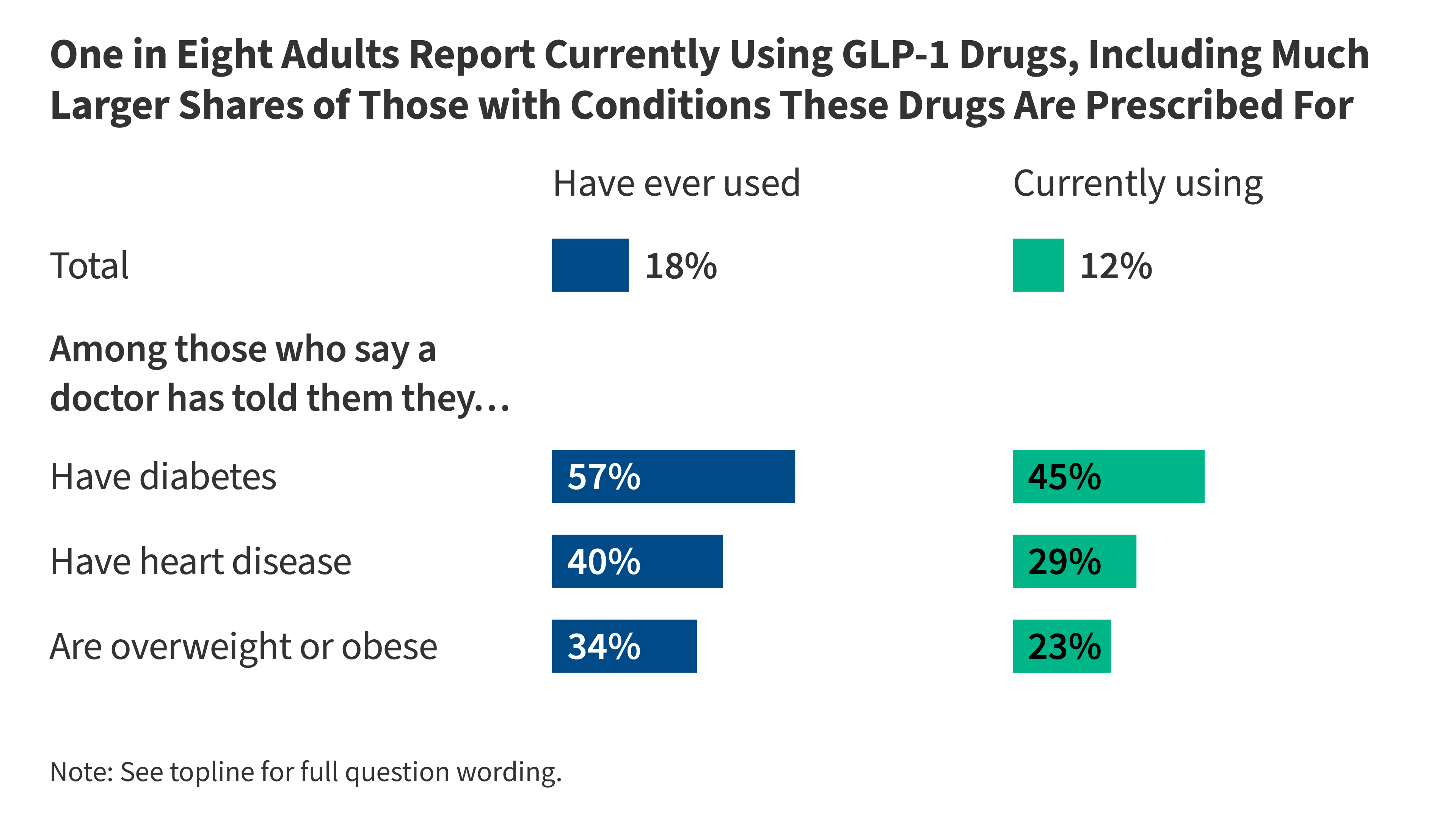
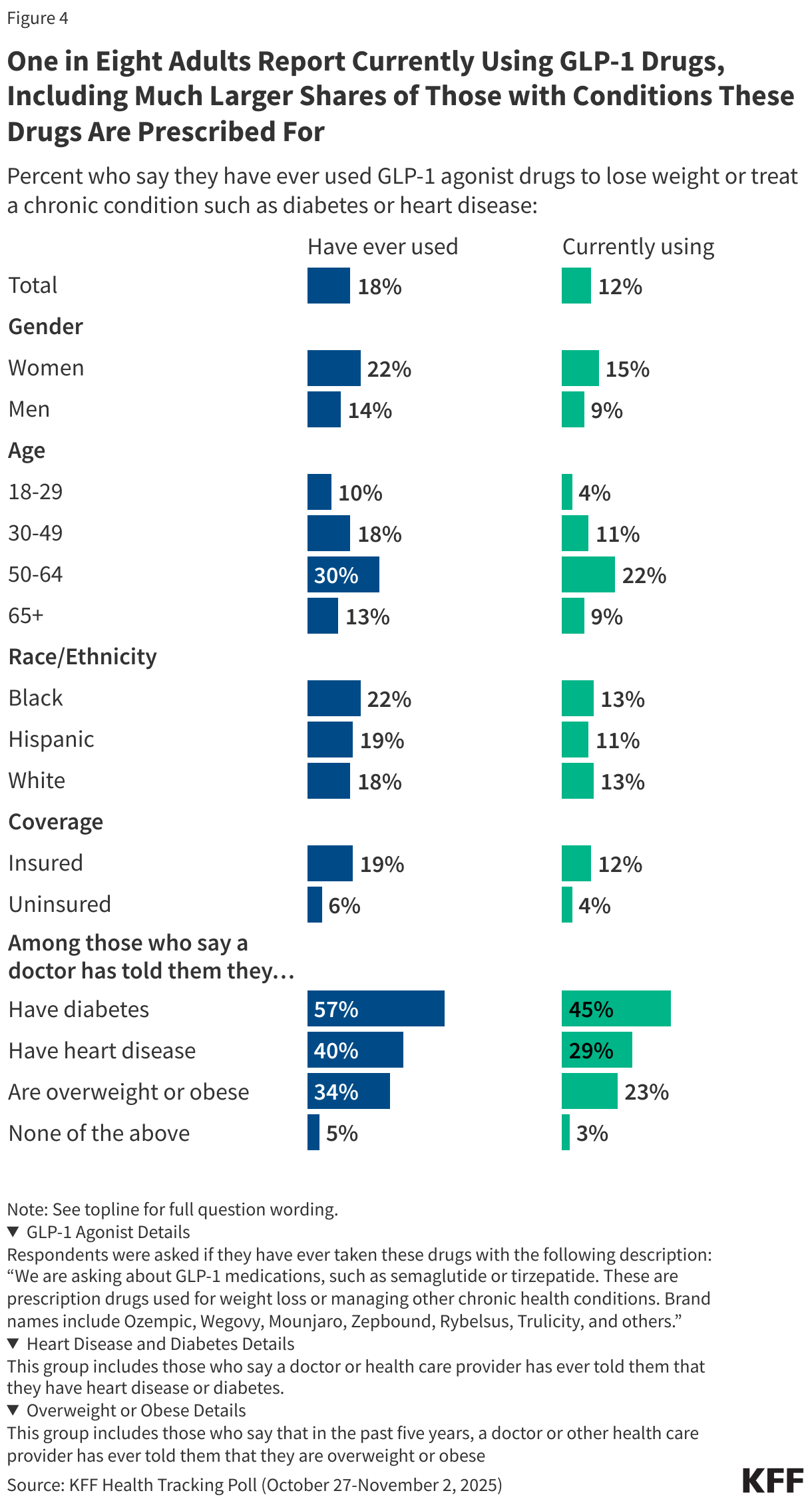
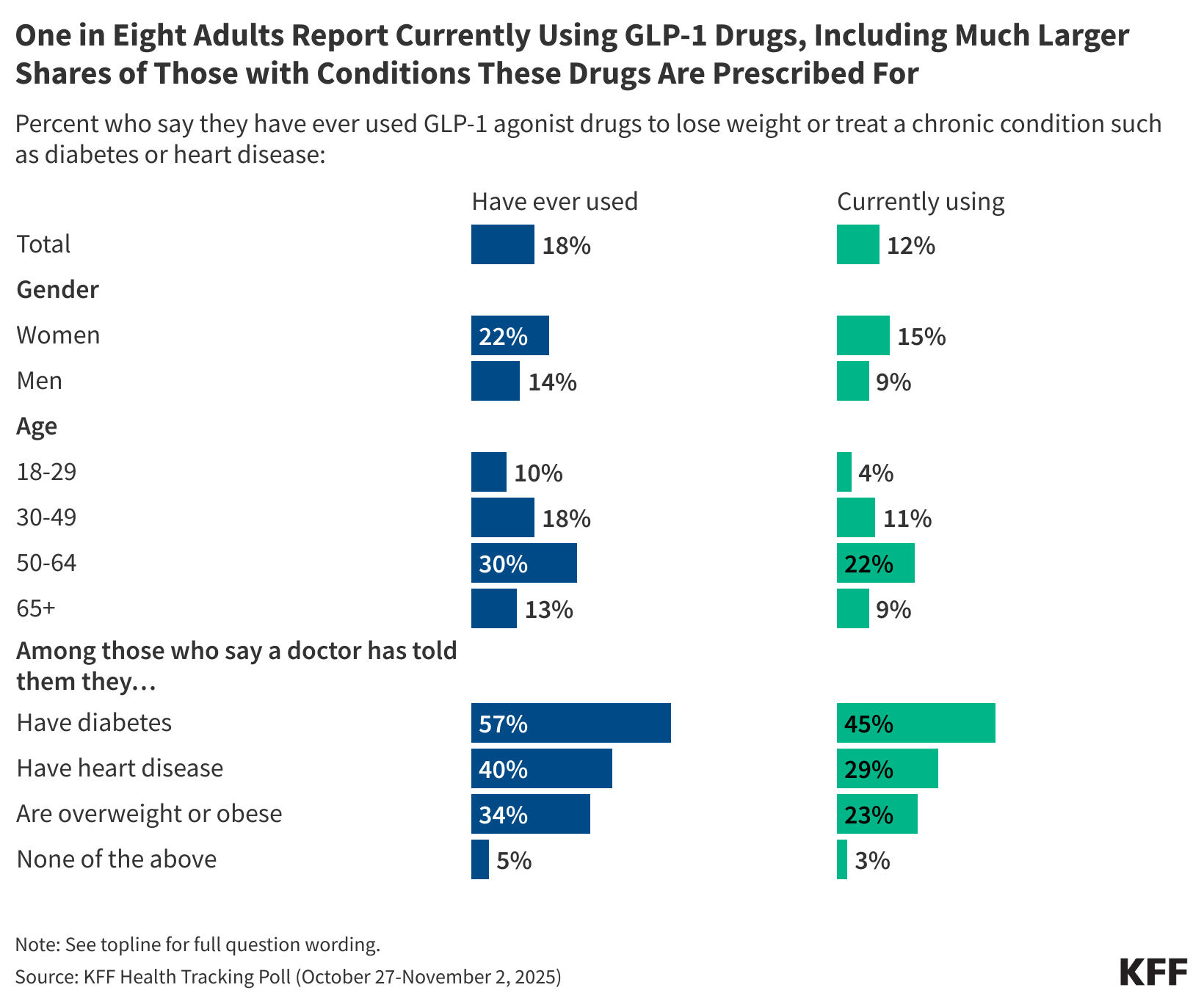
About one in eight US adults (12%) say they are currently taking a GLP-1 drug such as Ozempic or Wegovy for weight loss, diabetes or another chronic condition, according to a KFF Health Tracking Poll released November 14 [2]. That is a 6 percentage point jump from KFF's May 2024 survey, meaning current use has roughly doubled in 18 months [1]. Nearly one in five adults (18%) say they have used a GLP-1 at some point [1].
The poll was conducted October 27 through November 2, 2025, online and by phone, among a nationally representative sample of 1,350 adults in English and Spanish, with a margin of sampling error of plus or minus 3 percentage points for the full sample [2].
Who is using them
Use is concentrated among people with the conditions these drugs treat. Among adults who say a doctor told them they have diabetes, 57% have ever used a GLP-1 and 45% are currently using one [1][2]. Among those told they have heart disease, 40% have ever used and 29% currently use [1][2]. Among adults diagnosed as obese or overweight in the past five years, 34% have ever used and 23% currently use [2].
Women are more likely than men to report current use (15% versus 9%) [2]. By age, current use peaks at 22% among adults 50 to 64 and drops to 9% among those 65 and older — a gap KFF says likely reflects Medicare's lack of coverage for drugs prescribed specifically for weight loss [1][2].
Most users got their prescription through conventional channels: 76% say they got the drug from a primary care provider or specialist, while 17% report getting it from an online provider or website and 9% from a medical spa or aesthetic medical center [1][2].
Cost is still the sticking point
Even though most users say insurance covered at least part of the cost, 56% of GLP-1 users say the drugs were difficult to afford, including one in four who say "very difficult" [1]. The share reporting difficulty was nearly identical among insured users (55%) [2]. About a quarter of insured users (27%) say they paid the entire cost of the medication themselves [1][2].
Cost also drives people off the drugs. Among adults who have ever taken a GLP-1, 14% say they stopped because of the price [2]. A similar share (13%) stopped because of side effects, and far fewer (5%) stopped because their condition improved [2].
Interest among people who have never taken one remains meaningful but not universal: 22% say they would be interested in taking a GLP-1 to lose weight, including 7% who are "very interested" [2]. That rises to 43% among adults diagnosed as obese or overweight who are not currently taking the drugs [2].
Broader drug affordability problems show up too. About 26% of adults say they or someone in their household had trouble paying for prescription drugs in the past year, rising to 41% among uninsured adults, 33% among Hispanic adults, 32% among Black adults and 33% among households earning under $40,000 [1][2].
Why it matters for patients
The numbers put a figure on something many people taking these medicines already experience: coverage is uneven, and having insurance does not guarantee the drug is affordable. More than a quarter of insured users in this survey were paying cash anyway [2], which is a plausible reason the direct-to-consumer and online channels keep growing, with 17% of ever-users reporting they obtained the drug online [1].
The poll also shows that stopping treatment is common and that price is now as frequent a reason as side effects [2]. For anyone comparing coverage options or weighing a switch between pharmacy benefit coverage and cash-pay programs, these figures are a snapshot of what other patients are running into, not a prediction about any individual plan.
One important limit: KFF fielded the survey before the Trump administration's November 6 announcement on GLP-1 pricing and coverage, so the results do not capture any reaction to it [1][2].
What happens next
KFF's poll found low public awareness of the administration's earlier drug-pricing moves. Fewer than a third of adults had heard "a lot" or "some" about the Medicaid pricing deals (30%), IVF drug cost efforts (24%) or the planned TrumpRx website (20%), and 59% had heard nothing at all about TrumpRx [1].
Overall, 62% of adults said it is "not too" or "not at all" likely that administration policies will lower drug costs for people like them, versus 38% who said it is likely [1][2]. Expectations split sharply by party: 73% of Republicans and 83% of MAGA-supporting Republicans and Republican-leaning independents expect lower costs, compared with 33% of independents and 9% of Democrats [1][2]. Whether the November GLP-1 deals change any of those numbers is not yet known.
Images from the sources
Sources
- https://www.kff.org/public-opinion/kff-health-tracking-poll-prescription-drug-costs-views-on-trump-administration-actions-and-glp-1-use/
- https://www.kff.org/public-opinion/poll-1-in-8-adults-say-they-are-currently-taking-a-glp-1-drug-for-weight-loss-diabetes-or-another-condition-even-as-half-say-the-drugs-are-difficult-to-afford/
Semaglutides.org is for information only and is not medical advice. Always talk to a licensed healthcare provider about your own care. Some links to telehealth services are affiliate links, labeled where they appear.