SURMOUNT-4 post hoc grades cardiometabolic reversal by how much weight came back
A JAMA Internal Medicine reanalysis of SURMOUNT-4 found that waist size and blood pressure crept back in step with regained weight after tirzepatide stopped — and stayed better in people who regained little.
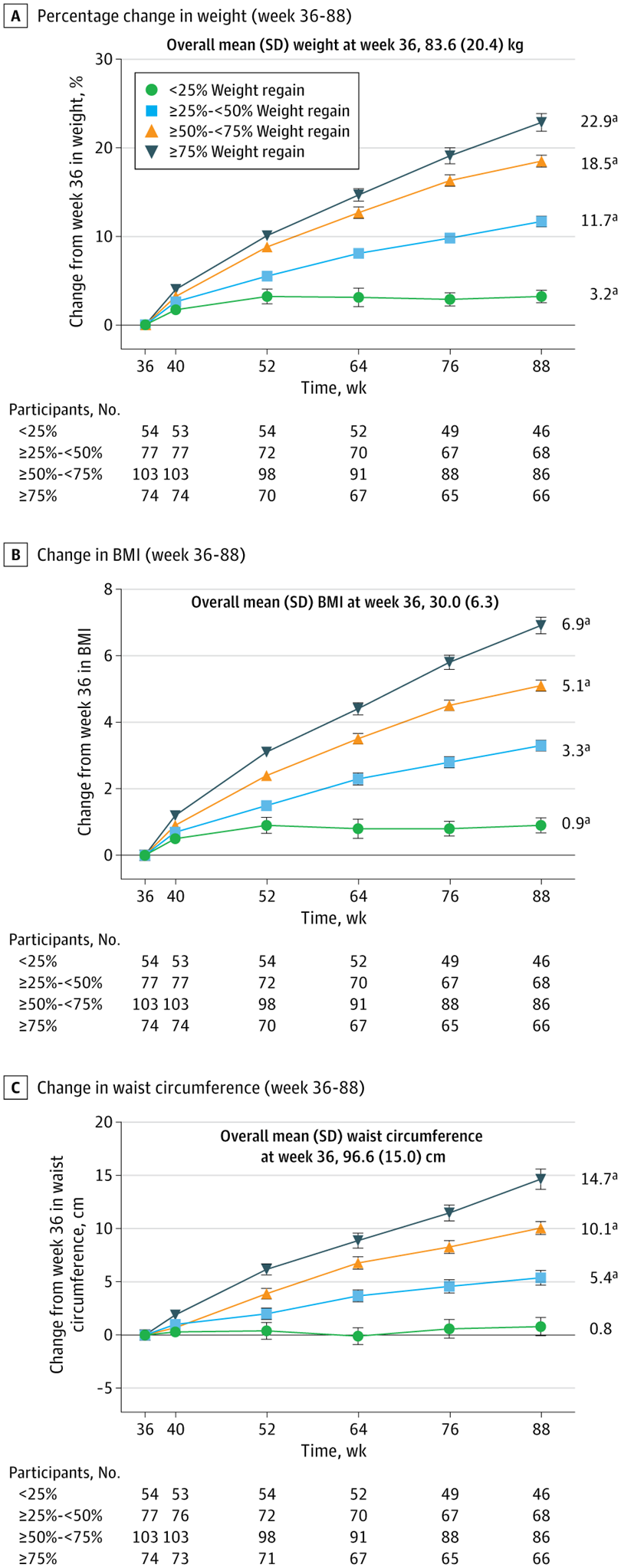
Researchers have re-sorted data from the SURMOUNT-4 tirzepatide withdrawal trial by how much weight participants put back on, and found that cardiometabolic measures moved roughly in proportion to the regain. The post hoc analysis was published in JAMA Internal Medicine [1][2].
SURMOUNT-4 tested what happens when tirzepatide (sold as Mounjaro for type 2 diabetes and Zepbound for obesity) is stopped. Everyone took tirzepatide during a lead-in period from week 0 to week 36. Participants who had lost at least 10% of their body weight by week 36 were then randomized, and this analysis follows the group that was switched off the drug through week 88 [1]. The new paper splits that withdrawal group into categories based on how much of the lost weight came back, then compares changes in weight, body mass index, waist circumference, blood pressure, fasting lipids and glycemic measures across those categories [1][2].
What the numbers showed
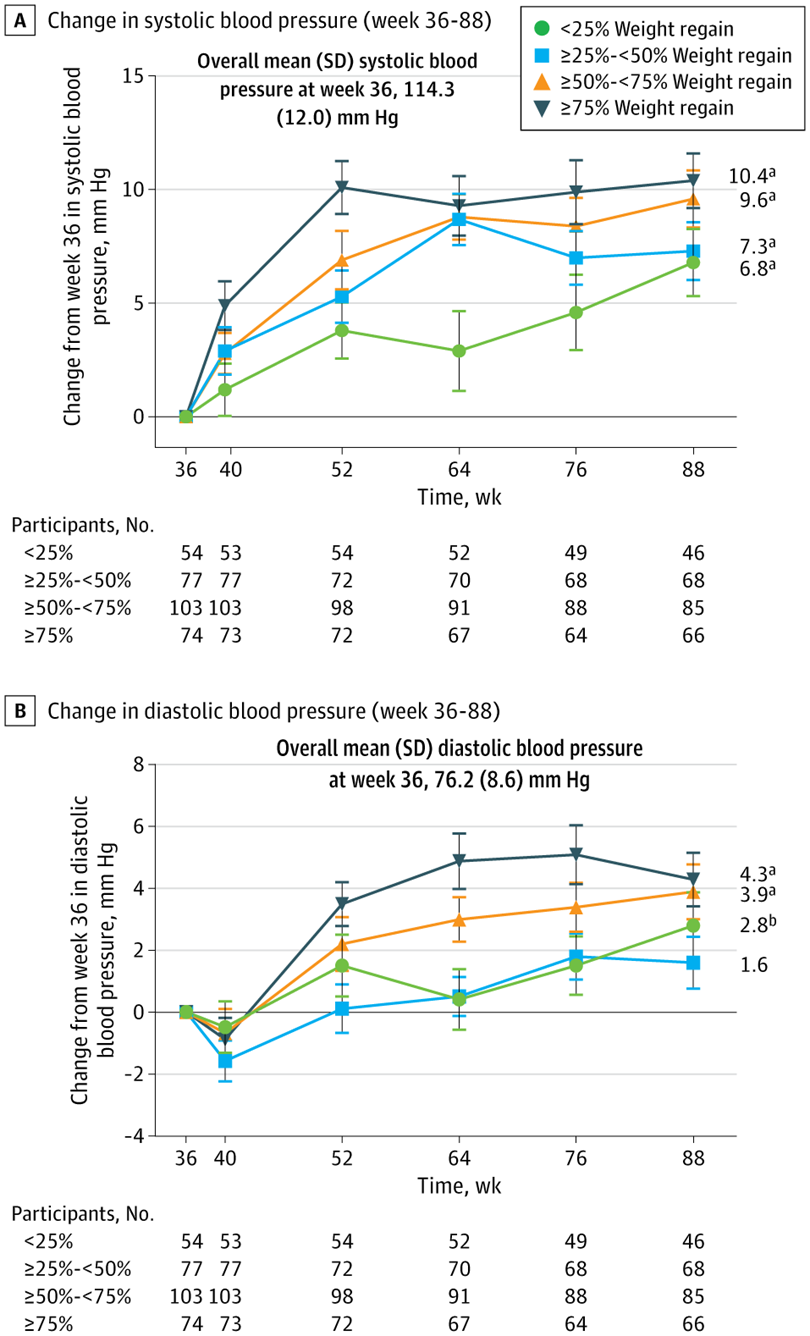
The gap between the least and most regain was wide. Waist circumference increased by 0.8 cm in the group that regained the least, compared with 14.7 cm in the group that regained the most. Systolic blood pressure rose across the categories as well, by between 6.8 and 10.4 mm Hg. Differences among the regain categories were statistically significant for weight, BMI and waist circumference, and for both systolic and diastolic blood pressure [1].
The analysis also tracked glycemic parameters and fasting lipids by regain category, plus insulin resistance and beta-cell function measures (HOMA2-IR and HOMA2-B) at baseline, week 36 and week 88 [1][2]. The published summary of this development does not give those specific values, so the size of the lipid and glucose shifts by category is not detailed here.
The practical read is that the benefits appear to follow the weight, not the fact of having once taken the drug. People who held onto most of their loss held onto most of the improvement; people who regained most saw their numbers drift back toward where they started. Partial regain went with partial retention of benefit rather than an all-or-nothing reversal [1].
Some caveats are built into the design. This is a post hoc analysis, meaning the regain groups were defined after the trial ended and were not randomly assigned, so people who regained little may differ from those who regained a lot in ways the analysis cannot fully account for. Several authors are employees of Eli Lilly and Company, which makes tirzepatide, with others affiliated with the Cleveland Clinic, the University of Leicester, McGovern Medical School and a contract data firm [1]. The trial measured risk factors such as blood pressure and waist size, not heart attacks or strokes, so whether these shifts change actual cardiovascular events is not established by this analysis.
Why it matters for patients
Stopping a GLP-1 or dual-agonist medication is common in the US, often because of cost, insurance changes or supply. This analysis puts numbers on what tends to happen to the health markers that usually motivate treatment in the first place. A waist that grows by about 15 cm and a systolic reading roughly 10 mm Hg higher are the kinds of changes clinicians watch when deciding about blood pressure or cholesterol medicines.
It also reframes a common worry. The data suggest that regain is not necessarily a reset to square one: those who regained less kept more of their metabolic improvement. That distinction may matter for people who reduce a dose, pause treatment or come off entirely.
What the analysis cannot answer is why some people regained far more than others, or whether any specific follow-up strategy changes that trajectory. Those questions remain open.
What happens next
JAMA Internal Medicine published the analysis alongside an editorial, "Lessons Learned From Antiobesity Medication Withdrawal Trials," by Elizabeth Oczypok and Timothy S. Anderson, and has since run a Comment & Response letter titled "Understanding Weight Regain After Tirzepatide Withdrawal" from researchers questioning aspects of the findings [1][2]. The trial protocol, a data sharing statement and supplementary tables and figures are posted with the article [1].
Images from the sources
Sources
Semaglutides.org is for information only and is not medical advice. Always talk to a licensed healthcare provider about your own care. Some links to telehealth services are affiliate links, labeled where they appear.