SURMOUNT-OSA mediation analysis separates weight effects from sleep apnea effects
A new analysis of the SURMOUNT-OSA trial finds that tirzepatide improves inflammation, insulin resistance and triglycerides partly by easing sleep apnea itself, not just by shrinking body weight.
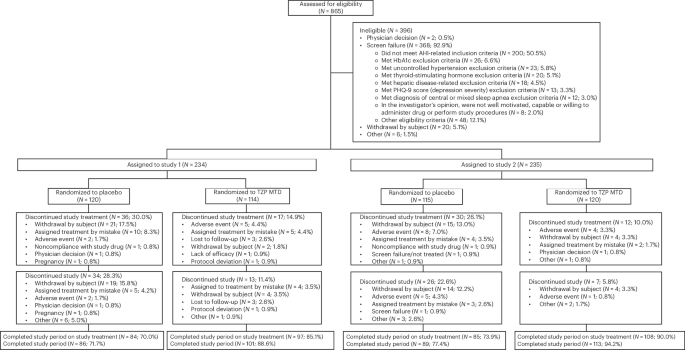
Researchers analyzing the SURMOUNT-OSA trial have found that tirzepatide's benefits for people with obstructive sleep apnea and obesity come from two separate pathways: weight loss and improvement in the breathing disorder itself. The mediation analysis, published in Nature Medicine, shows these two effects act independently on different health measures [1][2].
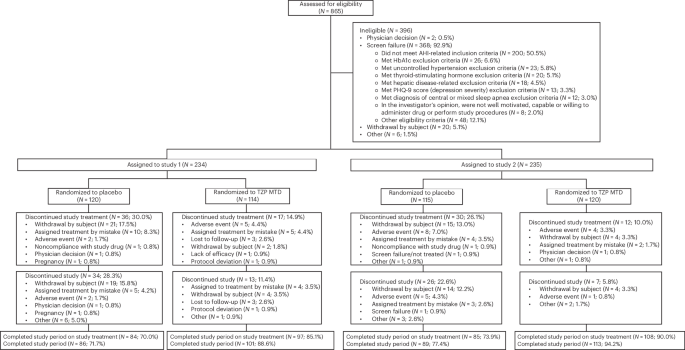
SURMOUNT-OSA was a set of two 52-week, placebo-controlled phase 3 studies testing tirzepatide (sold as Zepbound and Mounjaro) in 469 adults with moderate-to-severe obstructive sleep apnea and obesity [2]. Study 1 included participants who were not using continuous positive airway pressure (PAP) therapy, while study 2 included those who were [2]. The trial's main result, reported earlier, was that tirzepatide reduced the apnea-hypopnea index, a standard measure of sleep apnea severity, more than placebo [2].
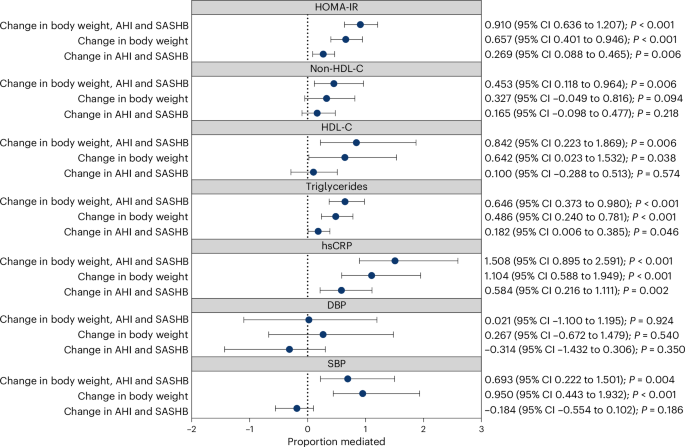
The new analysis dug into why cardiometabolic markers improved. Researchers used a bootstrap statistical method to estimate how much of the treatment effect on each marker was explained by weight loss alone, by changes in sleep apnea measures alone, or by both together [1]. They looked at high-sensitivity C-reactive protein (a marker of inflammation), a measure of insulin resistance called HOMA-IR, triglycerides, cholesterol markers, and blood pressure [1][2].
The results split the outcomes into two groups. Changes in sleep apnea metrics — specifically the apnea-hypopnea index and a related measure called sleep apnea-specific hypoxic burden — independently explained a meaningful share of the improvement in C-reactive protein, HOMA-IR and triglycerides [1][2]. Systolic blood pressure told a different story: the combination of weight change and sleep apnea metrics, as well as weight change alone, had a significant mediating effect, but the sleep apnea metrics alone did not [1][2]. Diastolic blood pressure showed no significant mediation effect from either weight or sleep apnea changes [1][2]. In study 1, tirzepatide's effect on systolic blood pressure at week 48 was 7.9 mmHg better than placebo [2].
Based on these patterns, the study authors concluded that treating both the sleep-disordered breathing and the underlying obesity is likely needed to get the full cardiometabolic benefit for patients with moderate-to-severe OSA and obesity [1][2]. In other words, weight loss by itself does not appear to fully explain why inflammation and insulin resistance improved — the direct effect on breathing during sleep mattered too.
Why it matters for patients
For people taking tirzepatide for sleep apnea and obesity together, this analysis suggests the drug may be working through more than one mechanism at once. A patient who loses weight but whose sleep apnea does not improve as much might still see less benefit on markers like inflammation and insulin resistance than someone whose breathing problem also gets better, according to the mediation patterns described [1][2].
The study also highlights that blood pressure appears to respond mainly to weight change rather than to the sleep apnea measures directly, while diastolic blood pressure did not show a clear link to either factor in this analysis [1][2]. That distinction could matter for how doctors and patients think about which outcomes to expect from treatment, and on what timeline.
The analysis does not establish that treating sleep apnea and obesity through separate treatments — such as adding PAP therapy — would produce identical benefits to a drug like tirzepatide that appears to affect both, since PAP has not shown consistent cardiovascular benefit in past studies cited by the authors [2]. What is not yet known from these sources is how these mediation findings would apply to other GLP-1 medications, such as semaglutide (Ozempic, Wegovy) or orforglipron (Foundayo), since this analysis was specific to tirzepatide in the SURMOUNT-OSA trial population [1][2].
What happens next
The paper itself does not list further planned studies or a specific timeline; it reports secondary and post hoc analyses from a trial already completed at 52 weeks [1][2]. Multiple authors disclosed financial ties to Eli Lilly, the maker of tirzepatide, and several are Lilly employees or shareholders, which is disclosed in the published conflict of interest statement [1].
Images from the sources
Sources
Semaglutides.org is for information only and is not medical advice. Always talk to a licensed healthcare provider about your own care. Some links to telehealth services are affiliate links, labeled where they appear.