First randomized tirzepatide trial in type 1 diabetes reports weight loss and lower insulin use
A 12-week trial found low-dose tirzepatide cut weight and insulin needs in adults with type 1 diabetes and obesity, but a new review rates the overall evidence as low certainty.
The first randomized trial of tirzepatide in adults with type 1 diabetes found that 12 weeks of low-dose treatment led to large weight loss and a substantial drop in daily insulin needs. A separate review of the available evidence, published in April, rated confidence in this research area as low to very low [1][2].
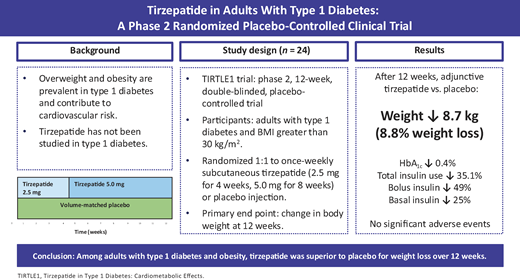
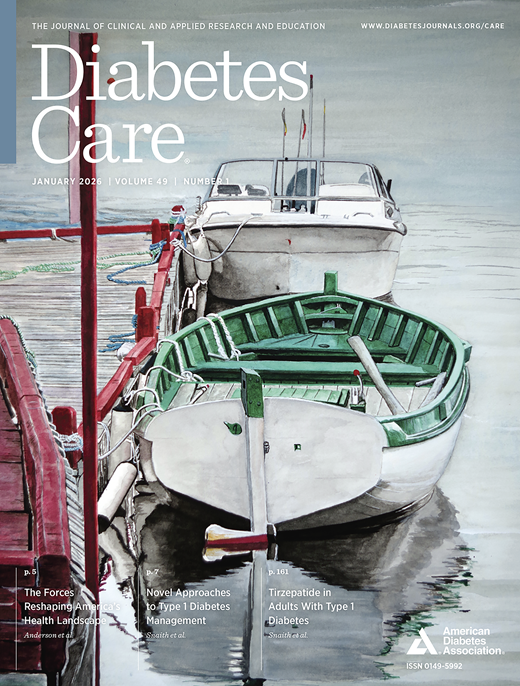
The trial, reported in the journal Diabetes Care in its January 2026 issue, enrolled 24 adults with type 1 diabetes and a body mass index above 30 kg/m2 [1]. Participants were randomly assigned to weekly tirzepatide injections or placebo. The tirzepatide dose was 2.5 mg for the first four weeks and 5.0 mg for the next eight weeks, lower than the maximum doses used in type 2 diabetes and obesity studies. Twenty-two of the 24 participants completed the study [1].
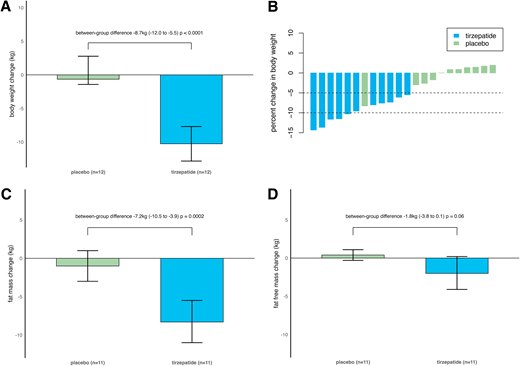
After 12 weeks, mean body weight fell by 10.3 kg with tirzepatide and 0.7 kg with placebo, an estimated treatment difference of 8.7 kg (95% confidence interval −12.0 to −5.5 kg; P < 0.0001), which the authors described as a loss of 8.8% of body weight. Every participant in the tirzepatide group lost at least 5% of body weight, and 45% lost at least 10%. In the placebo group, 9% lost at least 5% and none lost 10% [1].
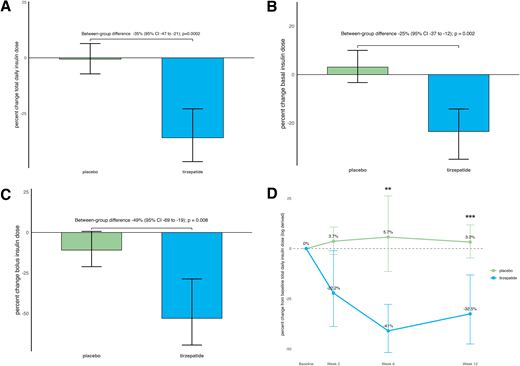
Average HbA1c, a marker of blood sugar over roughly three months, fell 0.4 percentage points more with tirzepatide than with placebo (95% CI −0.7 to 0.0; P = 0.05), a difference the review called short-term and imprecise [1][2]. Total daily insulin dose fell by 24.2 units per day with tirzepatide and 0.3 units per day with placebo, a 35.1% difference between groups (95% CI −46.5 to −21.3%; P = 0.0002) [1].
The trial reported no significant adverse events in either group [1]. The review, published in Endocrinology, Diabetes & Metabolism on April 20, 2026, found that gastrointestinal side effects were the most frequent safety finding across the studies it examined [2].
The review included eight studies: the one randomized trial and seven observational studies, most of which it judged to be at serious risk of bias. Because the studies differed so much in design, the authors combined them in a written summary rather than a statistical meta-analysis, and applied a GRADE-based framework to judge evidence quality. They concluded that current evidence is insufficient to establish durable blood sugar benefits or long-term safety [2].
Why it matters for patients
Type 1 diabetes is treated with insulin, and people who have it along with overweight or obesity can face a difficult cycle: extra weight raises insulin resistance, and higher insulin doses can add more weight while making glucose control harder to reach [2]. A drug that lowers both weight and insulin requirements would speak directly to that problem, which is why researchers are testing tirzepatide, a dual GIP and GLP-1 receptor agonist sold as Mounjaro and Zepbound, in this group [2].
The evidence is still early. The only randomized data come from a single 12-week study of 24 people using low doses. People with type 1 diabetes were excluded from the large trials that supported tirzepatide's approvals in type 2 diabetes and obesity, and the review describes it as an investigational adjunct in type 1 diabetes, not an established treatment [2]. Neither the trial nor the review reports on how tirzepatide affects the risk of diabetic ketoacidosis or severe low blood sugar in people with type 1 diabetes; those questions have not been answered.
What happens next
The review points to larger dedicated studies that are underway, including a published protocol known as TZP-T1D and two sponsor-led trials registered as NCT06914895 and NCT06962280 [2]. Completion dates and results for those studies have not been reported. The review's authors call for larger randomized trials to clarify whether any blood sugar benefit holds up and to assess long-term safety [2].
Images from the sources
Sources
Semaglutides.org provides information only, not medical advice. Talk to a licensed provider about your own care before making changes. Some telehealth links are affiliate links and are labeled where they appear.