Bone density study finds greater hip bone loss on incretin drugs in people without diabetes
A new study found hip bone loss was faster in non-diabetic patients on semaglutide or tirzepatide, even though larger studies link these drugs to fewer fractures overall.
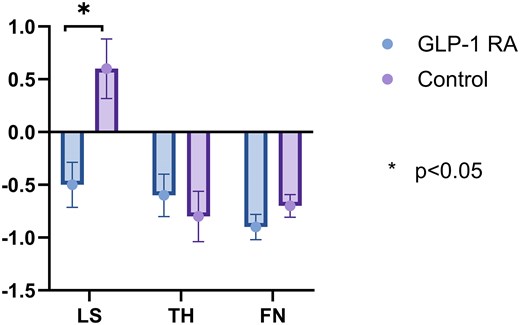
A single-center retrospective study found that people without diabetes who took semaglutide or tirzepatide lost more hip bone density than similar people who did not take the drugs, while no such difference showed up in patients who had diabetes [1].
Researchers matched 255 people on semaglutide or tirzepatide with 255 non-users [1]. Among participants without diabetes, annualized total hip bone loss was about 1 percent in drug users compared with 0.6 percent in non-users [1]. Among participants with diabetes, bone loss did not differ between the two groups [1]. The amount of bone lost tracked closely with how much weight a person lost, suggesting the drop in bone density may be tied to overall weight reduction rather than a direct drug effect [1].
That finding stands in contrast to a separate, much larger study using the TriNetX health record database, which tracked outcomes in more than 40,000 older adults with type 2 diabetes and overweight or obesity [2]. In that study, people age 65 and older who took semaglutide had significantly fewer femoral fractures over one year than those on a DPP-4 inhibitor, a different diabetes drug class — 0.3 percent versus 0.5 percent, a nearly 51 percent lower relative risk [2]. Tirzepatide users also had fewer fractures than DPP-4 inhibitor users, 0.2 percent versus 0.4 percent, a roughly 55 percent lower relative risk [2]. Falls were also less common in both drug groups compared with DPP-4 inhibitor users [2]. The fracture benefit was strongest in patients with a body mass index of 30 or higher [2].
The two studies looked at different things and different populations. The bone density study measured hip bone density directly using scans in a small, single-center group and found the effect only in people without diabetes [1]. The fracture study used medical records from a large international database, compared semaglutide and tirzepatide only against another diabetes drug, and included only adults 65 and older who already had type 2 diabetes [2]. Neither source in this story compared these two drugs against no treatment at all in the same population, and the sources do not explain why bone density loss and fracture risk seem to move in different directions.
Why it matters for patients
Bone density and fracture risk are related but not the same thing. A person can lose some bone mineral density and still have a lower overall risk of breaking a bone, if other factors — like fewer falls, less weight pressing on joints during a fall, or improved balance — offset the density loss. The fall and fracture study found lower fall rates in older adults with diabetes taking these drugs, which could help explain why fractures went down even as bone scans in a separate group showed density loss [1] [2].
For people without diabetes taking semaglutide or tirzepatide for weight loss, the bone density findings raise an open question that these sources do not fully answer: whether losing a large amount of weight on these drugs affects skeletal health differently than it does in people who also have diabetes. The bone loss study found the density drop tracked with weight lost, hinting that rapid or substantial weight loss itself, not the drug class, may be the driver [1].
What happens next
The sources reviewed here do not describe planned follow-up studies, though the bone density study's authors note it is a single-center, retrospective design with a modest sample size of 255 matched pairs [1]. Larger, prospective studies that track both bone density and actual fracture rates in the same patients — including those without diabetes who are losing significant weight — are not yet described in the available sources.
Sources
Semaglutides.org is for information only and is not medical advice. Always talk to a licensed healthcare provider about your own care. Some links to telehealth services are affiliate links, labeled where they appear.