Study links GLP-1 receptor agonists to blunted thirst signaling
A new analysis suggests GLP-1 drugs may dial down the body's thirst signal by 12%, offering a possible reason patients on these medicines often under-drink and get dehydrated.
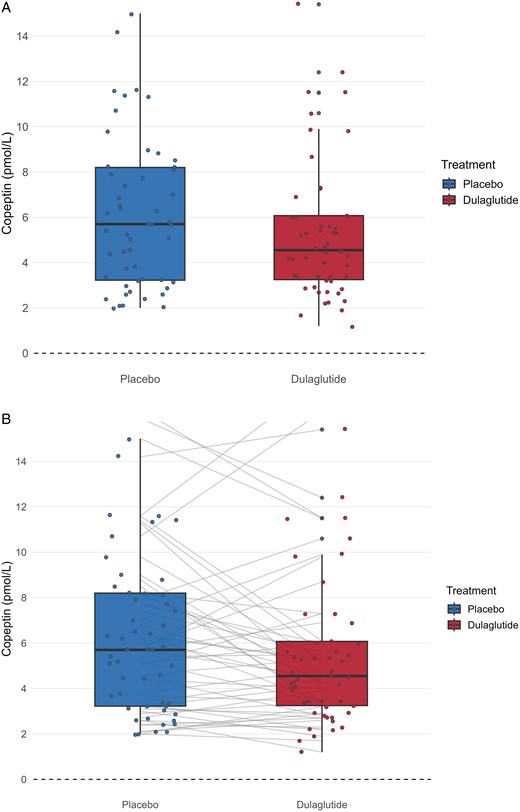
A secondary analysis of data from 54 people with normal fluid balance found that a GLP-1 receptor agonist blunted the body's vasopressin system, with copeptin levels falling by a median of 12% compared with placebo [1]. Copeptin is a stable marker used to estimate vasopressin, the hormone that helps the body sense thirst and manage water balance [1]. The study appears in the European Journal of Endocrinology [1].
The researchers describe this as a possible mechanism behind something doctors have already observed in patients: people on long-term GLP-1 therapy tend to drink less fluid and produce less urine [1]. Until now, that pattern was noted in the clinic, but the biological reason was not fully worked out. This analysis points to suppressed vasopressin signaling as one likely driver [1].
The study population was described as euvolemic, meaning participants started with normal, balanced hydration, not dehydration or fluid overload [1]. That detail matters because it suggests the effect on thirst signaling is not just a response to an existing fluid problem. Instead, the drug itself appears to interfere with the signaling pathway even when the body's water balance is otherwise normal [1].
The source material provided does not specify which GLP-1 receptor agonist was tested, the exact dose, the length of treatment, or how copeptin changes translated into measured differences in drinking behavior or urine volume within this specific study [1]. It also does not give a breakdown by age, sex, or other patient characteristics [1]. Those specifics are not yet known from what is available here.
Why it matters for patients
Many people taking semaglutide (sold as Ozempic, Wegovy, or Rybelsus) or tirzepatide (sold as Mounjaro or Zepbound) already report that their appetite and thirst both feel different on these drugs. This study offers a possible explanation for at least part of that experience: the medication may be turning down the internal alarm that normally tells the brain "drink now" [1].
That has a practical wrinkle. If the drug is blunting the thirst signal itself, then waiting to feel thirsty before drinking may not work as well as it does for someone not on these medications. The study's authors cite this as the reason behind existing clinical advice to drink water on a schedule, rather than relying on the sensation of thirst [1]. In other words, the guidance to drink at set times during the day is not just a general wellness tip. According to this analysis, it may be a direct response to a measurable change in the body's hydration signaling system caused by the drug [1].
For someone managing appetite suppression, nausea, or reduced food and fluid intake on a GLP-1 medication, this adds another layer to think about beyond calories: whether fluid intake is keeping pace with what the body needs, even when thirst does not clearly signal it [1].
What happens next
The source provided does not include information about follow-up studies, whether the finding will be tested in larger or more diverse patient groups, or whether it will change formal prescribing guidance [1]. It is not yet known whether regulators or medical societies plan to update hydration recommendations based on this specific analysis. Readers should note that this is described as a secondary analysis of a specific study population, and the sources here do not confirm how broadly these results apply across all GLP-1 receptor agonists or across different doses and treatment durations [1].
Sources
Semaglutides.org is for information only and is not medical advice. Always talk to a licensed healthcare provider about your own care. Some links to telehealth services are affiliate links, labeled where they appear.