SURPASS-CVOT post hoc finds a broad cardiorenal benefit for tirzepatide over dulaglutide
A post hoc analysis of SURPASS-CVOT found fewer combined heart, kidney and death events with tirzepatide than with dulaglutide in people with type 2 diabetes and existing cardiovascular disease.
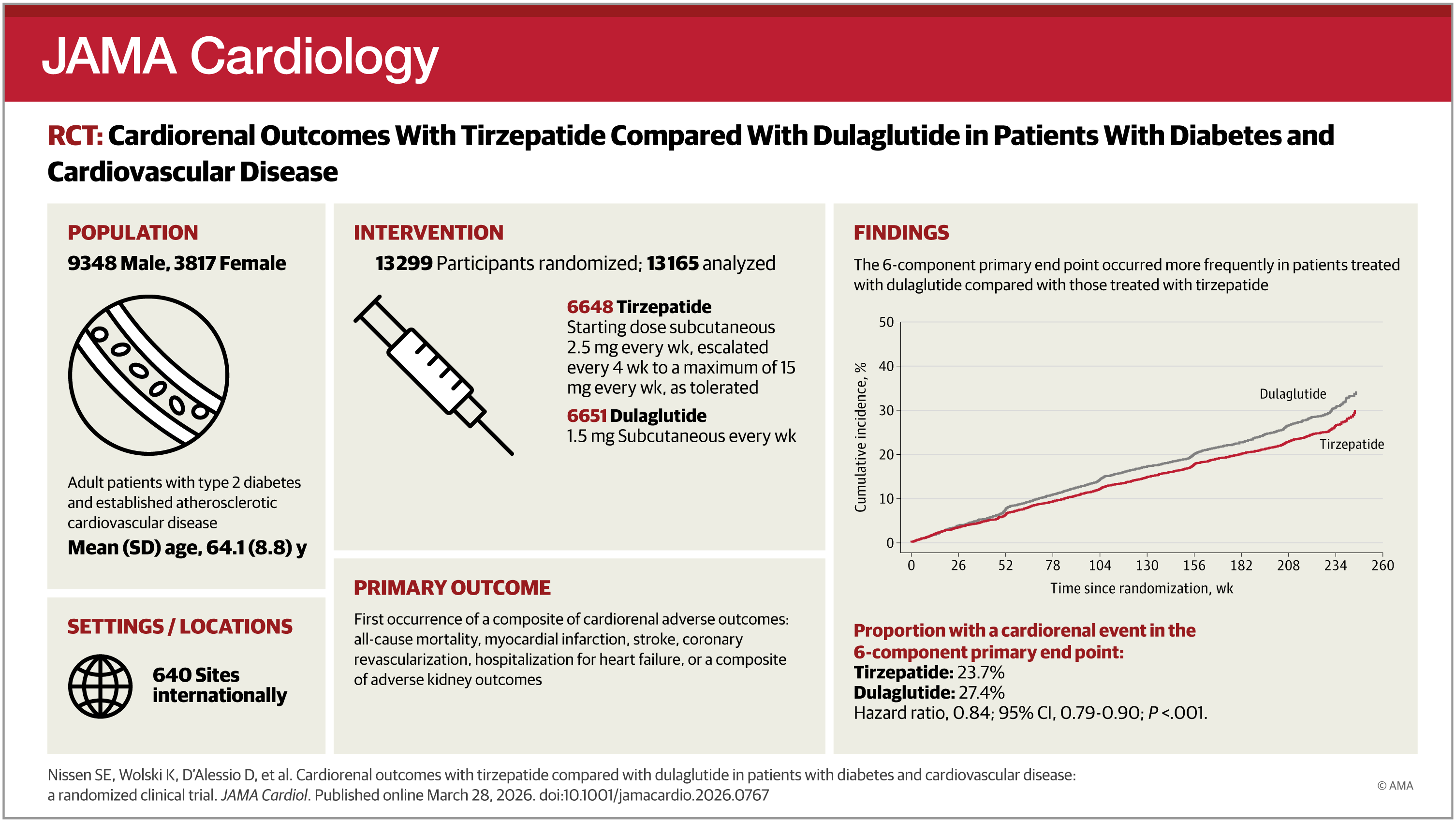
A new post hoc analysis of the SURPASS-CVOT trial, published in JAMA Cardiology, compared tirzepatide (sold as Mounjaro for type 2 diabetes and Zepbound for obesity) with dulaglutide using a wider outcome measure than the trial's original one. When researchers counted six types of events together — death from any cause, heart attack, stroke, coronary revascularization, hospitalization for heart failure, and a composite of adverse kidney events — 23.7% of people taking tirzepatide had at least one, compared with 27.4% of those taking dulaglutide [1].
That gap works out to a number needed to treat of 27, meaning roughly 27 people would need to be treated with tirzepatide instead of dulaglutide over the study period to avoid one of these events [1]. The median follow-up in the trial was 4.0 years [1].
What the analysis measured
SURPASS-CVOT enrolled adults with type 2 diabetes and established cardiovascular disease. Unlike most cardiovascular outcome trials, it did not use a placebo comparator; both groups received an active drug, with dulaglutide as the comparator. That design means the results describe one medicine against another, not against no treatment [1].
The original trial's primary endpoint was a narrower composite. This analysis widened it to six components, which the authors label MACE-6 [1]. According to the study summary, every component contributed to the difference, and the kidney composite on its own had a hazard ratio of 0.79 — about a 21% lower relative risk with tirzepatide [1]. The time-to-event data were analyzed with a Cox proportional hazards model stratified by whether patients were taking an SGLT-2 inhibitor, a class of diabetes drugs that independently protects the heart and kidneys [1]. The authors also reported five-component and four-component versions of the composite [1].
Two caveats are built into the design. First, this is a post hoc analysis, meaning the six-part endpoint was defined after the trial was completed rather than before it started. Post hoc results are generally treated as hypothesis-generating rather than definitive. Second, several authors are employees of Eli Lilly and Company, which makes both tirzepatide and dulaglutide and funded the trial [1]. The journal published a companion Editor's Note, "Exploring Additional Cardiorenal Outcomes," by Gregg C. Fonarow and John J. V. McMurray [1].
The source material available does not give the confidence intervals or p-values for the overall composite, the hazard ratios for individual components other than the kidney composite, the number of participants enrolled, or any new safety data. Those details are not yet known from what has been released here.
Why it matters for patients
Most of the public conversation about GLP-1 and dual GIP/GLP-1 drugs centers on weight and blood sugar. This analysis is part of a growing body of research asking a different question: whether these medicines change the rate of hard outcomes like death, hospitalization and kidney decline in people who already have heart disease.
The kidney signal is worth noting because kidney disease is common in long-standing type 2 diabetes and often progresses quietly. A hazard ratio of 0.79 for the kidney composite suggests a meaningful difference between the two drugs in this trial population [1], though again it comes from an analysis that was not pre-specified.
It is also a reminder that "GLP-1 drugs" are not interchangeable. Tirzepatide acts on two hormone receptors (GIP and GLP-1); dulaglutide acts on one. Head-to-head trials like this one are how the field sorts out whether those differences translate into different outcomes. This analysis compares tirzepatide only with dulaglutide — it does not tell you how tirzepatide compares with semaglutide (Ozempic, Wegovy, Rybelsus) or with orforglipron (Foundayo) on cardiorenal outcomes.
The findings apply to adults with type 2 diabetes and established cardiovascular disease. They do not automatically extend to people taking these drugs for weight management without diabetes or heart disease.
What happens next
The analysis was published in JAMA Cardiology and featured in the journal's coverage of the American College of Cardiology 2026 scientific sessions [1]. Whether regulators or guideline writers act on a post hoc composite endpoint is a separate question, and nothing in the available sources indicates a label change or guideline update has been proposed. Decisions about switching or starting any of these medicines are ones to work through with a clinician who knows your history.
Sources
Semaglutides.org is for information only and is not medical advice. Always talk to a licensed healthcare provider about your own care. Some links to telehealth services are affiliate links, labeled where they appear.