Nutrients publishes a nutrition-first framework for incretin therapy
A new peer-reviewed review in the journal Nutrients proposes minimum daily calorie targets — about 1,200 kcal for most women and 1,500 kcal for most men — to guide eating while on GLP-1 or dual incretin drugs for obesity.
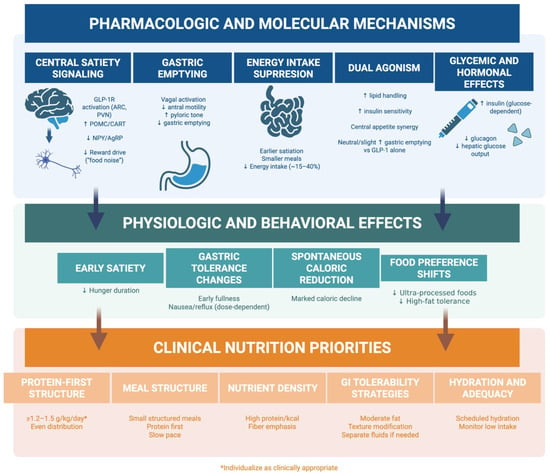
An international team of researchers published a review on May 29, 2026, in the open-access journal Nutrients that lays out a practical framework for diet, symptom management, and long-term weight maintenance for people taking GLP-1 and dual incretin medicines such as semaglutide (Ozempic, Wegovy) and tirzepatide (Mounjaro, Zepbound) [1]. The paper is titled "Nutrition-First Support for GLP-1 and Dual Incretin Therapy in Obesity: A Practical Framework for Dietary Management, Symptom Tolerability, and Long-Term Weight Maintenance" [1].
The central proposal is a set of energy floors, or minimum daily calorie targets, meant to keep intake from dropping too low while appetite is suppressed by these drugs. The authors suggest roughly 1,200 kcal per day for most women and 1,500 kcal per day for most men, with the understanding that these numbers should be adjusted up or down based on a person's body size and activity level rather than applied uniformly [1]. The framework is described as "nutrition-first," meaning diet planning is treated as a core part of treatment rather than something addressed only after side effects appear [1].
The review was authored by a group including Zambrano-Villacres, Campuzano-Donoso, Reytor-González, Rossetti, Cobellis L, Cobellis F, Pilone, Simancas-Racines, and Schiavo, and it appears in Nutrients, a journal published by MDPI [1]. As a review article, it does not report new clinical trial results. Instead, it synthesizes existing evidence and clinical experience into a proposed algorithm covering three areas: dietary management, tolerating gastrointestinal and other symptoms, and sustaining weight loss over the long term [1]. The specific dietary tactics recommended for symptom tolerability, such as meal timing, texture, or macronutrient balance, are not detailed in the material available for this article, so those particulars are not yet known.
Why it matters for patients
GLP-1 drugs and dual incretins work partly by sharply reducing appetite, and some patients end up eating far less than they need, which can raise the risk of muscle loss or nutrient shortfalls over months of treatment. A concrete calorie floor gives patients and their clinicians a specific number to watch instead of a vague instruction to "eat less." Because the review frames 1,200 kcal for women and 1,500 kcal for men as starting points to be individualized by body size and activity, not fixed rules for everyone, patients may see these figures adjusted in practice depending on their own weight, height, and how active they are [1].
The paper's focus on long-term weight maintenance also points to a practical reality: many patients stay on these medicines for years, and what they eat during that time affects both side effects and how well weight loss holds up. Because this is a review rather than a set of trial results, it does not establish that following these energy floors changes outcomes such as weight regain or muscle loss; it presents a proposed framework based on the authors' synthesis of existing knowledge [1].
What happens next
The review was published May 29, 2026, in Nutrients [1]. Whether professional medical or dietetic organizations will formally endorse or incorporate these specific energy floors into clinical guidance is not addressed in the available material, so that remains unknown at this time.
Sources
Semaglutides.org is for information only and is not medical advice. Always talk to a licensed healthcare provider about your own care. Some links to telehealth services are affiliate links, labeled where they appear.