Phase 2a smoking trial misses its main endpoint but cuts cigarette craving
A small randomized trial of once-weekly semaglutide in daily smokers failed its main goal of helping people resist smoking in a lab test, but it did lower craving, weight and blood sugar over eight weeks, researchers reported in JAMA Network Open.
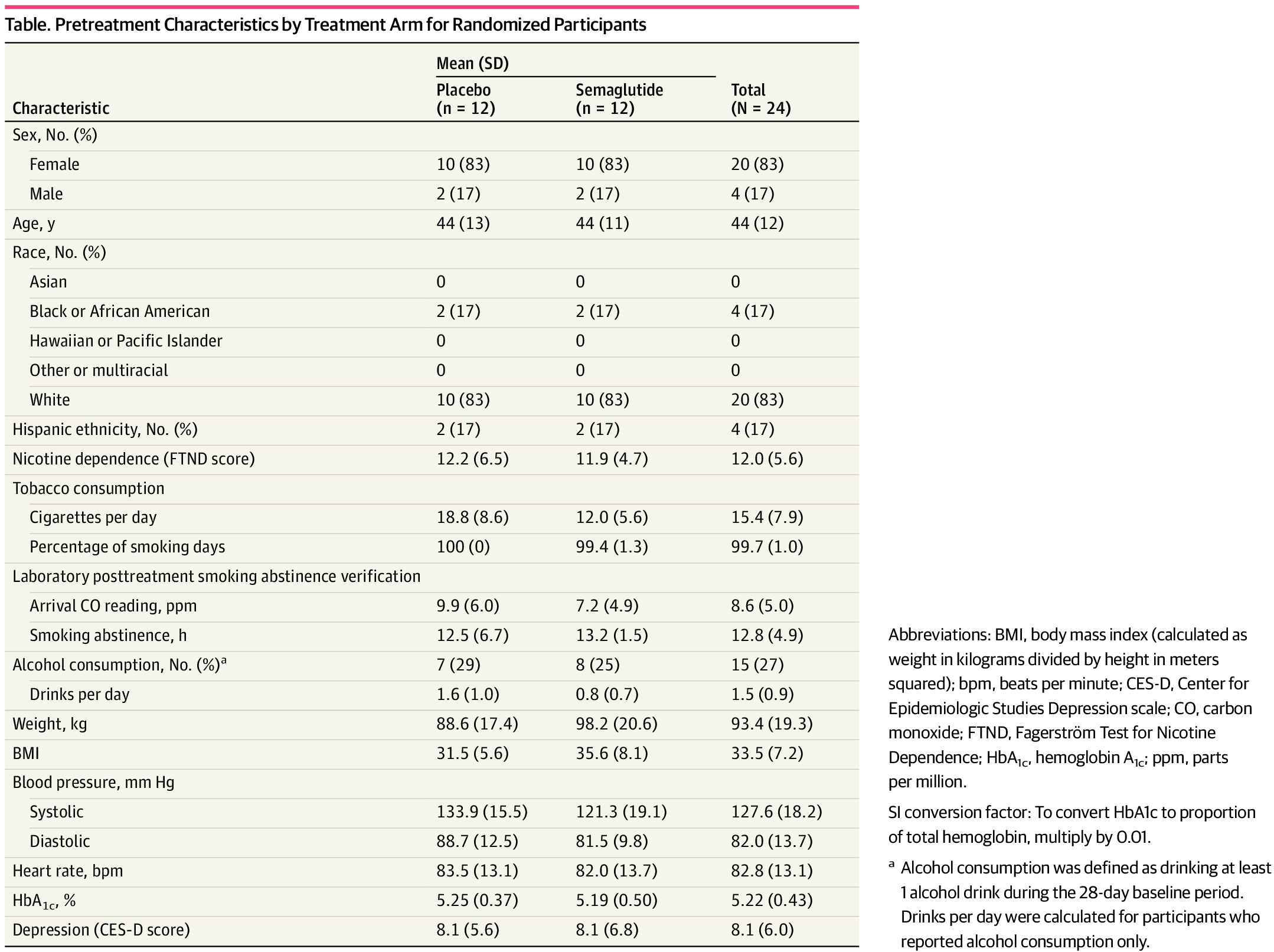
A randomized clinical trial testing once-weekly semaglutide in adults who smoke cigarettes every day did not meet its main goal, but turned up some secondary effects that researchers say are worth studying further, according to a paper published in JAMA Network Open [1].
The study, led by researchers from the University of Southern California, the University of North Carolina at Chapel Hill, Yale School of Medicine, the University of Toronto, the Centre for Addiction and Mental Health, and Penn State, tested semaglutide monotherapy against the main outcome of laboratory smoking resistance — essentially, how long and how much participants smoked when tempted in a controlled lab setting [1]. Posttreatment lab sessions were done after eight weeks of treatment, at a semaglutide dose of 0.5 mg per week [1]. The lab measures included delay time before smoking, assessed in 19 participants, and number of cigarettes smoked, assessed in 16 participants [1].
On that primary measure, semaglutide did not significantly improve participants' ability to resist smoking in the lab compared with before treatment, according to the study summary [1]. But the trial did track several other outcomes week by week, including cigarette craving, body weight, and hemoglobin A1c, a marker of average blood sugar over time [1]. Those three measures — weekly craving, weight, and HbA1c — showed statistically significant reductions over the course of the study [1]. The paper's supplementary materials also include a breakdown of adverse events by medication condition and dose, though specific rates were not detailed in the portion of the study reviewed here [1]. The study is indexed in PubMed under the same title [2].
Why it matters for patients
Semaglutide is already sold as Ozempic and Rybelsus for type 2 diabetes and as Wegovy for chronic weight management. It is not approved by the Food and Drug Administration as a smoking cessation aid. This trial is an early-stage, small study — the lab-based smoking measures included only 16 to 19 people — and it does not change what the drug is approved to treat.
The results are a mixed signal. The fact that semaglutide missed its main goal means researchers have not shown it helps people resist the physical act of smoking when tempted, at least not in this lab setup and at this dose. At the same time, the significant drops in craving, weight, and HbA1c suggest the drug's known effects on appetite and metabolism may extend into other reward-related behaviors, which is part of why scientists are curious about GLP-1 drugs and addiction more broadly.
For people currently taking semaglutide for diabetes or weight loss who also smoke, this study does not establish that the drug will help them quit or cut back on cigarettes. It also does not mean the drug is ineffective for that purpose — the trial was not designed or sized to answer that question definitively. Anyone weighing options for smoking cessation should know that this remains an open research question, not a proven use.
What happens next
The sources reviewed here do not specify a follow-up trial, a target enrollment for a larger study, or a date for further results. Given the small sample size in this JAOA-published trial, larger and longer studies would likely be needed before smoking cessation could be considered a supported use for semaglutide. No regulatory review or label change related to smoking cessation is indicated by the available sources.
Sources
Semaglutides.org is for information only and is not medical advice. Always talk to a licensed healthcare provider about your own care. Some links to telehealth services are affiliate links, labeled where they appear.