Restaurant survey finds GLP-1 users eat out more often, not less
A National Restaurant Association survey found GLP-1 users ate at restaurants 7.6 times a week versus 5.1 for non-users, suggesting the drugs are reshaping how people order, not whether they dine out [1].
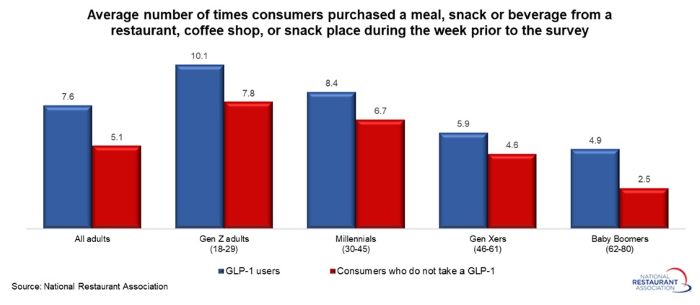
A new survey from the National Restaurant Association finds that people taking GLP-1 medications visit restaurants more often than people who are not, even though the drugs are known to suppress appetite [1]. The survey, based on responses from 1,400 US adults including 509 current GLP-1 users, found that GLP-1 users bought a restaurant meal, snack, or beverage an average of 7.6 times in the week before the survey, compared with 5.1 times for non-users [1].
The association says roughly one in eight adults currently use some form of GLP-1 medication, and that share is expected to keep growing as coverage and affordability improve [1]. About 29% of adults not currently using a GLP-1 say they would consider it if it were more accessible and less expensive, which the association says could eventually push GLP-1 use toward four in ten adults [1].
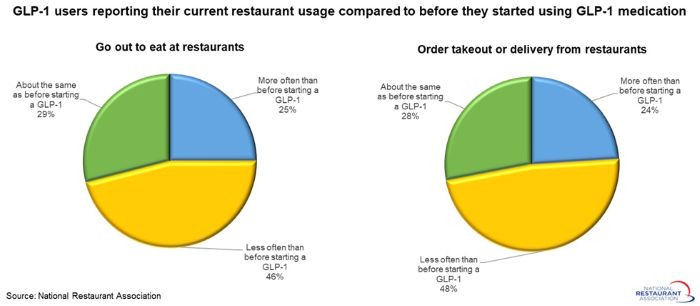
The data show a mixed picture within the GLP-1 user group itself. Nearly half of GLP-1 users say they have cut back on how often they eat out since starting the medication, but one in four say they are dining out more often than before, and about three in ten report no meaningful change [1]. Even so, GLP-1 users say restaurants remain central to how they live: 87% say they enjoy going to restaurants, and 71% call restaurants an essential part of their lifestyle, a figure 10 percentage points higher than the 61% of all adults who say the same [1].
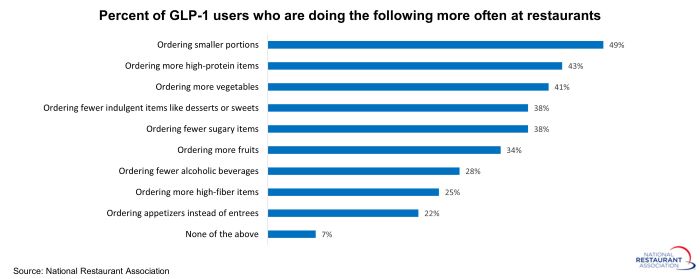
What is changing is how GLP-1 users order once they sit down. The survey found that a large majority of GLP-1 users say they have adjusted their ordering habits, most commonly by choosing smaller portions, prioritizing high-protein items, and adding more vegetables to their meals [1]. More than nine in ten GLP-1 users say they would order menu items tailored to their specific food and beverage preferences, and 76% say they would pay a premium for such options [1]. Separately, 86% say they would be interested in buying take-home meal kits from restaurants built around their dietary preferences [1].
Why it matters for patients
For people taking semaglutide (Ozempic, Wegovy, Rybelsus) or tirzepatide (Mounjaro, Zepbound), this survey suggests that reduced appetite does not necessarily mean giving up restaurant meals altogether. It points instead to a shift in what and how much people order, rather than whether they go out at all [1]. That may be useful context for patients trying to figure out how to fit dining out into a routine shaped by a smaller appetite, since the survey found smaller portions, higher protein, and more vegetables were the most common adjustments GLP-1 users made [1].
The survey also flags a communication gap that could affect what patients encounter on menus. While about nine in ten GLP-1 users say restaurants typically offer healthy options, 89% think restaurants could do a better job clearly labeling or highlighting those choices [1]. GLP-1 users in the survey also said they want more flexibility, including more portion-size choices and the ability to order snack-sized items throughout the day, which could show up as menu changes at some restaurants going forward [1].
What happens next
The National Restaurant Association's survey was fielded March 6 to 11, 2026, and the findings were published as an industry analysis on May 20, 2026 [1]. The association frames the results as a signal to restaurant operators about menu and portion strategy rather than a one-time snapshot, and ties future GLP-1 adoption to trends in insurance coverage and drug affordability, though no specific dates for expected changes in either are given in the source [1].
Images from the sources
Sources
Semaglutides.org is for information only and is not medical advice. Always talk to a licensed healthcare provider about your own care. Some links to telehealth services are affiliate links, labeled where they appear.