Consensus report issues practical guidelines for GLP-1 use in type 1 diabetes
A new consensus report in Diabetes Technology & Therapeutics says no GLP-1 or GLP-1/GIP drug is approved for type 1 diabetes, and offers safety guidance for people who already take them for obesity [1][2].
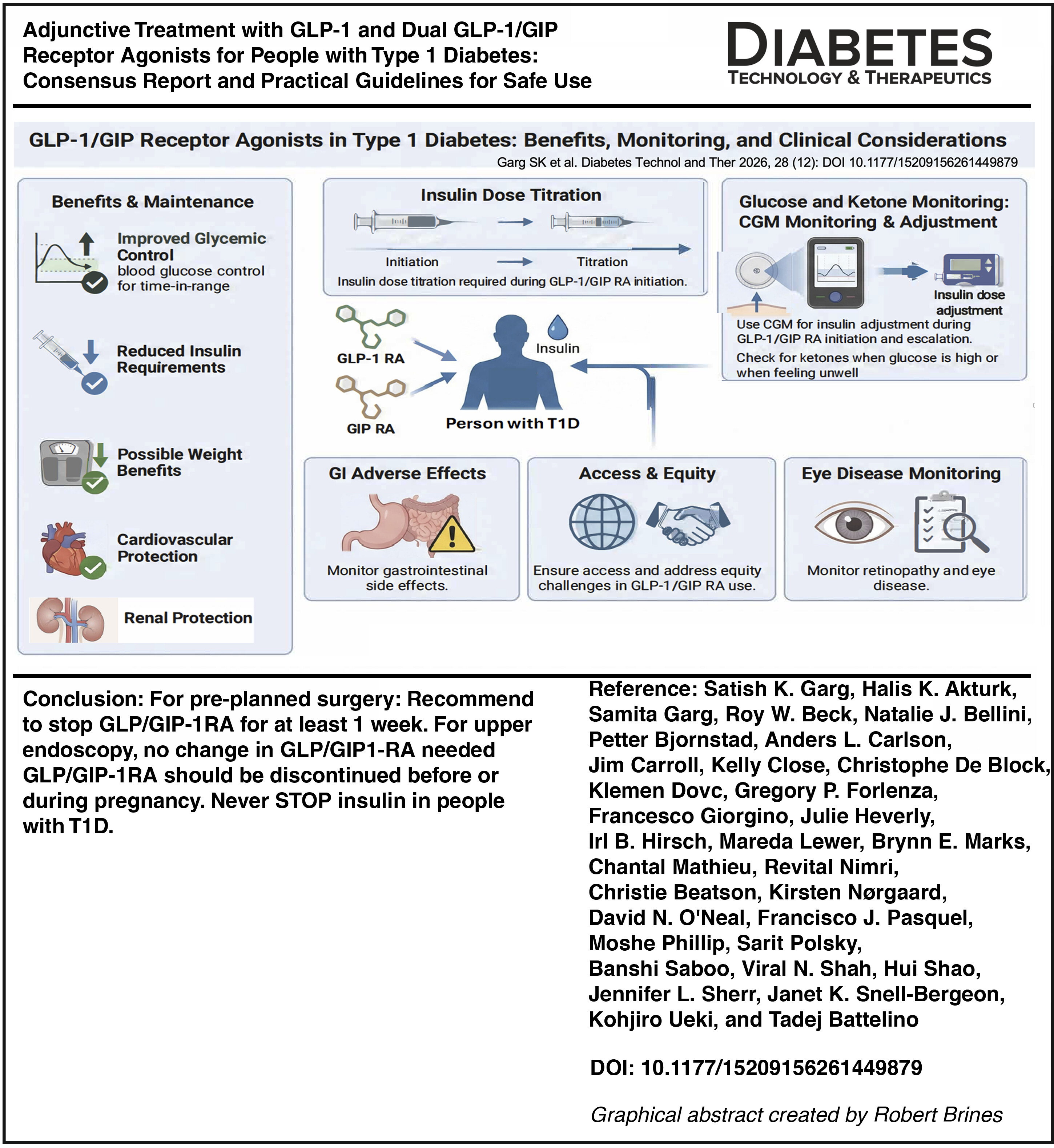
A group of diabetes specialists has published a consensus report and practical guidelines on using GLP-1 receptor agonists and dual GLP-1/GIP receptor agonists as add-on therapy for people with type 1 diabetes. The report, published in Diabetes Technology & Therapeutics, states plainly that these drugs have not received regulatory approval for type 1 diabetes, and that hypoglycemia and hyperglycemia-related ketosis are the main safety concerns when someone with type 1 diabetes starts them [1][2].
The authors say they wrote the guidance because of a gap between what is approved and what is actually happening. Access to these medicines "is already possible, based on their use to treat overweight and obesity," the report notes — but without a type 1 diabetes indication, patients may miss out on the education and clinical support that would normally come with a labeled use [1]. That includes help managing the insulin dose changes expected when a GLP-1 drug is added [1][2].
What the report covers
The consensus report is a literature review plus expert guidance, not a new clinical trial. The authors searched MEDLINE, PubMed and the Cochrane Library for articles published up to February 9, 2026, using search terms including semaglutide, tirzepatide, exenatide, liraglutide, dulaglutide, type 1 diabetes, insulin titration and safety [1].
The report frames the problem this way: since exenatide was introduced in 2005, incretin-based drugs have transformed type 2 diabetes care, with effects that include weight loss, reduced insulin resistance, improved glucose regulation, and reductions in risk markers for diabetic kidney disease and cardiovascular disease [1][2]. But approvals so far cover only type 2 diabetes, obesity, sleep apnea, and metabolic dysfunction-associated steatohepatitis with moderate-to-advanced fibrosis [1][2].
Type 1 diabetes is not on that list. The authors attribute this in part to "the limited number of inconsistent, small-scale" randomized controlled trials and real-world studies looking at how these drugs affect glucose control in type 1 diabetes [1][2]. Larger randomized trials are described as ongoing or planned in people with type 1 diabetes, though the abstract does not name the specific trials, sponsors or expected completion dates [1][2].
The authors are explicit about the narrow scope of their work. Writing in an "Acknowledgment of Narrow Scope" section, they say that in the absence of those trial results, and given "an increasing number of T1Ds leveraging GLP/GIPs as adjunctive therapies," they wanted to offer recommendations on how to safely integrate semaglutide and tirzepatide into type 1 diabetes management [1]. Semaglutide is sold as Ozempic, Wegovy and Rybelsus; tirzepatide is sold as Mounjaro and Zepbound.
The article's keywords point to the specific topics addressed: gastrointestinal side effects in people with type 1 diabetes using these drugs, diabetic eye disease, glucose and ketone monitoring, glucose control, and insulin dose changes [2]. The detailed recommendations sit behind a paywall and are not available in the sources reviewed here.
The statement has been endorsed by Advanced Technologies & Treatments for Diabetes (ATTD), International Diabetes Federation–Europe, the American Association of Clinical Endocrinologists (AACE), Breakthrough T1D, the International Society for Pediatric and Adolescent Diabetes (ISPAD), and the Association of Diabetes Care and Education Specialists (ADCES) [1][2].
Why it matters for patients
Many people with type 1 diabetes also live with overweight or obesity, and can qualify for a GLP-1 prescription under the obesity indication. This report is an acknowledgment by mainstream diabetes organizations that this is already occurring, and that the use is off-label for the diabetes itself [1][2].
The two named risks are specific to insulin-treated diabetes. Because these drugs lower glucose and reduce food intake, insulin doses that were correct before starting may become too high, raising hypoglycemia risk [1][2]. The report also flags hyperglycemia-related ketosis after starting a GLP-1 or GLP-1/GIP drug [1][2]. Ketone monitoring is one of the listed topics [2].
Insurance coverage is a separate question the sources do not address. The report notes only that lacking a type 1 indication can limit access and education [1].
What happens next
The authors point to larger randomized trials that are ongoing or planned in type 1 diabetes [1][2]. Their timing, size and results are not yet known from these sources. Until those read out, no approval for the type 1 indication is expected.
Sources
Semaglutides.org is for information only and is not medical advice. Always talk to a licensed healthcare provider about your own care. Some links to telehealth services are affiliate links, labeled where they appear.