Review maps the off-label evidence across five domains and finds it thin everywhere
A new review of research on semaglutide and tirzepatide finds early signals for uses beyond diabetes and weight loss — from cancer to fertility — but says solid randomized trial evidence is still lacking in every area studied.
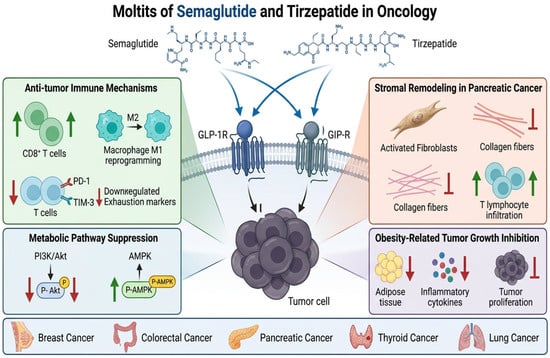
A review published July 21 in the journal Biomedicines looked at how semaglutide (sold as Ozempic, Wegovy and Rybelsus) and tirzepatide (sold as Mounjaro and Zepbound) are being studied for uses that go beyond their approved roles in diabetes and obesity [1]. The authors, from the University of Catania in Italy, examined five areas: oncology, psychiatry and addiction medicine, orthopedics, aesthetic medicine, and human reproduction [1]. Their overall conclusion is that each area shows some promising signal, but the supporting evidence comes mostly from lab studies, observational data and large database analyses rather than randomized controlled trials [1].
In oncology, the review describes antitumor activity tied to changes in the immune system around tumors and to broader metabolic reprogramming in the body [1]. In psychiatry and addiction medicine, the drugs appear to affect reward pathways in the brain, with reported effects on alcohol use and binge-eating behavior [1]. For joint health, the review points to evidence on knee osteoarthritis, including effects on pain and physical function [1]. In aesthetic medicine, the paper discusses signals related to inflammatory skin disease [1]. And in reproduction, it covers research touching on polycystic ovary syndrome (PCOS) and male fertility [1].
Across all five areas, the review's authors are consistent in their caution: the evidence base is described as thin, drawn mainly from preclinical models, observational cohorts, and pharmacoepidemiologic studies — the kind of research that can spot patterns in large populations but cannot prove cause and effect the way a randomized trial can [1]. The review states that randomized trials remain limited in each of these domains [1].
Why it matters for patients
Semaglutide and tirzepatide are approved in the United States for specific uses: managing type 2 diabetes and, in higher doses under different brand names, chronic weight management. Patients sometimes hear about other potential uses — for mood, addiction, joint pain, skin conditions or fertility — through social media, anecdotal reports, or news coverage. This review is a useful reality check on where that evidence currently stands.
The key takeaway for patients is that early research signals are not the same as proof. Preclinical studies (done in cells or animals), observational cohorts (which track people without controlling who gets the drug), and pharmacoepidemiologic studies (which mine large health databases for patterns) can all suggest that something might be worth studying further. But none of these designs can rule out other explanations for what researchers are seeing, such as differences between people who happen to take the drug and those who don't [1]. Randomized controlled trials, where patients are assigned by chance to receive a drug or not, are considered the gold standard for showing whether a treatment actually causes a benefit — and the review says those trials are still limited across all five areas it examined [1].
For someone currently taking semaglutide or tirzepatide for an approved use, this review does not change anything about the established, FDA-approved indications for these drugs. For someone curious about off-label possibilities, it is a signal that the science in areas like cancer, addiction, joint pain, skin disease, or fertility is still developing and not yet settled [1].
What happens next
The review does not lay out specific new trials or dates. Its broader point is that more rigorous, randomized research is needed before any of these five potential uses could be considered well-established [1]. Readers interested in a particular area — such as osteoarthritis or addiction medicine — may want to watch for future randomized trial results as that research matures, since the current evidence base described in this review is not yet strong enough to draw firm conclusions [1].
Sources
Semaglutides.org is for information only and is not medical advice. Always talk to a licensed healthcare provider about your own care. Some links to telehealth services are affiliate links, labeled where they appear.