Systematic review finds GLP-1 drugs raise testosterone only in metabolically unwell men
A new systematic review finds GLP-1 receptor agonist drugs raise testosterone only in men who have obesity, type 2 diabetes or related low testosterone, not in healthy men with normal hormone levels [1].
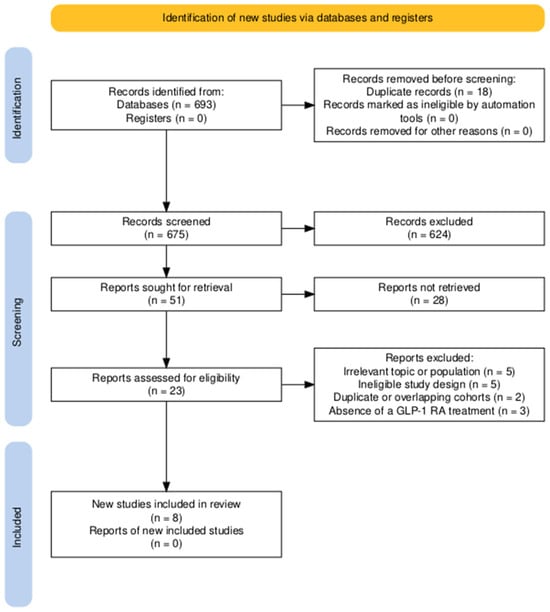
A systematic review published July 23, 2026, in the journal Cells looked at how GLP-1 receptor agonist medications affect male reproductive hormones and function [1]. The review followed PRISMA 2020 guidelines, a standard method for combining and grading medical research, and searched PubMed/MEDLINE, Cochrane and Google Scholar for studies published between January 2021 and January 2026 [1]. Researchers Zakhi Zafrani, Sarah Suleman Khan and Michael Zitzmann found eight studies that fit their criteria, including one randomized, placebo-controlled crossover trial and six other observational or interventional studies [1].
The main finding is that the effect of these drugs on testosterone depends heavily on who is taking them. In men with obesity, type 2 diabetes, or what the authors call functional hypogonadism — low testosterone caused by an underlying metabolic problem rather than a primary reproductive disorder — GLP-1 receptor agonists were associated with modest increases in testosterone, along with improvements in erectile function or in some measures of semen quality [1]. But in the placebo-controlled trial involving healthy men with normal testosterone levels, the drug produced no significant change in hormone levels or reproductive measures [1]. The authors conclude that the endocrine response tracks with a man's underlying metabolic health rather than being a direct effect of the drug on the reproductive system [1].
The review does not specify brand names or the exact molecules used in each of the eight studies, so it is not yet known from this source which specific GLP-1 drugs — such as semaglutide (Ozempic, Wegovy, Rybelsus), tirzepatide (Mounjaro, Zepbound) or others — were involved in each finding. The authors frame their conclusion as evidence that testosterone changes are "largely mediated by improvements in metabolic health" rather than a separate hormonal action of the drug class [1].
Why it matters for patients
Low testosterone linked to obesity or type 2 diabetes is common, and some men on GLP-1 drugs for weight loss or diabetes may notice changes in libido, erectile function or energy that could relate to hormone shifts [1]. This review suggests that if a benefit to testosterone or erectile function occurs, it is most likely to show up in men who started out with obesity, diabetes or hypogonadism tied to those conditions — not in men whose hormone levels were already normal [1]. The authors describe this as a possible "fertility-preserving metabolic strategy" for some men with functional hypogonadism, but that framing comes from the study authors themselves, and the review is based on a small number of studies, only one of which was a placebo-controlled trial [1].
Because the review draws on just eight studies, and most were observational rather than tightly controlled, the findings describe an association rather than a proven cause-and-effect relationship in most of the included research [1]. The size of the testosterone increases, how long they lasted, and whether they varied by drug or dose are not detailed in the information available here.
What happens next
The review does not describe planned follow-up studies or regulatory next steps. The authors' stated implication is that GLP-1 receptor agonist effects on male reproductive hormones appear to depend on a patient's starting metabolic condition, a distinction future trials would need to test directly by comparing men with and without obesity or diabetes under the same controlled conditions [1].
Sources
Semaglutides.org is for information only and is not medical advice. Always talk to a licensed healthcare provider about your own care. Some links to telehealth services are affiliate links, labeled where they appear.