Three-case series describes flat mood and lost motivation at tirzepatide 15 mg
A new three-patient case report describes flat mood and lost motivation in women taking the highest dose of tirzepatide, symptoms that eased when the dose was lowered.
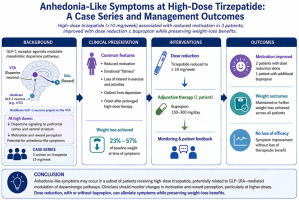
A case series published in the journal Obesity Pillars describes three women with obesity who developed reduced motivation, emotional flatness, or loss of interest in previously enjoyable activities while taking tirzepatide 15 mg weekly, the top dose of the drug sold as Zepbound and Mounjaro [1]. All three lost weight successfully on the medication, but reported that something felt off emotionally even as the scale moved in the direction they wanted [1].
Two of the three patients had no prior history of mood disorders. One had a history of depression and anxiety [1]. The authors say the patients described their symptoms as distinct from a depressive episode, and the changes appeared only after prolonged treatment at or near the maximum dose [1]. One patient noticed on her own that her mood and motivation improved when she temporarily stopped and lowered her dose around a medical procedure [1].
All three patients had their tirzepatide dose reduced to 10 mg per week or lower [1]. Two improved markedly in motivation and enjoyment of daily activities from the dose reduction alone [1]. The third needed the antidepressant bupropion added on top of the lower dose to see further improvement [1]. In one patient, raising the dose back up brought the symptoms back without any extra weight-loss benefit, and lowering it again restored her motivation while she kept the weight off [1]. Across all three cases, the researchers report that symptoms improved even as patients maintained or continued to lose weight [1].
The authors, who include obesity medicine physicians, propose that the symptoms are linked to how GLP-1 receptor agonists affect the brain's reward pathways, the same mesolimbic dopamine system thought to explain why these drugs reduce food cravings and other compulsive behaviors [1]. They suggest that in some patients, this dampening of reward signaling may go further than intended, blunting motivation and pleasure more broadly rather than just curbing appetite [1].
Why it matters for patients
This is a case series of three patients, not a clinical trial, so it cannot show how common this experience is or prove that tirzepatide caused it in every instance [1]. But the authors frame it as a potentially underrecognized effect of high-dose therapy that clinicians should watch for, particularly because the symptoms did not look like typical depression and might otherwise be missed or misattributed [1].
For people taking tirzepatide at 15 mg, especially those who notice they feel emotionally flat or have lost interest in things they used to enjoy, this report offers a possible explanation tied to the drug's dose and its effects on the brain's reward circuitry rather than to the weight loss itself [1]. The case series suggests dose reduction, sometimes combined with bupropion, was linked to improvement in these three patients without giving up their weight-loss progress [1]. It is not yet known whether this pattern shows up in larger groups of patients, how often it occurs, or whether it applies to other GLP-1 drugs such as semaglutide (Ozempic, Wegovy, Rybelsus) or orforglipron (Foundayo), since the report covers only tirzepatide [1].
What happens next
The case series was published in the September 2026 issue of Obesity Pillars, a journal of the Obesity Medicine Association [1]. The authors call for clinicians to consider monitoring for changes in motivation and reward perception during treatment, particularly at higher doses, though the paper does not describe any planned larger study to confirm how widespread this effect might be [1].
Sources
Semaglutides.org is for information only and is not medical advice. Always talk to a licensed healthcare provider about your own care. Some links to telehealth services are affiliate links, labeled where they appear.