Wegovy pill reaches its fifth regulatory approval
The European Union has approved Novo Nordisk's Wegovy pill for weight management, the fifth country or region to clear the once-daily tablet after the US, UK, UAE and Bahrain.

The European Commission has approved Novo Nordisk's oral semaglutide 25 mg tablet, sold as Wegovy, for adults with obesity or with overweight plus at least one weight-related health condition [1]. The decision makes Wegovy the first GLP-1 receptor agonist available as a pill for weight management across all EU member states [1]. It follows approvals already in place in the United States, the United Kingdom, the United Arab Emirates and Bahrain, bringing the pill's total regulatory clearances to five [1].
The EU approval covers adults with a body mass index of at least 30 kg/m², or at least 27 kg/m² with a weight-related condition such as cardiovascular disease, type 2 diabetes or obstructive sleep apnea, to be used along with a reduced-calorie diet and more physical activity [1][2]. The tablet is meant to be taken once daily on an empty stomach [2]. Unlike the Wegovy injection, which is approved for people 12 and older in the EU, the pill is authorized only for adults [2]. The European Commission also separately approved a 7.2 mg single-dose injection pen version of Wegovy for obesity [1].
The approval rests on the OASIS trial program, including OASIS 4, a Phase 3 study of 307 participants with obesity or overweight and at least one weight-related condition [1][2]. Novo Nordisk reported that people taking the oral tablet lost about 17% of their body weight on average, compared with 3% for those on placebo, when combined with diet and exercise changes [1]. About one-third of people on the drug lost 20% or more of their body weight [1]. The company said the side-effect profile was similar to the injectable version, with gastrointestinal symptoms and nausea occurring mainly early in treatment [1][2]. Discontinuations due to side effects were somewhat higher on the drug than on placebo, at 6.9% versus 5.9% [1].
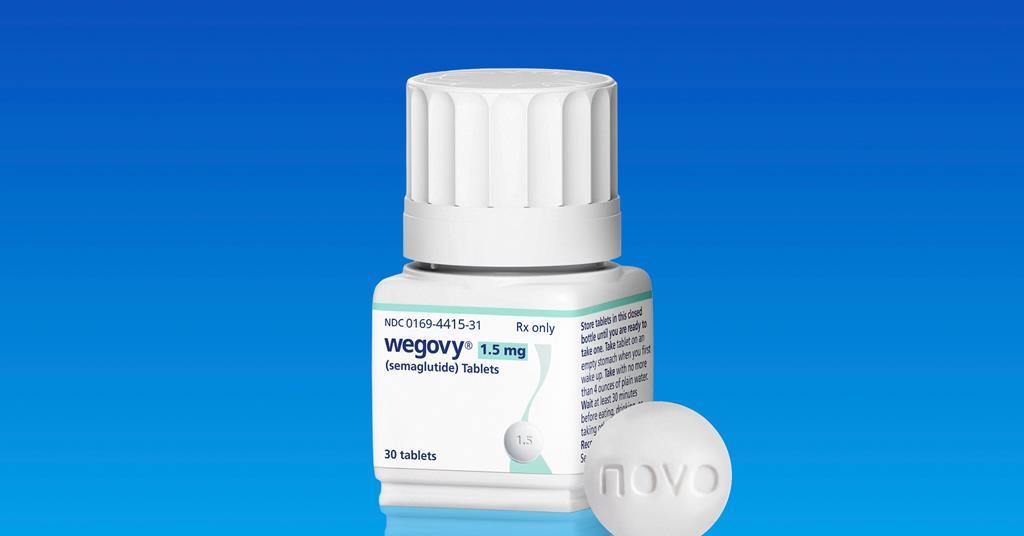
The path to this approval began with a positive opinion in May 2026 from the European Medicines Agency's Committee for Medicinal Products for Human Use, which recommended extending Wegovy's marketing authorization to include tablet forms in four strengths: 1.5 mg, 4 mg, 9 mg and 25 mg [1][2]. That recommendation went to the European Commission for a final decision [2]. Wegovy remains under additional monitoring in the EU, a status used for newer or closely watched medicines [2].
Why it matters for patients
For people in the US already using injectable Wegovy or the oral tablet, this approval does not change access or price at home. It does show that regulators in a large new market have reviewed the same OASIS trial data used for the US approval and reached a similar conclusion about effectiveness and safety [1][2]. The consistency of the side-effect pattern across countries, mainly gastrointestinal symptoms early in treatment, may be reassuring to patients weighing whether to try the pill form instead of the injection [1][2].
The approval also signals that Novo Nordisk is building out oral semaglutide as a global product rather than a niche one. That could affect long-term supply, manufacturing investment and, eventually, competition dynamics that touch US pricing, though the sources describe none of those effects directly.
Separately, the sources note that Wegovy is not the only oral GLP-1 drug in development. AstraZeneca has moved its own oral small-molecule GLP-1 candidate into Phase 3 trials after encouraging Phase 2b results in obesity and type 2 diabetes, suggesting more oral options may reach patients in the coming years [2].
What happens next
Novo Nordisk has said it plans to launch the Wegovy tablet in additional countries during the second half of 2026, though the sources do not name which countries or give exact dates [1][2]. Discussions about pricing and reimbursement in EU countries were expected to begin once the marketing authorization extension was granted, according to the EMA's timeline described before the European Commission's decision [2]. No further EU-specific milestones are given in the sources.
Images from the sources
Sources
Semaglutides.org is for information only and is not medical advice. Always talk to a licensed healthcare provider about your own care. Some links to telehealth services are affiliate links, labeled where they appear.