Brazilian survey documents how widely GLP-1 drugs are self-prescribed
A Brazilian web survey found nearly one in four GLP-1 users took the drugs without a prescription, raising concerns as the medications are heavily advertised worldwide, including in the US.
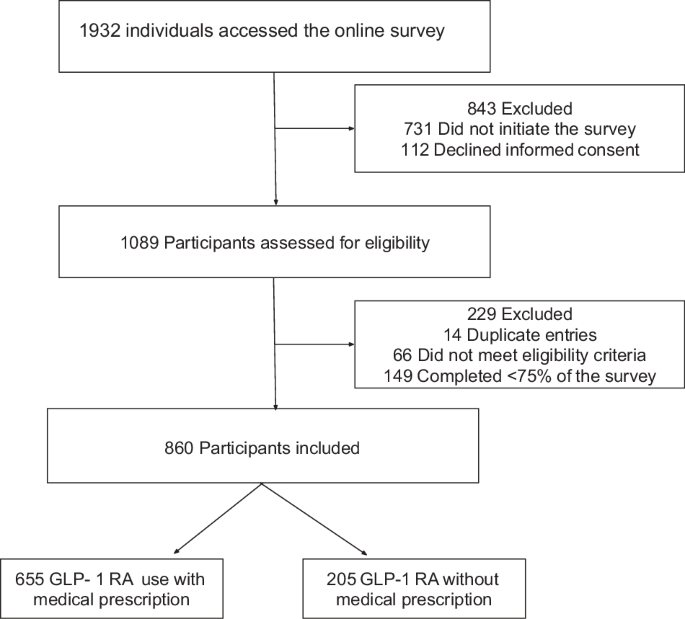
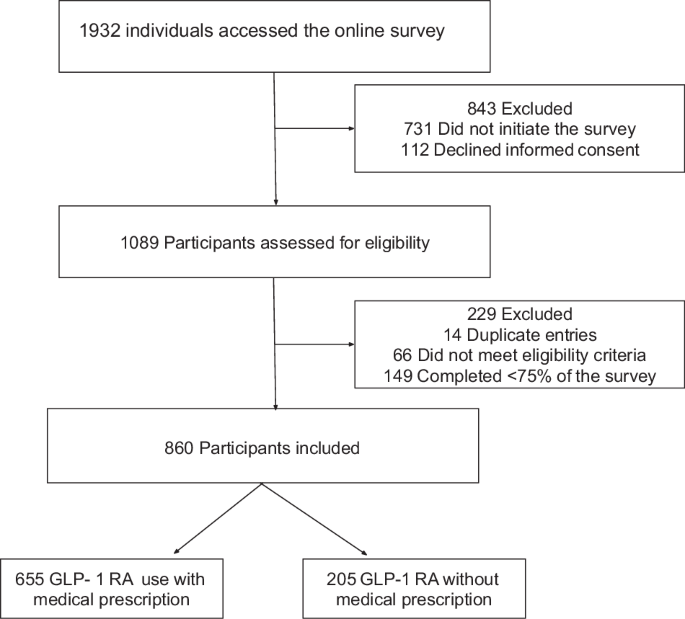
A survey of 860 Brazilian adults who reported current or past use of GLP-1 receptor agonists found that 23.8% had used the drugs without a medical prescription, according to a study published in the International Journal of Obesity [1]. The authors call self-medication with these drugs common enough to be a public health concern in a market where the medications are widely advertised [1].
The study, conducted through an online questionnaire distributed via WhatsApp, Instagram, TikTok, YouTube, Facebook, and printed QR codes at clinics and public spaces, ran from November 2024 to April 2025 [1]. Participants averaged 39.46 years old, 82.0% were female, and 47.1% had obesity [1]. The only GLP-1 medicines approved in Brazil for weight loss at the time were liraglutide and semaglutide [1].
The researchers used statistical modeling to identify who was more likely to self-medicate. People without obesity were 45% more likely to self-medicate than those with obesity (PR = 1.45; 95% CI: 1.13–1.89) [1]. People who did not attend physical training centers were 55% more likely to do so (PR = 1.55; 95% CI: 1.23–1.96), and healthcare workers were 45% more likely (PR = 1.45; 95% CI: 1.14–1.84) [1]. By contrast, being married (PR = 0.73), having diabetes (PR = 0.35), or having an eating disorder (PR = 0.72) were each linked to lower rates of self-medication [1].
The paper notes that Brazil has strict rules on selling GLP-1 drugs, but pharmacies were not required to retain prescriptions until 2025, a gap the authors say may have made it easier to obtain the drugs without a doctor's involvement [1]. The study also cites US Food and Drug Administration warnings about counterfeit and unapproved GLP-1 products, and a UK safety statement tied to hospital admissions and deaths linked to inappropriate GLP-1 use, as part of the broader context for their concern [1].
The survey is self-selected, drawn from people who saw social media posts, ads, or QR codes and chose to respond, so it cannot be read as a measure of how common self-medication is across the entire Brazilian population [1]. The authors designed the recruitment strategy, including paid and geographically targeted ads, specifically to try to reduce this kind of bias, but the sample is still not a random, nationally representative one [1].
Why it matters for patients
The finding comes from Brazil, not the United States, and the survey methods mean it should not be treated as a national prevalence estimate even there [1]. Still, the pattern the study describes, people obtaining GLP-1 drugs without a prescription or clinical supervision, echoes concerns raised in other countries, including FDA warnings about counterfeit Ozempic and unapproved GLP-1 products circulating in the US drug supply, and a UK safety notice linking inappropriate use to hospital admissions and deaths [1].
For patients considering semaglutide (Ozempic, Wegovy, Rybelsus), liraglutide, tirzepatide (Mounjaro, Zepbound), or other GLP-1 medicines, the study is a reminder that these drugs are approved and studied for use under medical supervision, at specific doses, for specific conditions. The survey found that people without obesity and those not engaged in structured fitness programs were more likely to self-medicate, suggesting some use may fall outside the approved criteria of a BMI of 30 or higher, or 27 to 29.9 with a weight-related health condition [1].
The study does not report what specific harms, if any, occurred among the self-medicating participants in this sample. It also does not establish how common this practice is in the US market specifically, where GLP-1 drugs are sold under different regulatory and pharmacy rules than in Brazil. What is not yet known is whether similar rates or patterns of unsupervised use exist among American patients; the sources provided do not address that question.
What happens next
The authors say their findings may help inform public health measures aimed at reducing self-medication, though the study does not describe specific policy proposals or timelines [1]. Brazil's health regulator, ANVISA, began requiring pharmacies to retain prescriptions for GLP-1 drugs in 2025, a change referenced in the study as part of the regulatory backdrop, though the paper does not report data on whether that rule has changed self-medication rates since then [1].
Images from the sources
Sources
Semaglutides.org is for information only and is not medical advice. Always talk to a licensed healthcare provider about your own care. Some links to telehealth services are affiliate links, labeled where they appear.