Case series reports muscle and grip-strength gains on tirzepatide — with testosterone in the mix
A small clinic study of 93 men on tirzepatide plus testosterone therapy and coaching reported muscle and grip-strength gains, but the drug's role can't be separated from the other treatments.
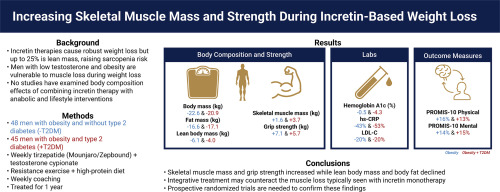
A new case series published in the journal Obesity Pillars describes 93 men with obesity who lost significant weight while also gaining measures of skeletal muscle mass and grip strength over a year. The catch, laid out by the study's own authors, is that these men were not taking tirzepatide alone. All of them also received testosterone injections and weekly coaching on resistance exercise and protein intake, which means the muscle gains cannot be credited to the drug by itself [1].
The retrospective study followed men treated at a single outpatient clinic. All had obesity, symptoms of testosterone deficiency, and morning total testosterone levels under 400 ng/dL. Forty-five of the 93 also had type 2 diabetes. Everyone received weekly tirzepatide (the active ingredient in Mounjaro and Zepbound), intramuscular testosterone cypionate, and lifestyle coaching focused on lifting weights and eating enough protein [1].
Over 12 months, body weight dropped by 20.9 to 22.6 kg, or 18% to 20% of starting weight, and fat mass fell by 16.6 to 17.1 kg, a 38% to 40% reduction [1]. Total lean body mass — which includes muscle plus other tissues like organs, water, and connective tissue — actually decreased, by 4.0 to 6.1 kg. But a specific subset measured by bioelectrical impedance analysis, skeletal muscle mass, increased by 1.6 to 3.7 kg, a rise of 4% to 12%. Grip strength, measured with a handheld dynamometer, rose by 5.7 to 7.1 kg, or 18% to 21% [1].
Other health markers moved as well. Among the men with diabetes, average blood sugar control (measured by HbA1c) improved from 10.1% to 5.8%. LDL cholesterol fell by 20%, a marker of inflammation called hs-CRP dropped by 43% to 53%, and self-reported physical and mental health scores rose 13% to 16% [1].
The study's authors are direct about what their design can and cannot show. Because every participant received tirzepatide, testosterone therapy, and structured coaching all at once, with no comparison group getting only one or two of those interventions, the researchers state plainly that the design "precludes attribution of these findings to individual components" [1]. In other words, the paper does not show that tirzepatide alone builds muscle or grip strength. It shows that this specific combined program was associated with those changes in this group of men.
Why it matters for patients
GLP-1 drugs like tirzepatide are known to cause loss of lean body mass along with fat during weight loss, which has raised concern about muscle wasting, particularly in older adults. This study is notable because muscle mass and grip strength went up rather than down, even as total lean mass fell — the authors suggest this may reflect a bigger loss of non-muscle lean tissue relative to muscle [1].
But the study only involved men, all of whom had documented low testosterone and were prescribed testosterone therapy alongside the drug, plus weekly coaching on lifting weights and protein intake. Nothing here indicates whether tirzepatide by itself, without testosterone or supervised coaching, would produce similar muscle or strength results in men with normal testosterone, or in women. The retrospective, uncontrolled design also means outside factors, patient selection, or the coaching itself could account for some or all of the muscle findings [1].
What happens next
The paper does not describe planned follow-up studies or a controlled trial that would isolate the effect of tirzepatide from testosterone and coaching. Until such research exists, whether GLP-1 drugs alone can preserve or build muscle during weight loss remains an open question not answered by this case series [1].
Sources
Semaglutides.org is for information only and is not medical advice. Always talk to a licensed healthcare provider about your own care. Some links to telehealth services are affiliate links, labeled where they appear.