New GLP-1 consumer data undercuts the food industry's doomsday forecasts
New industry survey data shows GLP-1 medications are shrinking some grocery categories but boosting others, complicating fears that the drugs will simply shrink Americans' food spending across the board.

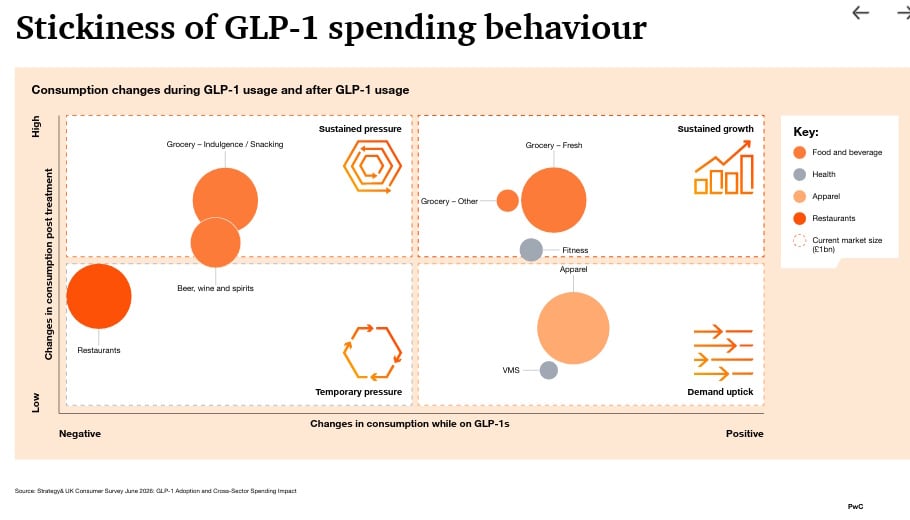
New consumer research reported by FoodNavigator finds that the way GLP-1 users are changing their grocery habits is more mixed and category-specific than blanket warnings of a food industry collapse have suggested [1]. The findings, compiled from surveys by IFF, PwC's Strategy&, Boston Consulting Group (BCG) and The Harris Poll UK, show spending shifting toward some products even as overall food volume falls [1].
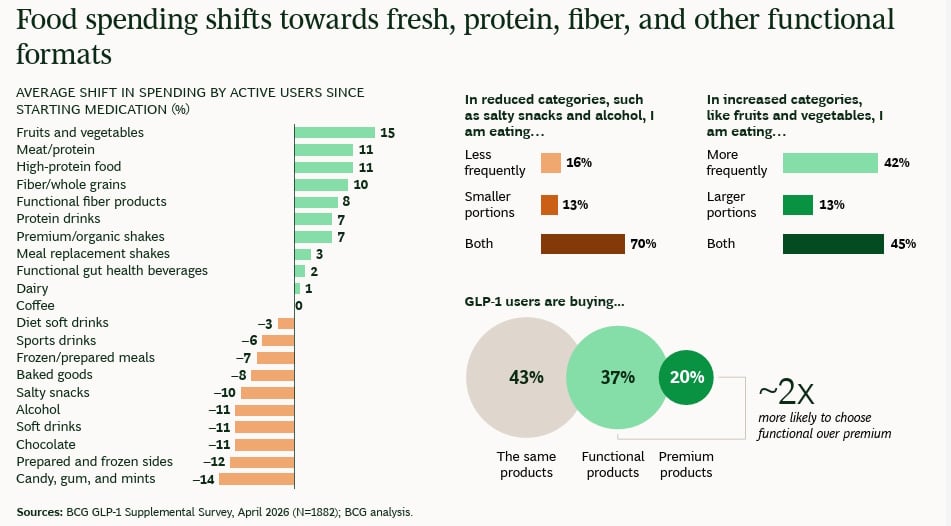
About 60% of GLP-1 users in a PwC survey of more than 2,300 UK adults said they are buying less food overall, but roughly 30% said they are trading up to pricier items, which partly offsets the drop in volume [1]. BCG's data shows active users expect to spend 15% more each month on fruit and vegetables, 11% more on high-protein foods, and notably more on fiber-rich and wholegrain products, and they are twice as likely to pick functional products over regular premium ones [1]. That pattern challenges the simple assumption that smaller appetites automatically mean smaller grocery bills [1].
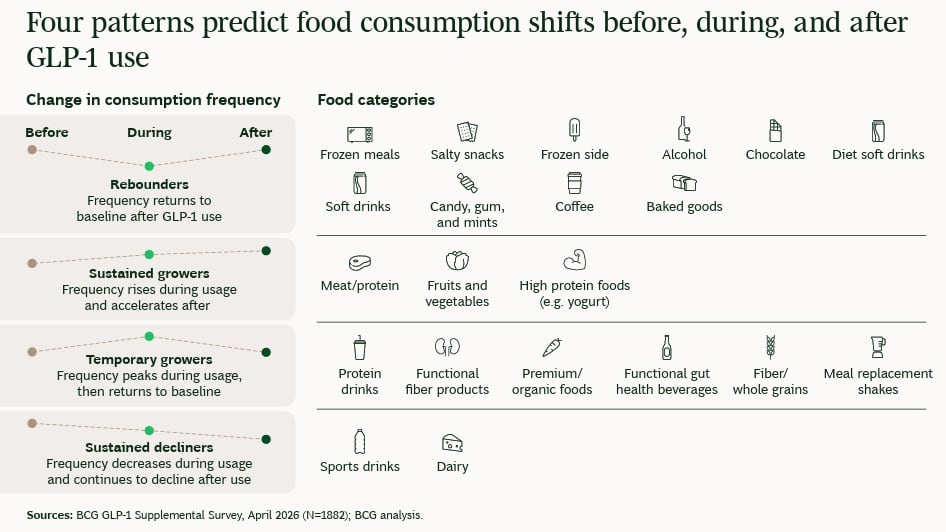
Bakery offers a similar complication. BCG's research found baked goods among items whose consumption falls during active treatment, but IFF's separate UK data found GLP-1 users were more likely than other weight-conscious shoppers to increase their intake of grain-based and baked products, along with honey and natural syrups [1]. Both groups moved away from artificial sweeteners [1]. The result is not that bakery is safe, but that the category is splitting between items people still choose to eat and those they are cutting [1].
The research also finds effects that reach beyond people actually taking the drugs. BCG found about 70% of users said they had changed what other people in their household eat or drink, with partners, children and housemates eating more fruits and vegetables, choosing less fast food, and accepting smaller portions [1]. Non-users adopted 30% to 50% of the dietary changes seen in the person on medication, which led BCG to estimate the GLP-1-influenced market is about 50% larger than the count of active users alone — roughly 24 million people in the US instead of an estimated 16 million active users [1].
The picture is also not static. Around one-third of people who have taken a GLP-1 medication have stopped at any given time, but about 60% of former users intend to restart, and more than one in 10 active users already cycle on and off treatment deliberately, according to BCG [1]. Reasons for stopping include reaching a target weight and difficulty affording the medication [1]. PwC found more than 80% of former users kept at least some dietary changes, but BCG's data shows food categories rebound unevenly: baked goods, salty snacks, confectionery and frozen meals are more likely to bounce back after treatment stops, with cravings and old habits returning within one to three months, while meat, produce and high-protein foods tend to stay elevated [1].
Why it matters for patients
For people taking semaglutide (Ozempic, Wegovy, Rybelsus) or tirzepatide (Mounjaro, Zepbound), this research does not change anything about the medications themselves, but it helps explain patterns many patients already notice: eating less overall while still wanting certain foods, or finding that cravings for snacks and sweets return within months of stopping treatment [1]. It also confirms that dietary changes tend to spread to other household members, not just the person prescribed the drug [1]. Separately, IFF found that 70% of GLP-1 users reported losing some of the enjoyment of eating, 73% said their taste preferences changed, and 66% reported some change in mood or personality, while a Harris Poll of current users found 38% noticed less "food noise," 37% reported less emotional eating, and 36% had fewer cravings [1]. These findings may help patients understand that shifts in appetite, taste and cravings are common and can change again if they pause or restart treatment [1].
What happens next
The sources do not give a timeline for when broader industry sales forecasts might be revised to reflect this more granular data, and specific figures behind earlier multibillion-dollar loss estimates are not detailed in this research [1]. What is documented is that consumption patterns keep shifting as people start, stop and restart these medications, meaning the size and shape of the affected market will likely keep changing rather than settling into one fixed level [1].
Images from the sources

Sources
Semaglutides.org is for information only and is not medical advice. Always talk to a licensed healthcare provider about your own care. Some links to telehealth services are affiliate links, labeled where they appear.