Novo's CEO defends the lawsuit and concedes Lilly's lead
Novo Nordisk's CEO defended a lawsuit accusing Eli Lilly of misleading weight-loss drug ads while admitting Lilly leads in injectable sales, even as Novo says its Wegovy pill has topped 5 million US prescriptions.
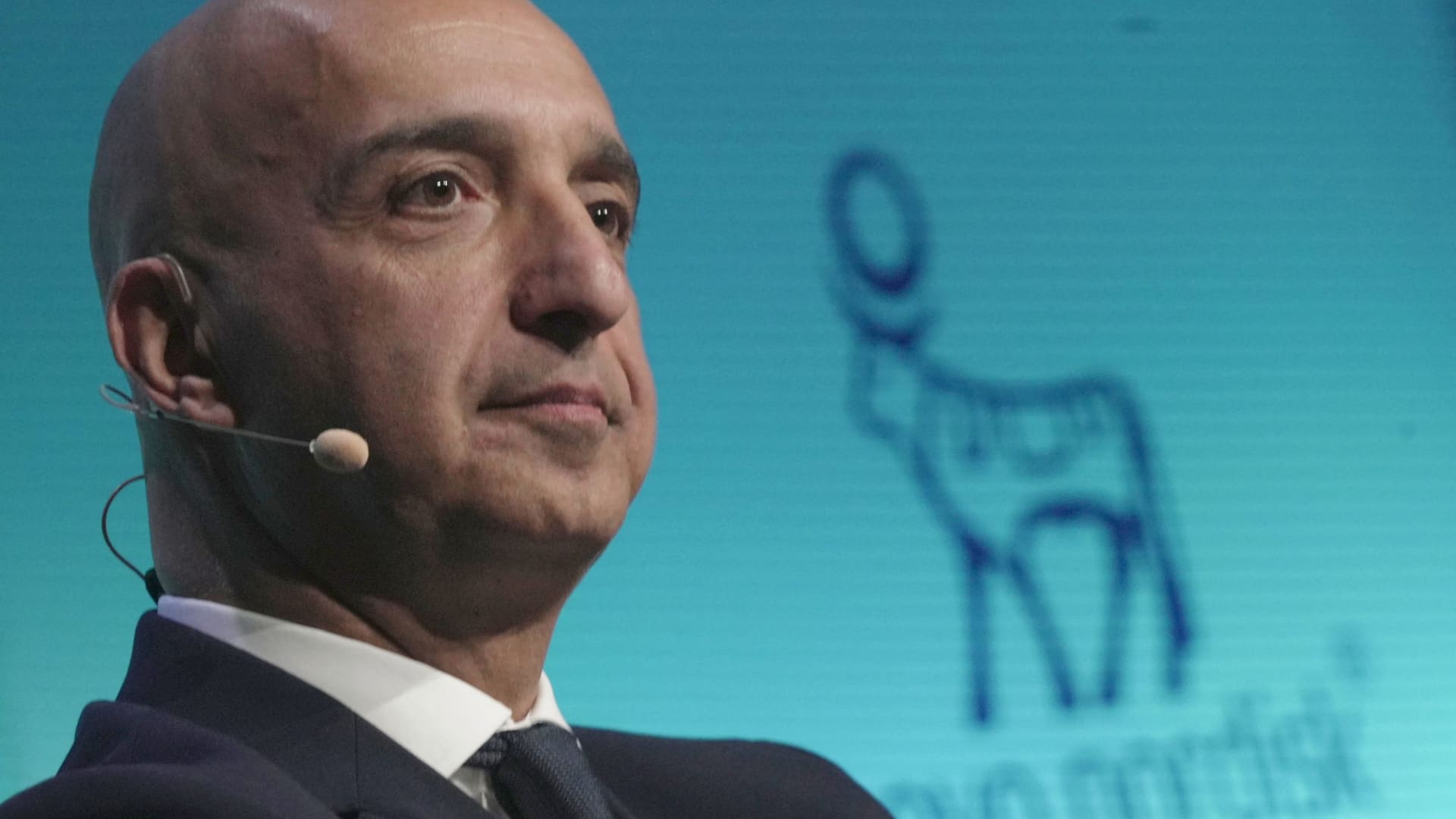
Novo Nordisk CEO Mike Doustdar defended his company's lawsuit against Eli Lilly over weight-loss drug advertising, telling CNBC's "Mad Money" that "competition has to be fierce, but I also think competition has to be fair" [1]. At the same time, he acknowledged that Lilly has pulled ahead of Novo in sales volume and market share for injectable GLP-1 drugs [1].
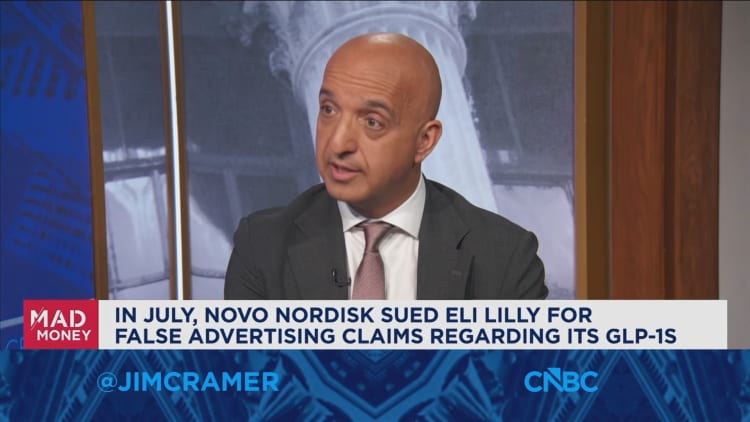
Novo filed the lawsuit last month, arguing that Lilly's ads for its injectable drugs mislead consumers about how well they work compared with Novo's products [1]. The dispute centers on a head-to-head trial Lilly ran comparing its obesity drug Zepbound with Wegovy, published in The New England Journal of Medicine in May 2025 [1]. In that trial, patients on the highest approved dose of Zepbound (10 mg or 15 mg) lost an average of 20.2% of their body weight, or about 50 pounds, over 72 weeks. Patients on the then-highest dose of Wegovy (1.7 mg or 2.4 mg) lost 13.7%, or roughly 33 pounds [1].
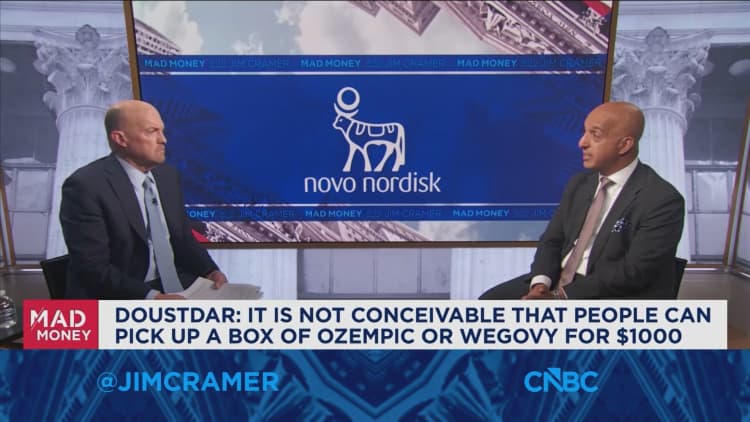
Doustdar argues that comparison is outdated because it does not include Novo's newer, higher-dose Wegovy, a 7.2 mg version the FDA approved in March [1]. Novo says its own study of that higher dose showed average weight loss of about 19%, or 47 pounds, over 72 weeks — a result Doustdar says is much closer to Zepbound's numbers [1]. "We believe that the advertisements that they have been doing, while truthful, is not the complete picture," he said, adding that "people need to know that there is a more advanced version of Wegovy in the market" [1].
A Lilly spokesperson pushed back, saying the company's advertising is truthful and that no head-to-head clinical trial supports Novo's claim that 7.2 mg Wegovy performs on par with Zepbound. The spokesperson also noted that Zepbound remains the most prescribed obesity medicine in the U.S. [1]. Since the lawsuit was filed, Novo's stock has fallen 6%, while Lilly's has climbed nearly 4% [1].
Why it matters for patients
This legal fight is playing out in the middle of heavy marketing for competing GLP-1 drugs, and the disagreement is specifically about which comparisons in those ads are fair. Patients trying to weigh Wegovy against Zepbound based on advertised weight-loss numbers should know that the widely cited 20.2%-versus-13.7% comparison used an older, lower dose of Wegovy, not the 7.2 mg version now available [1]. Novo's own 19% figure for the higher dose has not been tested against Zepbound in a head-to-head trial, according to Lilly [1]. That means there is currently no independent, direct trial comparing the newest versions of both drugs, so patients and their doctors are working with numbers from separate studies rather than one apples-to-apples comparison.
Meanwhile, Novo's Wegovy pill, launched in early January after FDA approval in late December 2025, has surpassed 5 million U.S. prescriptions, according to Doustdar, who called it the best pharmaceutical product launch in history [1]. Lilly's competing pill, Foundayo, was approved April 1 and began shipping shortly after, but it missed sales expectations in Lilly's most recent earnings report as the company works to build awareness [1].
What happens next
The lawsuit Novo filed last month is still pending, and its outcome could affect how both companies are allowed to advertise efficacy comparisons going forward [1]. Lilly has said it stands by its advertising and its head-to-head trial data [1]. No date for a ruling or trial was included in the available reporting.
Images from the sources
Sources
Semaglutides.org is for information only and is not medical advice. Always talk to a licensed healthcare provider about your own care. Some links to telehealth services are affiliate links, labeled where they appear.