Post hoc analysis reports about 13% weight loss with orforglipron in adults 65 and older
A new subgroup analysis of Eli Lilly's orforglipron obesity trials found adults 65 and older lost roughly as much weight as younger participants, up to about 13% at the top dose, though researchers say the finding needs confirmation.[1]
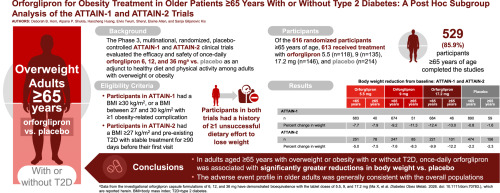
A post hoc analysis of the Phase 3 ATTAIN-1 and ATTAIN-2 trials, published in the journal Obesity Pillars, reports that older adults taking orforglipron, the experimental once-daily pill known by the brand name Foundayo, lost weight in amounts broadly similar to younger trial participants.[1] Orforglipron is a small-molecule, non-peptide GLP-1 receptor agonist taken as a pill, unlike injectable GLP-1 drugs such as Ozempic, Wegovy, Mounjaro and Zepbound.[1]
The analysis looked at 616 participants aged 65 or older who were randomized in the two trials; 613 actually received treatment, split among orforglipron 5.5 mg (118 people), 9 mg (135 people), 17.2 mg (146 people) and placebo (214 people).[1] In ATTAIN-1, which enrolled people with obesity but not type 2 diabetes, weight fell by 7.9% with the 5.5 mg dose, 11.3% with 9 mg and 13.0% with 17.2 mg at week 72, compared with 1.6% for placebo, with all differences statistically significant.[1] In ATTAIN-2, which enrolled people with obesity and type 2 diabetes, the reductions were 7.5%, 8.3% and 12.2% for the three doses, versus 2.3% for placebo, again statistically significant.[1] The authors say these results were comparable to what was seen in participants under 65 in the same trials.[1]
The most common side effects among older participants were gastrointestinal, including nausea, constipation, diarrhea and vomiting, and the study authors describe these as generally mild to moderate and consistent with the safety profile seen across the full trial populations and with other drugs in the GLP-1 class.[1][2]
Importantly, this was a post hoc subgroup analysis, meaning researchers looked back at data from a trial that was not originally designed or statistically powered to test whether orforglipron works differently in people 65 and older.[1] The study's own summary calls such analyses hypothesis-generating rather than proof of an independent efficacy finding, and the authors note there is limited existing research on incretin-based medications specifically in older adults with obesity.[1]
Why it matters for patients
Older adults are often left out of, or underrepresented in, weight-loss drug trials, and clinicians have had few dedicated safety and efficacy data for this age group.[1] This analysis suggests that age itself may not blunt the weight-loss effect of orforglipron, and that a once-daily pill without food or water restrictions could be easier for some older patients than injectable options or oral drugs with strict fasting rules.[1] But because this is a subgroup analysis rather than a study built to test older adults specifically, it should be read as an early signal, not confirmed evidence that outcomes or risks in this age group are fully understood.[1] Older adults may also face age-related health issues, such as changes in muscle mass or kidney function, that were not the focus of this particular report.
What happens next
Orforglipron has not yet received FDA approval as of this analysis, and it continues to be studied for other uses, including type 2 diabetes, obstructive sleep apnea, osteoarthritis knee pain, hypertension, peripheral artery disease and stress urinary incontinence, according to a secondary account of the trial data.[2] That same account also reports that a Medicare GLP-1 Bridge program was set to offer the drug at a $50 monthly copay starting July 1, 2026, though this claim was not verified in the peer-reviewed study itself and should be treated with caution pending confirmation from primary sources.[2] Further prospective research focused specifically on older adults would be needed to confirm whether the weight-loss and safety patterns seen here hold up under more rigorous testing.[1]
Sources
Semaglutides.org is for information only and is not medical advice. Always talk to a licensed healthcare provider about your own care. Some links to telehealth services are affiliate links, labeled where they appear.