PCOS does not blunt tirzepatide weight loss in a 54,114-woman cohort
A UK study of 54,114 women taking tirzepatide found those reporting PCOS lost about as much weight as those who did not, though only 40 PCOS patients were followed a full 10 months.
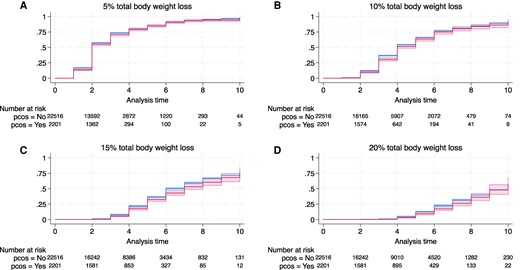
Women with polycystic ovary syndrome (PCOS) lost weight on tirzepatide at roughly the same rate as women without the condition, according to a retrospective study of 54,114 women published in the Journal of the Endocrine Society [1].
The analysis drew on records from a UK digital weight-management service and included every woman prescribed tirzepatide there between February 2024 and January 2025 [1]. Of those 54,114 women, 4,241 reported having PCOS [1]. Tirzepatide is the molecule sold as Mounjaro and, for weight management in the US, as Zepbound.
What the study found
At the 10-month mark, mean weight change was −19.40 percent in women with self-reported PCOS compared with −18.74 percent in women without it [1]. The difference between the two groups was not statistically significant [1]. Among the PCOS group, 57.66 percent had lost at least 20 percent of their starting body weight [1].
That matters because PCOS is commonly described as making weight loss harder, and women with the condition are often underrepresented in obesity drug trials. These data suggest that, at least in this real-world setting, a PCOS diagnosis did not appear to blunt the response to tirzepatide.
The caveats are large
This was a retrospective open-cohort study, not a randomized trial [1]. An open cohort means women entered the service at different times, so most had not been on treatment long enough to reach the later follow-up points. Only 40 women with PCOS actually reached the 10-month timepoint [1]. A figure like 57.66 percent losing 20 percent or more of body weight rests on that small number, so the confidence around it is much weaker than the size of the overall cohort implies.
PCOS status was also self-reported rather than confirmed through diagnostic criteria or medical records [1]. PCOS is frequently underdiagnosed, which means some women counted in the comparison group may in fact have the condition, and some who reported it may not meet formal criteria. Either direction of misclassification can push the two groups' results closer together.
The study also comes from a single commercial digital weight-management service in the UK [1]. People who sign up for and stay in a paid program may differ from the broader population of women with PCOS and obesity in ways that affect results — including motivation, ability to pay, and baseline health.
The sources do not report whether the study tracked PCOS-specific outcomes such as menstrual regularity, ovulation, fertility, or androgen levels, nor do they describe side effect rates, dose levels reached, or how many women stopped treatment. Those details are not yet known from what has been made available.
Why it matters for patients
For women with PCOS who are weighing a GLP-1 or dual-agonist medication, the practical question is often whether the condition will make the drug work less well. This study offers early real-world evidence pointing toward similar percentage weight loss in both groups over the first 10 months [1]. It does not establish that tirzepatide treats PCOS itself, and it does not measure reproductive or hormonal outcomes.
Insurance and access issues in the US are separate from what this study addresses. Coverage for tirzepatide generally hinges on obesity or type 2 diabetes criteria rather than a PCOS diagnosis, and nothing in this research changes labeling or approved uses.
It is also worth noting the number that anchors the headline finding. A cohort of 54,114 women sounds definitive, but the 10-month comparison rests on 40 women with PCOS [1]. Findings built on samples that small can shift substantially when larger groups reach the same follow-up point.
What happens next
The paper appears as article bvag177 in the Journal of the Endocrine Society [1]. As more of the women in this open cohort accumulate longer treatment time, later analyses would be able to report on far more than 40 people at 10 months. Whether the authors plan such an update, and whether any randomized trial is testing tirzepatide specifically in PCOS, is not stated in the available source.
Sources
Semaglutides.org is for information only and is not medical advice. Always talk to a licensed healthcare provider about your own care. Some links to telehealth services are affiliate links, labeled where they appear.