Pooled analysis of 6,239 adults reports semaglutide benefits beyond weight itself
A pooled analysis of 6,239 adults found semaglutide reduced weight, waist size, and an inflammation marker beyond placebo, though the study can't prove effects are separate from weight loss itself.
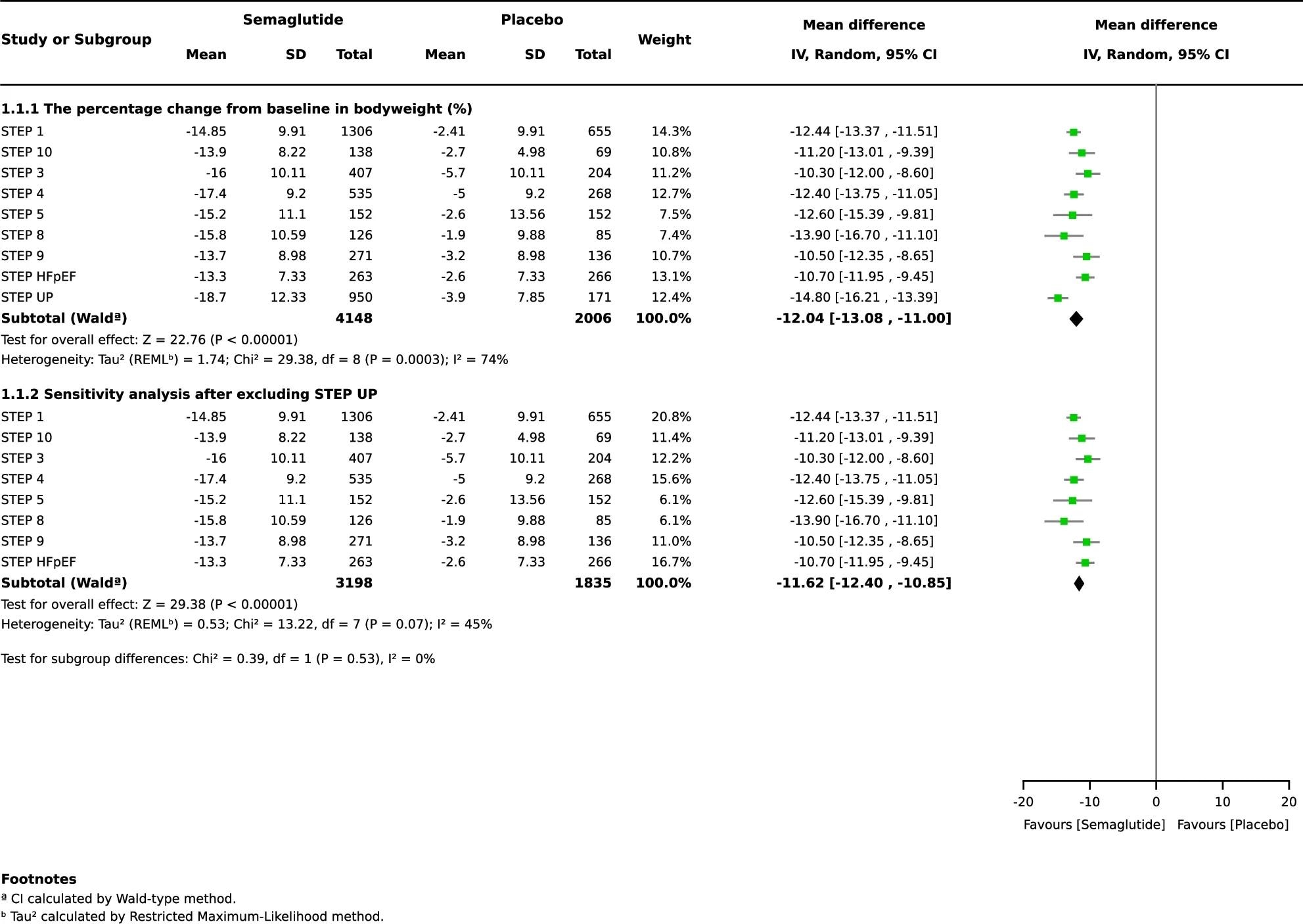
A new systematic review and meta-analysis pooled data from nine randomized controlled trials involving 6,239 adults with overweight or obesity but without diabetes, comparing subcutaneous semaglutide to placebo [1]. The analysis, published in the International Journal of Obesity, found that semaglutide was linked to a 12.04-percentage-point greater reduction in body weight, a 9.36 cm greater reduction in waist circumference, and a 40.90-percentage-point greater reduction in C-reactive protein (CRP), a marker of inflammation, compared with placebo [1].
The study drew on data from 4,203 people who took semaglutide and 2,036 who took placebo across trials lasting between 52 and 104 weeks [1]. Researchers used random-effects statistical models and also ran a "trial-policy" analysis meant to estimate outcomes under more ideal trial conditions, which showed an even larger weight reduction gap of 14.13 percentage points [1].
One trial, called STEP UP, tested a higher 7.2 mg dose of semaglutide and stood out in the pooled results. It showed a 14.80-percentage-point greater weight reduction and a 50.00-percentage-point greater CRP reduction than placebo, both larger than what was typically seen with the more common 2.4 mg dose [1]. This single trial was also identified as a major source of statistical variation across the pooled studies [1]. The authors were careful to note that conclusions about the higher dose remain exploratory since they rely on just one trial [1].
On safety, the overall rate of serious adverse events did not differ significantly between semaglutide and placebo groups across the full pooled data [1]. But when researchers excluded one trial called STEP HFpEF, which studied people with heart failure and had lower serious adverse event rates on semaglutide, the pooled risk ratio for serious adverse events rose to 1.31 and became statistically significant [1]. The study authors said this result may reflect differences between patient populations studied in different trials rather than a true safety signal, and urged caution in interpreting it [1].
Why it matters for patients
This analysis adds to a broader 2026 research effort trying to figure out whether semaglutide's health benefits come only from weight loss itself, or whether the drug has additional effects on inflammation and metabolism [1]. The CRP reduction reported here is one of the pieces of evidence researchers are using to make that case, since CRP dropped by a much larger margin than would be expected from weight loss alone [1]. But this is a pooled analysis of existing trials, not a new trial designed to isolate drug effects from weight effects, so it cannot establish that semaglutide causes these improvements independent of weight loss.
The finding about the higher 7.2 mg dose is preliminary because it comes from just one trial, STEP UP, included in the pooled data [1]. People taking semaglutide at different doses should not assume this analysis tells them what to expect, since the review pooled data across trials with different populations, doses, and durations, introducing variability the authors call heterogeneity [1].
The safety question also deserves attention. The overall serious adverse event rate did not differ from placebo, which is reassuring, but the sensitivity analysis that removed the heart failure trial suggests results can shift depending on which patient populations are included [1]. This does not necessarily mean semaglutide is riskier in general; it may simply reflect differences in who was enrolled in each trial [1].
What happens next
The study authors say the 7.2 mg dose finding needs confirmation in future trials, since it currently rests on a single study [1]. They also call for longer trials that track multi-year safety and for research using broader inflammatory markers, such as interleukin-6 and TNF-alpha, which were not measured in the trials pooled here [1]. No specific dates for these future studies are given in the source material.
Images from the sources
Sources
Semaglutides.org is for information only and is not medical advice. Always talk to a licensed healthcare provider about your own care. Some links to telehealth services are affiliate links, labeled where they appear.