Survey of 1,226 patients puts numbers on skin laxity, facial volume loss and hair shedding
A survey of 1,226 people on weight-loss drugs found more than 6 in 10 reported sagging skin, facial hollowing, or hair shedding, with GLP-1 users reporting more of these effects as they lost more weight.
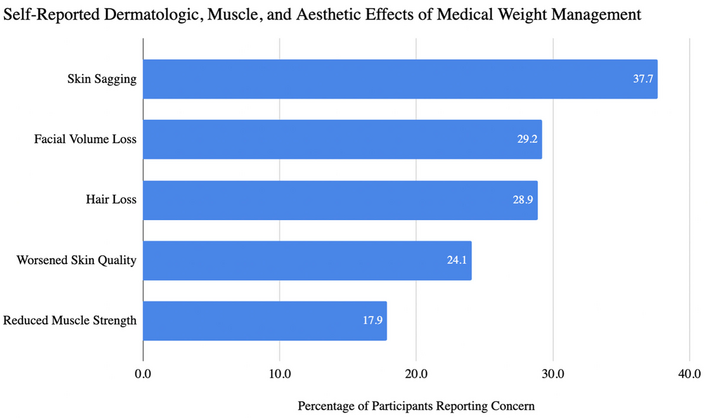
A new survey of 1,226 patients receiving medical weight management finds that more than 60% reported at least one aesthetic or dermatologic concern, including skin sagging, facial volume loss, or hair shedding [1]. The study, published in the International Journal of Women's Dermatology, found these concerns were more common among patients using GLP-1 receptor agonist drugs, who tended to lose more weight overall [1].
The anonymous survey was conducted through a national telemedicine platform in April and May 2025 [1]. Participants were grouped by treatment type and by how much total body weight they had lost. Overall, 61.9% of respondents reported at least one concern, with skin sagging the most common at 37.7%, followed by facial volume loss at 29.2%, hair loss at 28.9%, worsened skin quality such as dryness or fine lines at 24.1%, and decreased muscle strength at 17.9% [1]. Most people who reported a concern said they had more than one [1].
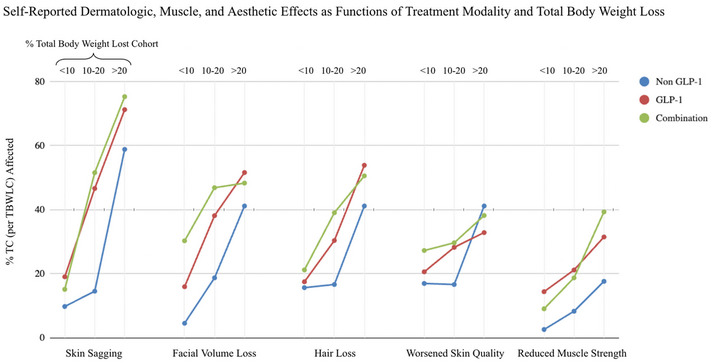
The numbers rose sharply with the amount of weight lost. Among those who lost more than 20% of their total body weight, 90.9% reported at least one concern, compared with 50.5% of those who lost less than 10% [1]. Weight loss caused by GLP-1 drugs appeared to carry a higher burden of these effects than weight loss achieved on non-GLP-1 medications such as bupropion, metformin, or phentermine. In the group that lost 10% to 20% of body weight, 76.6% of GLP-1 users reported at least one concern versus 52.1% of non-GLP-1 users [1]. Sagging skin on the arms was the single most reported specific complaint, affecting 71% of the 390 people who described that symptom [1].
The study's authors suggest possible biological explanations for some findings. They note that GLP-1 drugs may cause a loss of protective cytokines, increased oxidative stress, and death of adipose-derived stem cells, which could contribute to facial volume loss [1]. For hair shedding, the authors point to possible disruption of the hair growth cycle alongside nutritional deficiencies from caloric restriction, though they note that data specific to GLP-1 users remains limited [1]. The study population skewed heavily toward White, female telemedicine patients, at 85.1% and 80.3% respectively, which the authors caution may limit how broadly these findings apply [1]. The rate at which people lost weight was not tracked, so its role in these outcomes is unclear [1].
Why it matters for patients
The authors argue that unwanted aesthetic and muscle effects can undermine whether people stick with weight management treatment, since visible changes to skin, face, or hair may feel like a step backward even as the scale moves in a desired direction [1]. This is a patient-reported survey, not a clinical trial, so it captures perception and experience rather than a controlled measurement of drug effects. Still, the pattern the authors describe, more reported concerns tied to greater weight loss and to GLP-1 use specifically, adds numbers to an issue that has circulated informally as "Ozempic face" [1].
The researchers propose a framework built around nutrition and strength preservation as a first response to these effects, with dermatologic or regenerative treatments such as radiofrequency, fillers, or biostimulatory injections considered as additional options in some cases [1]. They frame this as preventive, meant to be built into weight management care rather than addressed only after concerns appear [1].
What happens next
The authors call for further research, including studies that track how quickly people lose weight and whether that pace affects skin, facial, or hair outcomes, since their survey did not measure this [1]. They also note that evidence specifically on hair shedding in GLP-1 users is sparse, suggesting more targeted study is needed before drawing firm conclusions about causes or the best ways to manage the issue [1].
Images from the sources
Sources
Semaglutides.org is for information only and is not medical advice. Always talk to a licensed healthcare provider about your own care. Some links to telehealth services are affiliate links, labeled where they appear.