Novo Nordisk moves amycretin into phase 3 trials as a pill and a weekly injection
Amycretin's mid-stage results come from small, short studies and the drug is not approved; phase 3 will show whether the numbers hold up.
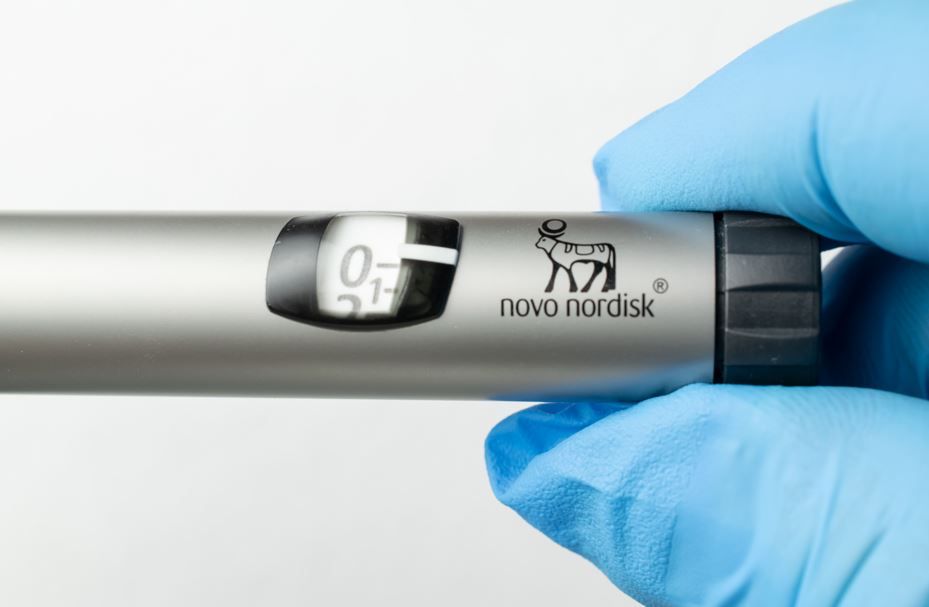
Novo Nordisk said it will take amycretin, an experimental drug that acts on two hormone receptors, into late-stage testing as both a once-weekly injection and a once-daily pill for weight management, after regulators gave positive feedback on its mid-stage results [1].
The company announced the decision on June 12, 2025, and said the phase 3 program in adults with overweight or obesity was planned to begin in the first quarter of 2026 [1]. Amycretin now appears among Novo Nordisk's phase 3 obesity candidates [2].
Amycretin is a single molecule that targets both the GLP-1 and amylin receptors, given as a once-weekly subcutaneous injection or a once-daily oral dose [1]. Novo's semaglutide, sold as Wegovy for weight management and Ozempic and Rybelsus for diabetes, targets GLP-1 alone [2]. Tirzepatide, sold as Mounjaro and Zepbound, targets GLP-1 and GIP [2].
In the phase 1b/2a study of the injection, 125 adults with overweight or obesity took part. Those who received the highest dose tested, 20 mg, lost an average of 22% of their body weight over 36 weeks, compared with a 2% weight gain in the placebo group. People on 5 mg for 28 weeks lost 16.2%, and those on 1.25 mg for 20 weeks lost 9.7%; placebo groups in those arms gained 2.3% and 1.9%, respectively. Side effects were mostly gastrointestinal and mild to moderate in severity [1].
Oral amycretin data presented in September 2024 at the annual meeting of the European Association for the Study of Diabetes showed a mean 13.1% reduction in body weight over 12 weeks at the highest dose tested, 2×50 mg, compared with 1.1% for placebo. A 50 mg once-daily dose led to a 10.4% average reduction. Researchers said weight loss had not plateaued by week 12, suggesting more loss could come with longer treatment. Tolerability was acceptable across doses when the dose was raised gradually, but declined at higher starting doses without titration [1].
At Novo Nordisk's 2024 capital markets day, company leaders said the 13% reduction seen with oral amycretin at 12 weeks exceeded the 6% reduction seen with semaglutide at the same point. The oral data had not been peer reviewed or published at that time, and the two figures come from separate small studies rather than a head-to-head trial [1].
"We are very pleased that the feedback from regulatory authorities has allowed us to take subcutaneous and oral amycretin in weight management to phase 3," Martin Lange Holst, Novo Nordisk's executive vice president for development, said in the company's statement [1].
Why it matters for patients
Amycretin is not approved and is not available. The numbers above come from small, short studies — 125 people over 36 weeks for the injection and 12 weeks for the pill — so they are early signals, not a forecast of how the drug will perform in phase 3 or in everyday use [1].
If it works and is approved, amycretin would offer another route: a weekly shot or a daily pill, both built on a single molecule that acts on the amylin pathway in addition to GLP-1 [1]. Oral GLP-1 options already exist. Oral semaglutide is approved for weight management, and Eli Lilly's orforglipron, sold as Foundayo, was approved in April 2026; both are listed at roughly 15% weight loss [2]. Whether adding amylin improves weight loss or tolerability compared with GLP-1 alone is still being tested.
Side effects in the amycretin studies were mostly gastrointestinal and mild to moderate, in line with other incretin-based medicines [1]. For the pill, how the dose is stepped up mattered: tolerability dropped when higher doses were started without gradual increases [1].
The amylin pathway is already closer to the US market in another form. CagriSema, Novo's combination of semaglutide and the amylin analog cagrilintide, is in phase 3, and an FDA decision is expected in the second half of 2026 [2]. In the phase 3 REDEFINE 2 trial, people with overweight or obesity and type 2 diabetes taking CagriSema lost a mean 13.7% of body weight versus 3.4% with placebo [1]. The tracker lists CagriSema at about 22.7% weight loss [2]; those two figures come from different patient groups and are not directly comparable.
What happens next
Novo Nordisk said the phase 3 program in adults with overweight or obesity would begin in the first quarter of 2026 [1]. Whether the trials have started enrolling participants has not been reported.
The company has not disclosed when phase 3 results are expected or when it might file for FDA approval.
For context, an FDA decision on CagriSema is expected in the second half of 2026 [2].
In the broader obesity field, Eli Lilly's retatrutide is listed at 28.3% weight loss over 80 weeks in the TRIUMPH-1 trial, with a filing guided to the first quarter of 2027 [2].
Images from the sources

Sources
Semaglutides.org provides information only, not medical advice. Talk to a licensed provider about your own care before making changes. Some telehealth links are affiliate links and are labeled where they appear.