ERS 2026: semaglutide tied to about 40 percent fewer asthma attacks
A UK records study presented at the European Respiratory Society Congress linked semaglutide to about 38 to 40 percent fewer asthma attacks, but researchers say it is not proof and should not change treatment.
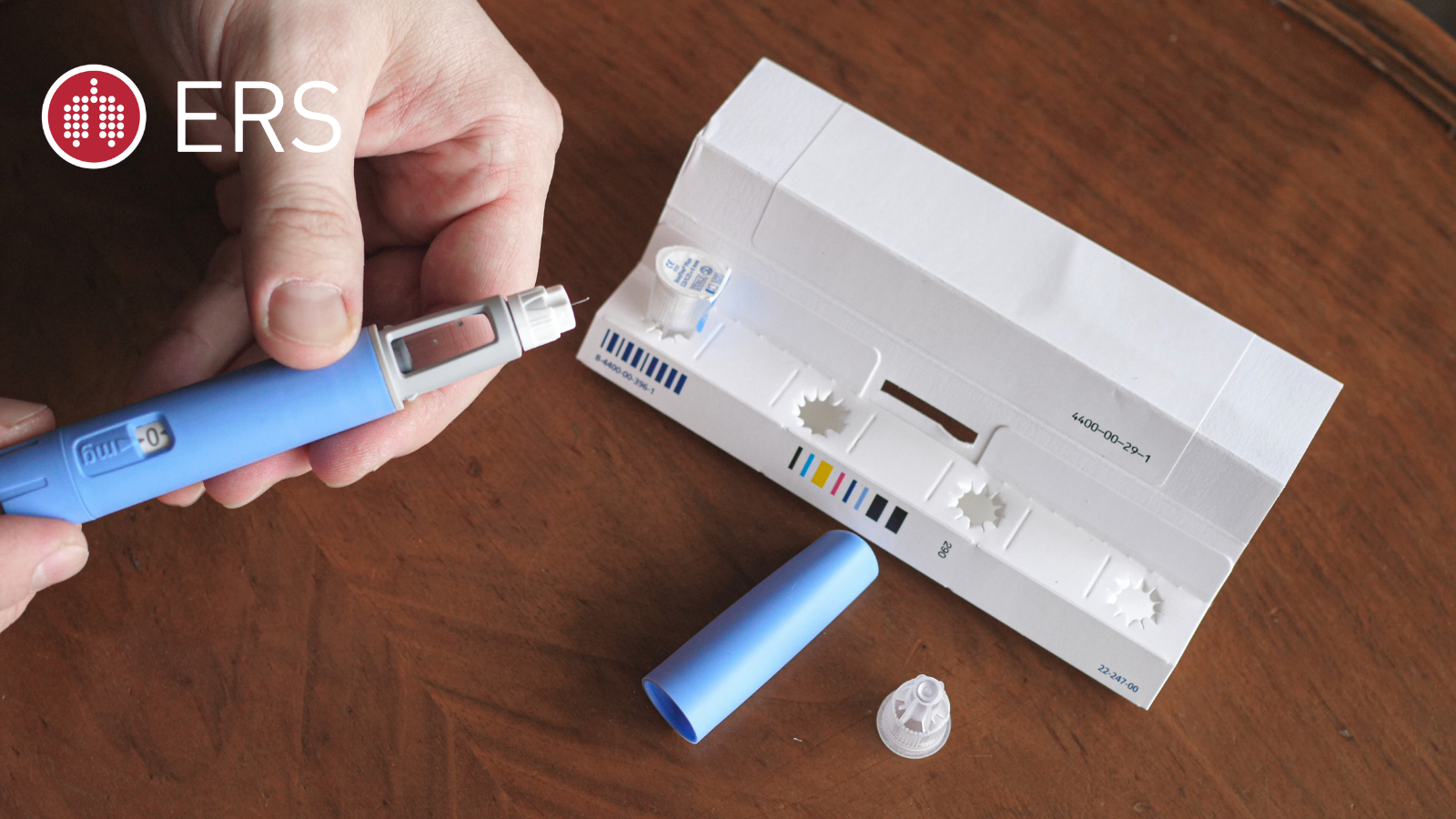
Researchers reported on September 8, 2026 at the European Respiratory Society (ERS) Congress in Barcelona that people with asthma or COPD who started a GLP-1 receptor agonist had fewer breathing attacks than similar patients who started an older diabetes pill [1][2]. The strongest signal was for semaglutide, the molecule in Ozempic and Wegovy, which was tied to roughly a 38 to 40 percent drop in asthma attacks [1][2].
The study was led by Chloe Bloom, MBChB, MSc, PhD, of the National Heart & Lung Institute at Imperial College London, and presented by Bohee Lee [1]. It used UK electronic health records to compare new users of GLP-1 drugs with new users of sulfonylureas, a class of diabetes medicines [1][2]. Both groups were taking the drugs for other conditions, such as type 2 diabetes, not for their lungs [2].
What the numbers showed
Across all GLP-1 drugs combined, patients had a 14 percent lower risk of an asthma or COPD exacerbation than sulfonylurea users [2]. An exacerbation was counted as a short course of oral steroids, an emergency department visit, a hospitalization, or death [2].
The size of the effect varied by drug. Semaglutide was tied to a 30 percent reduction in exacerbations overall, exenatide (Byetta, Bydureon) to a 23 percent reduction, and dulaglutide (Trulicity) to a 12 percent reduction [2]. Liraglutide (Victoza, Saxenda) and lixisenatide (Adlyxin) showed no change [2]. Broken out by disease, semaglutide was associated with a 38 percent reduction in asthma exacerbations and a 21 percent reduction in COPD flare-ups [2]; the ERS press release described those figures as "nearly 40%" and "20%" [1].
The two sources describe the study size differently. The ERS release says the team ran four parallel studies, each covering 20,000 to 22,000 people who started a GLP-1 drug or a sulfonylurea [1]. MedPage Today reports that from more than 1.1 million adults with asthma or COPD, investigators built a new-user cohort of 8,266 GLP-1 users and 20,273 sulfonylurea users, compared using weighted propensity scoring [2]. The study was supported by Asthma+Lung UK, and Bloom reported no personal disclosures [2].
One finding drew particular attention: the apparent benefit did not seem to track with metabolic changes. Semaglutide's effect was not modified by starting body mass index, HbA1c, insulin resistance, weight change during treatment, or change in blood sugar control during treatment [2]. It also was not modified by age, smoking, or eosinophil count [2]. "Metabolic factors did not appear to significantly influence effects, supporting the possibility of direct pulmonary mechanisms," Bloom said [2].
Why it matters for patients
Many people who take semaglutide also live with asthma or COPD, and obesity is a known risk factor for chronic respiratory disease and its flare-ups [2]. This study raises the possibility that a drug already prescribed for diabetes or weight may carry a side benefit for the lungs — but it does not prove it.
This was an observational study of medical records, not a randomized trial, and it cannot show cause and effect [2]. Bloom was direct about the limits: "The findings from this study are encouraging, but they should not change treatment decisions on their own. People with asthma or COPD should not start GLP-1 receptor agonists specifically for their lung condition outside current prescribing guidance" [1][2].
Outside experts echoed that. Marie Spreckley, PhD, of the University of Cambridge said it is "too early to state that semaglutide reduces or prevents asthma attacks" and that people should not seek semaglutide for asthma or change existing asthma treatment based on these results [2]. Her Cambridge colleague Stephen Burgess, PhD, raised another caveat: it is unclear whether semaglutide's stronger result reflects a real drug-specific effect or a chance finding, noting "it may simply be that we can make a stronger claim about semaglutide because we have more data on this drug" [2].
No GLP-1 drug is approved in the US for asthma or COPD, and the sources do not report any regulatory filing for a respiratory indication.
What happens next
The results were presented as a conference abstract on September 8, 2026; the sources do not say whether or when a peer-reviewed publication will follow [1][2].
Alexander Mathioudakis, MD, PhD, of the University of Manchester, who was not involved in the work, called it one of the largest real-world studies in this area and one of the first to compare individual GLP-1 drugs [1][2]. He said trials are needed that measure respiratory outcomes directly — asthma attacks, COPD exacerbations, lung function, symptoms and quality of life [1][2]. The sources do not name any such trial that is currently underway.
Images from the sources
Sources
Semaglutides.org is for information only and is not medical advice. Always talk to a licensed healthcare provider about your own care. Some links to telehealth services are affiliate links, labeled where they appear.