Largest musculoskeletal synthesis to date: no bone or joint effect, low-certainty lean-mass reduction
A new meta-analysis of 60 studies and 1.25 million people found GLP-1 drugs did not harm bone or joint measures but were tied to lean-mass loss at low certainty of evidence [1].
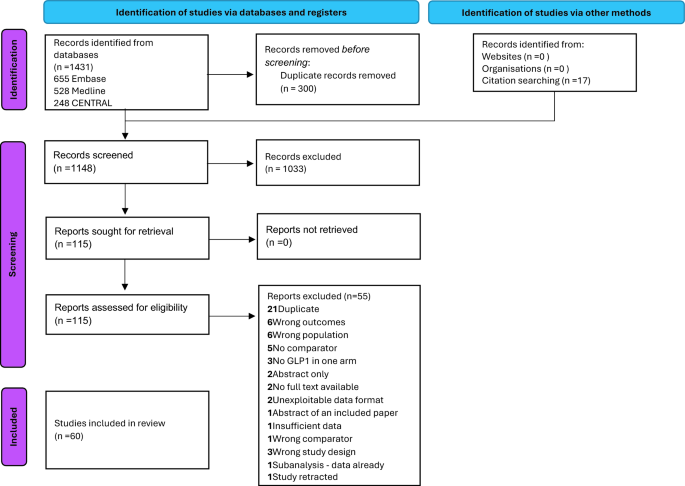
A systematic review and meta-analysis published September 12, 2026 in the journal Drugs pooled 60 studies covering 1,250,717 individuals and found no effect of GLP-1 receptor agonists on bone mineral density or fractures, no significant change in joint pain, function or stiffness scores, and a consistent reduction in lean body mass and fat-free mass — though the authors rated the certainty of that muscle finding as low [1].
The researchers searched MEDLINE, the Cochrane Central Register of Controlled Trials and Embase from inception through March 2025, screened 1,148 potentially relevant references, and included 60 articles: 46 randomized controlled trials, 13 real-world evidence studies and one pharmacovigilance study [1]. The included studies covered semaglutide, liraglutide, exenatide, dulaglutide and tirzepatide, which the authors describe as a dual GIP/GLP-1 agonist, along with others [1]. The review was registered in PROSPERO (record CRD420251024082) and followed PRISMA reporting standards, with strength of evidence graded using GRADE [1].
What the bone and joint results showed
When the meta-analytic models used the most adjusted effect estimates — that is, results that account for other factors that could skew the comparison — no effect was seen on bone outcomes, including bone mineral density at all sites and fractures at all sites [1]. For joints, the models found no significant change in the Western Ontario and McMaster Universities Osteoarthritis Index (WOMAC) scores for pain, physical function or stiffness [1].
That matters because both questions have been open. The authors note that clinical data on GLP-1 drugs and bone mineral density have remained inconclusive, while some observational studies and earlier meta-analyses had suggested a possible reduction in fracture risk with these drugs [1].
The muscle signal, and its limits
The lean-mass finding came from 28 comparisons and was described as a significant decrease in lean body mass/fat-free mass in the global model, with a standardized mean difference reported as 0.52 and a 95% confidence interval of −0.8 to −0.23 [1]. The sign of the point estimate and the confidence interval as published are inconsistent, so readers should treat the exact magnitude with caution; the direction the authors describe throughout is a decrease [1]. Heterogeneity was high (I² 88%, p for heterogeneity <0.0001), meaning individual studies varied widely in their results [1].
The finding held up across all sensitivity analyses, including leave-one-out tests and analyses restricted to the most adjusted estimates, and no publication bias was detected [1]. Subgroup analyses indicated the effect was mainly driven by liraglutide and semaglutide, and the decrease appeared when GLP-1 drugs were compared with placebo [1].
Crucially, the authors conclude that the changes "appeared largely related to weight loss" and that whether they translate into clinically meaningful impairments in muscle function or physical performance "remains uncertain" [1]. GRADE certainty for the muscle result was low [1].
Why it matters for patients
Muscle loss has become one of the most discussed concerns among people taking GLP-1 medications for obesity or type 2 diabetes. This synthesis, which the authors say is the first to look across a broad panel of bone, muscle and joint outcomes, puts some numbers on that concern while also drawing a boundary around what the data can and cannot say [1].
On the reassuring side, the pooled analysis did not find worse bone density or more fractures, and it did not find worsening osteoarthritis pain, stiffness or physical function on the WOMAC scale [1]. On the muscle side, the studies measured mass, not strength. The authors explicitly flag that future research needs to evaluate muscle strength, physical performance and other clinically relevant musculoskeletal outcomes, and to use multivariate models that account for confounding [1].
So the practical takeaway from this paper alone is narrow: scales and body-composition scans show less lean tissue, in a pattern the authors link to overall weight loss, and it is not yet known from this evidence whether that shows up as weaker or slower function in daily life [1]. The high heterogeneity and low certainty rating mean the size of the effect is not pinned down [1].
What happens next
The paper was published September 12, 2026, as an open-access article in Drugs [1]. Its literature search closed in March 2025, so trials and real-world analyses reported after that date are not included [1]. The authors call for further studies specifically measuring muscle function, strength and performance to firm up the conclusions [1]; no timeline for those studies is given in the paper.
Sources
Semaglutides.org is for information only and is not medical advice. Always talk to a licensed healthcare provider about your own care. Some links to telehealth services are affiliate links, labeled where they appear.