Viking Therapeutics says VK2735 holds up to 97% of weight loss on less-frequent maintenance dosing
Viking's Phase 2 data suggest people who switch from weekly to every-other-week or monthly shots may keep most of their weight loss, but the drug is still years from any approval.
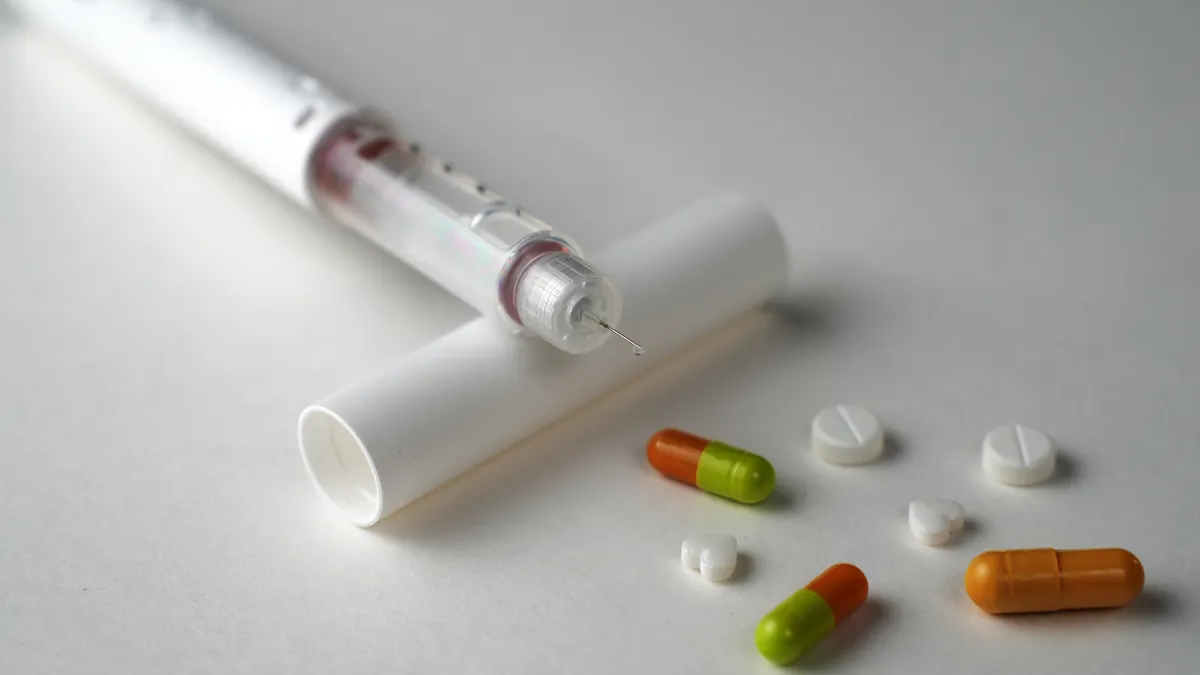
Viking Therapeutics said on Sept. 22, 2026 that its experimental injectable VK2735, a dual GLP-1/GIP receptor agonist, allowed most patients to keep their weight off after switching from weekly shots to every-other-week or monthly dosing in a mid-stage trial [1][2]. The stock jumped sharply on the news [3].
The placebo-controlled Phase 2 study randomized about 180 adults with obesity — all with a body mass index of at least 30 and no obesity-related health conditions — to weekly VK2735 or placebo for 21 weeks [1][2]. Doses were stepped up every two weeks starting at 1.25 mg until participants reached a final weekly dose of 15, 17.5, 20 or 22.5 mg [1].
What the numbers showed
After 21 weeks, average weight loss ranged from about 16% to 19% across the dose groups, compared with roughly 0% for placebo [1]. The largest group, 118 people on 17.5 mg weekly, lost an average of 17.8% of body weight, or 17.7% after adjusting for placebo [1][3]. Across the combined treatment arms, 98% of participants lost at least 5% of their weight, 90% lost 10%, 65% lost 15% and 32% lost 20%, versus 13%, 0%, 0% and 0% on placebo [1].
Participants were then moved to lower, less frequent maintenance doses for 12 more weeks. Those switched to every-other-week injections kept up to 97% of the weight they had lost, with the combined every-other-week group retaining 90% [1]. People moved to monthly shots kept up to 90%, with the combined monthly group at 85% [1]. Placebo patients retained 61% of their loss, and the treated groups separated from placebo as early as four weeks after the switch [1]. Viking noted that one monthly cohort's 85% figure excludes an outlier; including that person would put the number at 99% [1].
A small exploratory group of 13 people who stayed on 17.5 mg weekly reached 21.7% average weight loss at week 33, compared with a 0.3% weight gain on placebo, and the company said no plateau was seen [1][3].
On safety, Viking said rates of gastrointestinal side effects such as nausea, vomiting, diarrhea and constipation during the 12-week maintenance period were "not meaningfully different" from placebo [1][2]. Discontinuations tied to side effects were low: one during induction, one in the every-other-week group and three in the monthly group [2].
Why it matters for patients
Staying on GLP-1 medicines long term is hard, and lagging adherence is a known problem with current obesity drugs [2]. If less frequent dosing can hold weight off, that could mean fewer injections, potentially lower drug costs per month and one less reason to quit. Louis Aronne, MD, former president of The Obesity Society, said in a statement provided by Viking that "the cardiometabolic benefits of maintaining 75% or more of a patient's weight loss are becoming clearer" and that the results support keeping people in that range with monthly or every-other-week shots [1][2].
The caveats are real. VK2735 is not approved by the FDA and is not available by prescription. This was a topline company announcement, not peer-reviewed data, and most individual maintenance arms had only 10 to 16 people [1]. The trial ran 33 weeks total; how well weight stays off over years on reduced dosing has not been reported. There was no head-to-head comparison with semaglutide (Wegovy) or tirzepatide (Zepbound) [2]. And Viking's oral version of VK2735 disappointed in August 2025, showing 10.9% placebo-adjusted weight loss at 13 weeks with 20% of treated patients dropping out for side effects versus 13% on placebo [3].
What happens next
Viking plans a part 2 of this study to test oral maintenance dosing regimens [1]. Phase 3 trials of the injectable were fully enrolled as of November 2025 and are testing doses only up to 17.5 mg weekly [2]. Readout dates for those trials have not been disclosed.
Investors reacted strongly, though accounts of the size differ: one report put shares up nearly 24% at $37.49 at the open, another said they rose as much as 36% in morning trading [2][3].
Sources
- https://ir.vikingtherapeutics.com/2026-09-22-Viking-Therapeutics-Announces-Positive-Topline-Results-from-Maintenance-Study-of-GLP-1-GIP-Agonist-VK2735-Demonstrating-the-Promise-of-Multiple-Maintenance-Dosing-Regimens
- https://www.biopharmadive.com/news/viking-obesity-drug-maintenance-study-results/831004/
- https://www.biospace.com/drug-development/viking-achieves-maintenance-trifecta-as-glp-gip-dual-agonist-exceeds-expectations
Semaglutides.org is for information only and is not medical advice. Always talk to a licensed healthcare provider about your own care. Some links to telehealth services are affiliate links, labeled where they appear.