Digital-first tirzepatide program linked to 16.1 kg mean weight loss in UK women
An observational study of 8,127 UK women treated mostly with tirzepatide through a digital program reported a mean 16.1 kg weight loss at six months, with no comparison group.
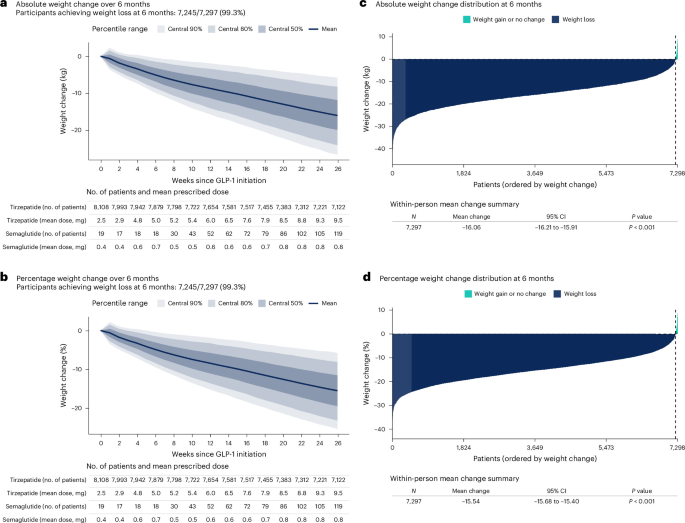
A structured digital care program that delivered GLP-1 therapy — almost entirely tirzepatide — to 8,127 women in the UK was associated with a mean weight loss of 16.1 kg, or 15.5% of starting weight, over six months, according to an observational study published October 1, 2026, in Nature Medicine [1].
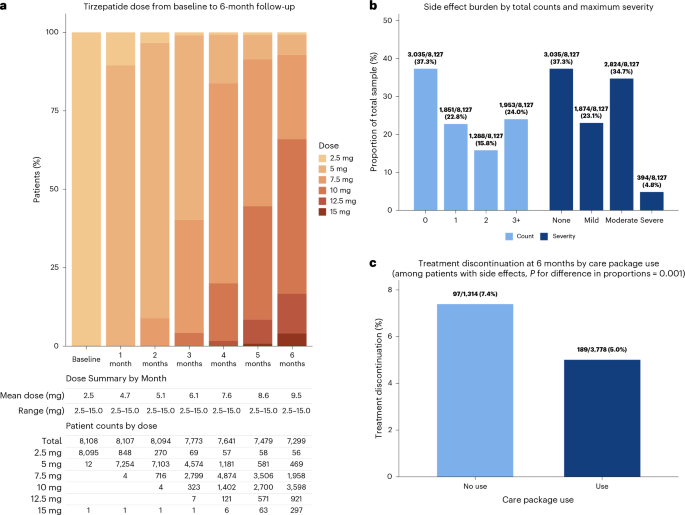
The women were recruited between November 27, 2024 and January 31, 2025 through digital outreach and screened online. Of the 8,127 who were prescribed and shipped medication before an administrative cutoff, 99.8% received tirzepatide, which is sold as Mounjaro for diabetes and Zepbound for obesity; the other 19 participants started semaglutide (Ozempic, Wegovy or Rybelsus). Nearly all of the tirzepatide group — 99.6% — began at 2.5 mg weekly, while 13 started at doses between 5 mg and 15 mg. Later dose increases were set by clinicians based on weight change and tolerability rather than a fixed schedule [1].
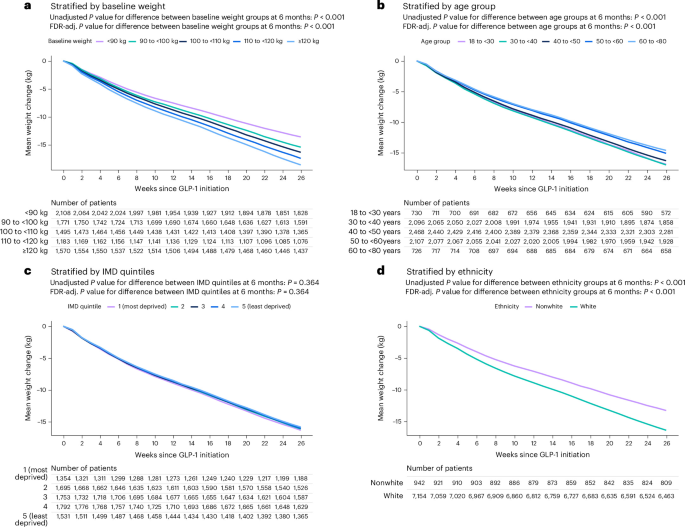
Participants had a mean starting weight of 104.2 kg and a mean body mass index of 38.2. About 95.5% met criteria for class I to class III obesity, 19.3% weighed at least 120 kg and 25.9% weighed under 90 kg. Ages ranged from 18 to 79, with 82.1% between 30 and 60. The cohort was 88.0% white, and 37.6% lived in the two most deprived areas under the Index of Multiple Deprivation [1].
Mean weight loss was 16.1 kg (95% confidence interval 15.9 to 16.2). Overall, 83.1% of participants lost at least 10% of body weight and 22.4% lost at least 20%. The study reports consistent responses across age, starting weight and socioeconomic groups. Retention was 91.4% at six months; 7,297 participants (89.8%) provided a six-month weight measurement and 6,466 (79.6%) completed repeat blood tests [1].
Among those with paired biomarker data, average glycated hemoglobin fell by 3.3 mmol/mol (95% confidence interval 3.1 to 3.4). Values returned to normal in 84.5% of participants who started in the diabetes range and in 96.3% of those who started in the prediabetes range. Total cholesterol fell by 0.77 mmol/L, LDL cholesterol by 0.61 mmol/L and triglycerides by 0.47 mmol/L. No serious treatment-related adverse events were reported [1].
The program was more than a prescribing website. Refills required a monthly structured questionnaire, and participants had weekly live video check-ins with trained proctors, supervised weight confirmation and medication scanning. Clinicians reviewed each case monthly and adjusted doses individually, and a structured side-effect mitigation package was provided [1].
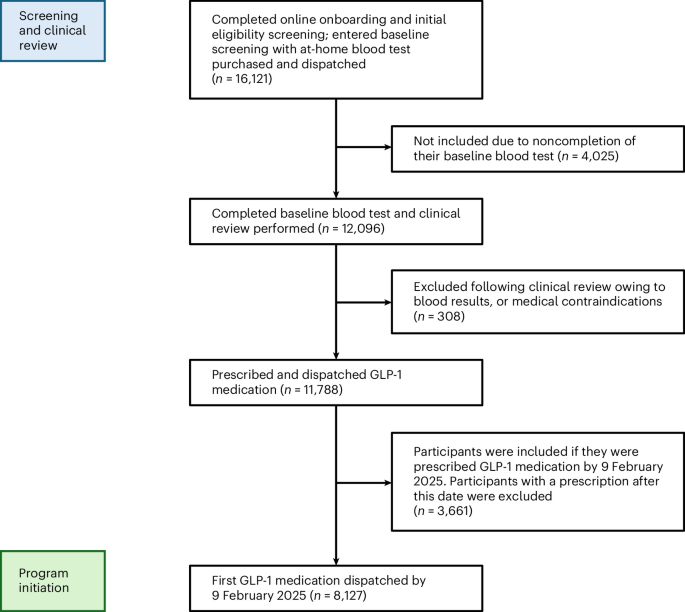
Of 16,121 people who met initial screening criteria, 4,025 were not included because they did not complete baseline blood testing, and 308 were excluded after clinical review for abnormal lab results or other medical exclusion criteria [1].
Why it matters for patients
Most large trials of these drugs enroll mostly men and run under tightly controlled conditions. This study describes what happened in a large group of women paying out of pocket for treatment through a remote program, a setting closer to how many people in the US actually get these medicines [1].
The retention figure matters as much as the weight numbers. About 9 in 10 participants were still in the program at six months, a period when many people stop GLP-1 treatment. The program's required check-ins and clinician dose adjustments are one possible explanation, but the study cannot show that [1].
The study also cannot show how much of the weight loss came from the drug, the program, or the type of person who signs up and pays for private care. There was no comparison group, follow-up stopped at six months, and participants were self-paying, which the authors list as a limitation. Whether the results hold in people who are not paying directly, or beyond six months, has not been reported [1].
Weight regain after stopping treatment is a known concern with this drug class, and this study does not address what happened to participants who discontinued. How these outcomes compare with in-person obesity care has also not been reported [1].
Images from the sources
Sources
Semaglutides.org provides information only, not medical advice. Talk to a licensed provider about your own care before making changes. Some telehealth links are affiliate links and are labeled where they appear.