Lilly publishes the tirzepatide discovery paper
Eli Lilly published the first full scientific description of LY3298176 — the experimental once-weekly injection later known as tirzepatide — including early human data in 142 people.
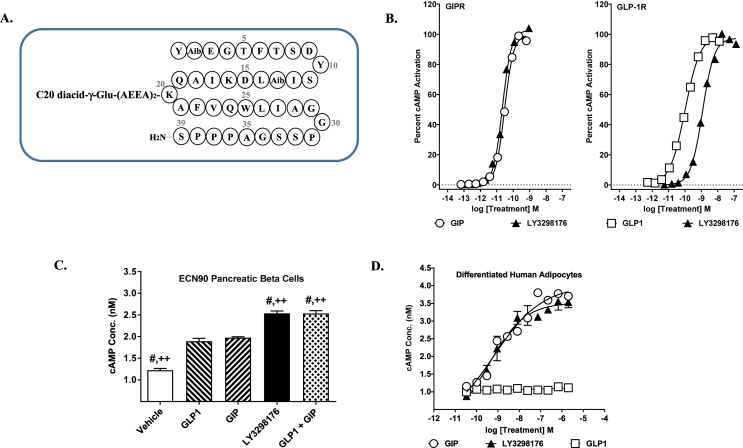
Eli Lilly researchers published the discovery and first-in-human results for LY3298176, an experimental once-weekly injection that activates two gut hormone receptors at once, in the journal Molecular Metabolism on October 3, 2018 [1]. The paper, led by Tamer Coskun with senior author Axel Haupt, appeared in Volume 18, pages 3–14, and is open access under a Creative Commons license [1][2]. Most authors were at Lilly Corporate Center in Indianapolis; one, David A. D'Alessio, was at Duke University Medical Center [1].
What the paper describes
The compound is described as a fatty acid modified peptide with dual GIP and GLP-1 receptor agonist activity, designed for once-weekly injection under the skin [1]. That is the key difference from the drugs already on the market at the time: semaglutide and dulaglutide act only at the GLP-1 receptor, while this molecule was built to also hit the receptor for GIP (glucose-dependent insulinotropic polypeptide). The stated purpose of the program was to find out "whether the metabolic action of GIP adds to the established clinical benefits of selective GLP-1 receptor agonists" in type 2 diabetes [1].
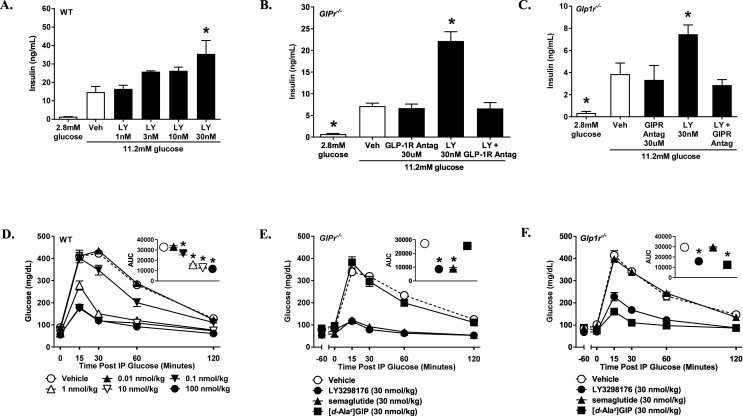
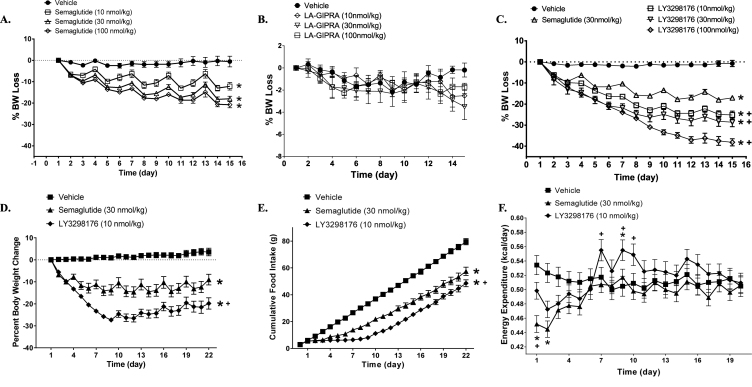
In laboratory work, the molecule turned on both GIP and GLP-1 receptor signaling in cells, and in mice it triggered glucose-dependent insulin release and improved glucose tolerance through both receptors [1]. With repeated dosing in mice, it lowered body weight and food intake more than a GLP-1 receptor agonist did [1]. (The paper uses only the code name LY3298176; the brand and generic names now used in the US are not part of this publication [1].)
The first human data
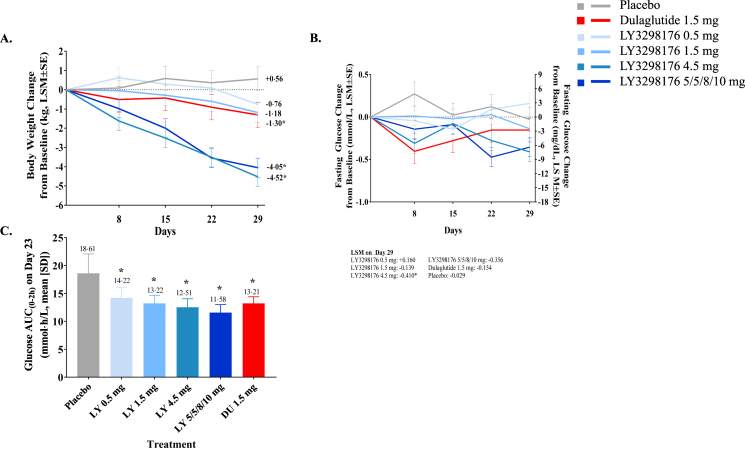
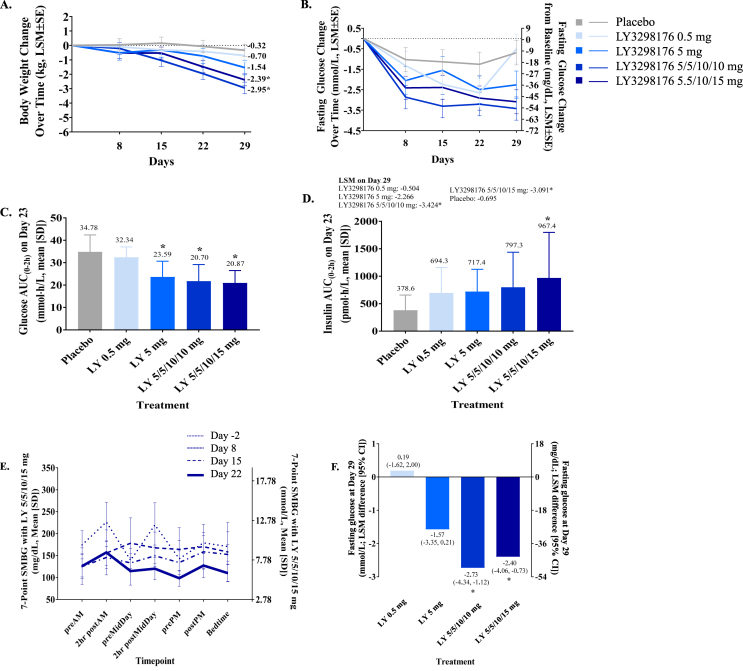
The Phase 1 program (ClinicalTrials.gov NCT02759107) was randomized, placebo-controlled and double-blind, and ran in three parts: a single-ascending-dose study at 0.25–8 mg in healthy subjects, a 4-week multiple-ascending-dose study at 0.5–10 mg in healthy subjects, and a 4-week Phase 1b proof-of-concept study at 0.5–15 mg in people with type 2 diabetes [1]. Doses above 5 mg were reached by titration — stepping up gradually — and dulaglutide was used as an active comparator [1]. A total of 142 people received at least one dose of LY3298176, dulaglutide or placebo, and the primary goal was safety and tolerability [1].
In the diabetes portion, the 10 mg and 15 mg doses cut fasting serum glucose compared with placebo by a least-squares mean of 49.12 mg/dL (95% CI −78.14 to −20.12) and 43.15 mg/dL (95% CI −73.06 to −13.21) [1]. Weight loss versus placebo in healthy subjects over four weeks was 1.75 kg at 1.5 mg, 5.09 kg at 4.5 mg and 4.61 kg at 10 mg [1]. In people with type 2 diabetes, the differences were 2.62 kg at 10 mg and 2.07 kg at 15 mg [1].
The most common side effects were gastrointestinal — vomiting, nausea, decreased appetite, diarrhea and abdominal distension — in both healthy subjects and people with diabetes [1]. The authors reported these were dose-dependent and mild to moderate, and that tolerability was comparable to GLP-1 receptor agonists [1].
Why it matters for patients
This paper is the public starting point for the dual-receptor approach that later produced the tirzepatide products Americans now see in pharmacies. It shows what companies knew in 2018: short, small studies suggesting that adding GIP activity might produce more weight loss than a GLP-1 drug alone, with a side effect profile dominated by stomach and gut complaints.
It also sets expectations about scale. Four weeks of dosing in 142 people is a safety and dose-finding exercise, not proof of long-term benefit. The weight numbers here are small compared with what later, larger trials would test, and the authors said only that the data "warrant further clinical evaluation" for type 2 diabetes and "potentially obesity" [1]. Anyone reading old coverage of this paper should keep that framing in mind.
One detail worth flagging: some descriptions of this molecule cite exact receptor binding constants and its 39-amino-acid structure built on the human GIP sequence. Those specifics sit in the full article text, not in the abstract material available here, so they are not cited in this story.
What happens next
The manuscript was received September 10, 2018, revised September 26, accepted September 28, and posted October 3, 2018, with the print collection dated December 2018 [1]. The paper itself sets no timeline beyond calling for further clinical evaluation [1].
Images from the sources
Sources
Semaglutides.org is for information only and is not medical advice. Always talk to a licensed healthcare provider about your own care. Some links to telehealth services are affiliate links, labeled where they appear.